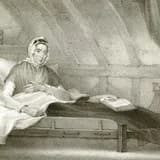
By 1 March 1809, Ann Moore's claimed multi-year fast had become a nationally circulated sensation in the British press, drawing visitors and medical curiosity.
By 1 March 1809, Ann Moore had achieved widespread notoriety across Britain as the 'fasting-woman of Tutbury.' Newspaper reports of her supposed years-long survival without food or water circulated extensively, transforming her from a local curiosity into a national phenomenon.
Her fame drew streams of visitors to her modest home in Tutbury, many of whom paid for the privilege of witnessing the supposed miracle, while physicians, clergymen, and members of the gentry debated the authenticity and meaning of her condition. In an era when religious interpretations of extraordinary bodily phenomena still competed with rationalist and medical explanations, Moore's case became a flashpoint for broader cultural anxieties about faith, fraud, and the credibility of scientific observation.
The financial incentive behind her fame is notable: donations and gifts from sympathetic and curious visitors provided her with income she otherwise would not have had, which later investigators would cite as a likely motive for perpetuating the hoax. Her case was frequently compared to other 'fasting girls' documented across Europe and America in the eighteenth and nineteenth centuries, a recurring phenomenon often linked to religious fervor, attention-seeking, or undiagnosed eating disorders.
This peak of notoriety, occurring roughly two years after the initial 1807 watch failed to disprove her, set up the far more rigorous and ultimately damning 1813 investigation that would finally expose her deception.