← All women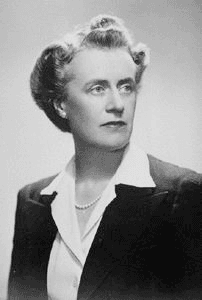
Canadian · Politics · Activism · Law
Thérèse Casgrain
July 10, 1896 – November 3, 1981
Early Life and Family Background
Marie Thérèse Forget, who became known to history as Thérèse Casgrain, was born on July 10, 1896, in Montreal, Quebec, into one of French Canada's wealthiest and most politically influential families. Her father, Sir Rodolphe Forget, was a prominent financier, stockbroker, and Conservative Member of Parliament, while her mother, Blanche MacDonald, managed the family's considerable social affairs. The Forget household moved in the highest circles of Montreal society, and Thérèse grew up surrounded by wealth, culture, and political conversation.
Despite this privilege, Thérèse's formal education followed the conventional pattern prescribed for young women of her class: she attended private convent schools where the curriculum emphasized deportment, religious instruction, music, and languages rather than the rigorous academic or professional training given to her brothers. This disparity was not lost on her. Decades later, she would point to her own family's unequal treatment of sons and daughters as an early awakening to the systemic inequalities facing women, even those born into privilege.
Marriage and Entry into Public Life
In 1916, Thérèse Forget married Pierre-François Casgrain, a lawyer and Liberal politician who would go on to serve as Speaker of the House of Commons and as a federal cabinet minister. The couple settled into a life split between Montreal and Ottawa, and Thérèse bore four children. Rather than confining her to domestic life, her husband's political career exposed her directly to the machinery of Canadian government — and to the fact that, as a woman, she had no formal voice within it. She began accompanying her husband to Ottawa during parliamentary sessions and became increasingly engaged with the political and social issues of the day, including the glaring absence of women from the electorate in Quebec, even as women in most other provinces and at the federal level had already won the vote.
The Fight for Women's Suffrage in Quebec
Quebec was the last Canadian province to grant women the right to vote and hold provincial office, a fact largely attributable to the powerful opposition of the Roman Catholic Church, conservative political elites, and a widespread belief that women's political participation would undermine family structure and social order. Women's suffrage campaigns had begun in Quebec as early as the 1910s and 1920s under figures such as Marie Gérin-Lajoie and Idola Saint-Jean, organized primarily through the Provincial Franchise Committee (later the Ligue des droits de la femme).
Thérèse Casgrain became involved in this movement in the 1920s and rose to become president of the Ligue des droits de la femme in 1928, a position she would hold for over a decade. She proved to be an extraordinarily effective organizer and public communicator. She staged annual delegations of women to the Quebec legislature, pressing successive premiers to introduce enfranchisement bills, and she pioneered the use of radio broadcasts to bring the suffrage message into homes across the province, including rural and working-class communities that had been largely untouched by earlier, more elite-focused campaigns.
Her efforts met with years of legislative defeat, ridicule in the press, and denunciation from clergy who preached that women's suffrage was contrary to Catholic teaching on the family. Casgrain persisted regardless, cultivating alliances with English-Canadian suffragists, labour organizations, and sympathetic politicians. Her persistence finally bore fruit when Premier Adélard Godbout's Liberal government introduced a suffrage bill that passed the Quebec legislature on April 25, 1940, granting Quebec women the right to vote and run for office provincially — a full generation after most Canadian provinces and the federal government had already done so.
Political Career and Firsts
Following the suffrage victory, Casgrain did not retreat from public life; instead, she expanded her ambitions into direct political participation. She ran unsuccessfully for federal office on several occasions, both as a Liberal candidate and later, after breaking with the Liberal Party over what she viewed as its inadequate commitment to social reform, as a candidate for the Co-operative Commonwealth Federation (CCF), the democratic socialist precursor to the New Democratic Party (NDP).
In 1951, Casgrain achieved another historic first: she was elected leader of the Quebec wing of the CCF, becoming the first woman in Canadian history to lead a provincial political party. She held this position until 1957, using it as a platform to advocate for labour rights, social welfare programs, and continued gender equality reforms, even though the CCF remained a marginal electoral force in Quebec's political landscape, which was dominated by the Union Nationale and the Liberal Party. Casgrain ran multiple times for federal and provincial seats throughout the 1940s, 50s, and 60s but was never elected to the House of Commons or the National Assembly, a fact she attributed candidly to the persistent barriers facing women candidates in Quebec's political culture.
Peace Activism and the Voice of Women
Beyond electoral politics, Casgrain became a leading voice in the international peace movement during the Cold War. In 1961, amid rising nuclear tensions, she helped found the Voice of Women / La Voix des femmes, a Canadian organization dedicated to nuclear disarmament, peace education, and international dialogue among women across ideological divides. She served as the organization's national president, using her decades of organizational experience and public credibility to build a network that lobbied government officials, organized peace conferences, and engaged in citizen diplomacy, including exchanges with women's groups in the Soviet Union and Vietnam during periods of extreme geopolitical tension.
Her work with Voice of Women placed her among the most prominent Canadian peace activists of her generation and connected her efforts on women's domestic equality with a broader vision of global justice, linking feminism, pacifism, and social democracy as interrelated causes.
Later Recognition and Senate Appointment
In recognition of her decades of public service, Casgrain was appointed to the Senate of Canada in 1970 by Prime Minister Pierre Elliott Trudeau. Her appointment was widely seen as a fitting culmination to a career that had begun with the fight for the basic right to vote and had expanded into leadership of a political party and an international peace organization. As a senator, she continued to advocate for progressive causes including social welfare reform, equal pay, and access to contraception and reproductive health services, issues that remained contentious in Quebec's still deeply Catholic political culture.
She was named a Companion of the Order of Canada in 1974, the nation's highest civilian honour, in recognition of her lifetime contributions to Canadian public life. In 1979, she received the Pearson Medal of Peace, awarded by the United Nations Association in Canada for outstanding contributions to international peace and understanding.
Casgrain also documented her extraordinary life in a memoir, Une femme chez les hommes (1971), later translated into English as A Woman in a Man's World, offering readers a firsthand account of her decades navigating, and ultimately reshaping, the male-dominated institutions of Canadian politics.
Legacy and Death
Thérèse Casgrain died on November 3, 1981, in Montreal at the age of 85. Her death was marked by widespread tributes across Canada recognizing her as one of the towering figures of twentieth-century Canadian feminism and social reform. She is remembered as the principal architect of the 1940 victory that finally extended the provincial vote to Quebec women, as the first woman to lead a Canadian political party, and as a tireless advocate for peace and social justice on the world stage.
Her legacy is preserved today through numerous institutions bearing her name, including the Fondation Thérèse-Casgrain, established to continue funding social justice and women's rights initiatives in Quebec, as well as parks, streets, government buildings, and educational programs across Canada. In 2017, the federal riding of Louis-Hébert and various commemorative programs, including Canada's "Women of Impact" series, have continued to honour her as a foundational figure in the ongoing struggle for gender equality in Canadian public life. Her portrait and story are frequently featured in Canadian history curricula, and she remains a touchstone reference for discussions of Quebec's distinct and delayed path toward women's political enfranchisement within the broader Canadian federation.
Dated achievements
4 indexed.
- Jul101896Science
Born in Montreal, Quebec
Marie Thérèse Forget was born in Montreal, Quebec, into a wealthy and politically connected French-Canadian family.
View details Thérèse Casgrain - Wikipedia - Apr251940Politics
Quebec women win the right to vote provincially
After decades of campaigning led by Casgrain, the Quebec legislature granted women the provincial vote on April 25, 1940.