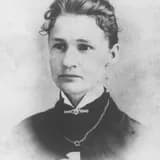
Susanna M. Salter’s one-year term as mayor of Argonia, Kansas, effectively began with her April 4, 1887 election, making her the first woman mayor in U.S. history.
Also on April 4, 1887, the date of the Argonia municipal election, Susanna M. Salter effectively began her one‑year term as mayor, widely reported at the time as the first mayoral term held by a woman in the United States. Contemporary accounts and later scholarship treat the election day as both the moment of her victory and the practical start of her service, since small‑town offices often transitioned immediately after the vote.
During her year in office from 1887 to 1888, Salter presided over a frontier community of roughly 500 residents. She focused on practical municipal governance rather than symbolic gestures, attending council meetings, enforcing ordinances, and working with male colleagues who, contrary to some critics’ expectations, generally cooperated with her leadership. She received a salary of one dollar for her service, a striking reminder of both the modest scale of Argonia’s government and the limited economic value placed on women’s work.
Her term’s significance extended far beyond the town. Newspapers throughout the United States followed "the lady mayor" with a mix of curiosity and skepticism, yet her competent performance helped counter claims that women in office would be either incompetent or overly sentimental. Suffragists such as Susan B. Anthony highlighted Salter’s tenure as evidence that enfranchised women could govern as effectively as men. By quietly managing routine civic affairs, she demonstrated that a woman mayor need not be an anomaly but could be a normal part of municipal life, thereby contributing to the gradual normalization of women’s political leadership.