← All women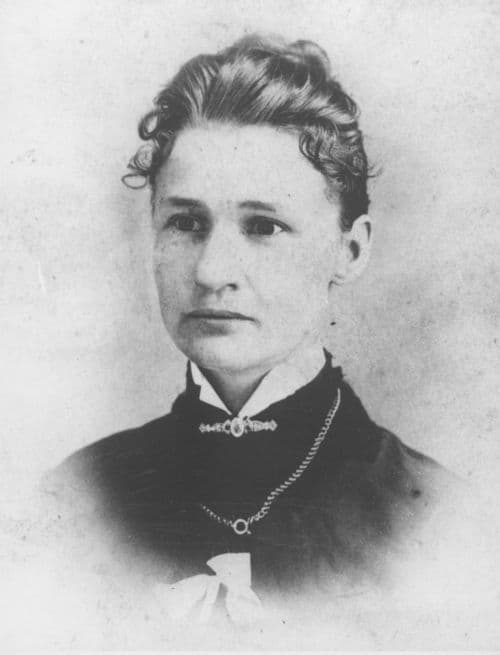
American · Politics · Activism
Susanna M Salter
March 1, 1860 – March 17, 1961
Early Life and Background
Susanna Madora (Medora) Kinsey, later known as Susanna M. Salter, was born in 1860 into a Quaker family in rural Belmont County, Ohio, near the community of Lamira.[1][5][6][13] Encyclopedia.com gives her birth as March 1, 1860 and locates it in Kansas, while an Ohio History Journal article and multiple modern reference works, including several language editions of Wikipedia, identify her birth near Lamira, Ohio and use March 2, 1860.[1][4][5][13] All agree that she was born in 1860 to a family shaped by Quaker values of simplicity, moral reform, and education.
Her parents, Oliver Kinsey and Terissa Ann Hutchinson Kinsey, were farmers.[7][11][13] Quaker communities of this era often supported abolition, temperance, and women’s participation in moral reform work, and these influences likely formed part of Susanna’s upbringing. When she was still a child, the family followed migration patterns typical of the period and moved west to Kansas, settling on a farm near the small town that would later become Argonia.[7][11][13] Growing up between Ohio’s settled farms and the developing Kansas frontier exposed her to both traditional rural life and the rapid social changes of the post–Civil War Midwest.
Susanna was described as intellectually able and unusually well educated for a woman of her time.[6][12] She attended Kansas State Agricultural College (now Kansas State University), where she studied in a co‑educational setting that remained relatively rare in the 1870s and early 1880s.[6][12][15] Her experiences there, including exposure to public speaking and civic debates, helped prepare her for later leadership roles, even though she did not initially anticipate holding elected office.
Marriage, Community Life, and Temperance Work
During or shortly after her college years, Susanna met Lewis Allison Salter, a fellow student and the son of former Kansas Lieutenant Governor Melville J. Salter.[1][7][10][12] The couple married and eventually settled in Argonia, Kansas, a small, predominantly agricultural town with a population of around 500 in the mid‑1880s.[7][11][13] Susanna’s parents also moved to the area and built a two‑story brick house for the young couple, a home that later became known as the Susanna Salter House and is now recognized by the National Park Service as the residence of the first woman mayor in the United States.[11]
Like many women in rural Kansas, Susanna combined domestic responsibilities—child‑rearing, household management, and farm work—with active participation in community organizations. She became an official in the local chapter of the Women’s Christian Temperance Union (WCTU), one of the largest women‑led reform movements of the period.[6][7][10][12][13] The WCTU advocated for the prohibition of alcohol, viewing temperance as a way to protect families from economic hardship and domestic abuse, and provided women a platform for public speaking, organizational leadership, and political lobbying.
Within the WCTU, Susanna organized and headed a caucus of women voters in Argonia at a pivotal moment in Kansas political history.[6][7] The state legislature had recently granted women the right to vote in municipal elections, though they still lacked voting rights in state and federal contests.[6][7][13] This limited enfranchisement created an opening for women’s direct participation in local politics, and Susanna’s temperance work placed her at the center of debates over the enforcement of prohibition ordinances.
Kansas Women’s Municipal Suffrage and the 1887 Argonia Election
In 1887, Kansas passed legislation allowing women to vote in city and town elections, making it one of the earliest states to experiment with women’s municipal suffrage.[6][7][13] Reformers hoped that enfranchised women would support policies favoring temperance, education, and social stability. Against this backdrop, Argonia prepared for its local election on April 4, 1887, the first such contest in the town where women could go to the polls.
As part of the preparations, Susanna helped organize a WCTU‑linked caucus to select a slate of candidates supportive of prohibition.[6][7] Anti‑prohibitionist men—often referred to as "wets"—resented the WCTU’s influence and feared that women voters would enforce stricter temperance laws. In an effort to ridicule both the WCTU and the notion of female political authority, a group of men secretly placed Susanna’s name on the ballot for mayor of Argonia, expecting that she would lose decisively and thereby discredit the temperance women.[6][7][10][13]
Accounts differ slightly as to whether the prank originated with local wets alone or involved complex local politics, but reputable historical summaries agree that Susanna herself had not sought the nomination and only learned she was a candidate on the day of the election.[6][7][10][13][14] Far from humiliating her, however, the move backfired. Once news of the nomination spread, WCTU women and many male voters rallied to support her, recognizing both her character and the unfairness of the attempted joke.
Election as the First Woman Mayor in the United States
On April 4, 1887, Susanna M. Salter went to the polls in Argonia, expecting simply to cast her ballot in the first municipal election open to women. Instead, she discovered that she was on the ballot for mayor.[6][7][10][13] Undeterred, she accepted the unexpected candidacy. That day, she was elected mayor of Argonia by about a two‑thirds majority, becoming the first woman elected mayor of any city in the United States.[6][7][10][13][15]
The election transformed Salter from a local WCTU organizer into a national figure. Newspapers across the country reported that a small Kansas town had chosen a young woman, only 27 years old, to head its municipal government. Some coverage treated the story with ironic humor and warned of "petticoat rule," but much of it recognized the seriousness of her victory and noted that she emerged from a prank with a legitimate mandate.[7][10][13][14]
Her election quickly attracted the attention of leading suffragists. The National Women’s History Museum notes that in the fall of 1887 she was invited to speak at the Kansas Woman Suffrage Association convention, sharing the program with Susan B. Anthony, Rachel Foster Avery, and Henry Blackwell, husband of suffrage advocate Lucy Stone.[3] To activists, Salter’s mayoralty provided a compelling example they could cite in speeches and pamphlets: a woman elected to public office who governed competently at a time when most American women could not vote in state or national elections.
Mayoral Term and Governance in Argonia
Susanna Salter served a one‑year term as mayor of Argonia, from 1887 to 1888.[1][6][8][13][15] Contemporary and later accounts treat the April 4 election date as both the moment she was chosen and the practical beginning of her time in office, as was common in small municipalities. Her official salary was a single dollar, underscoring both the limited resources of Argonia’s government and the era’s undervaluation of women’s labor.[6][13]
During her tenure, Salter chaired council meetings and oversaw enforcement of local ordinances. While detailed records of every policy decision are sparse in popular summaries, historians emphasize that she focused on routine municipal concerns rather than dramatic reforms, maintaining town services and legal order.[7][10][13] Importantly, the male council members largely cooperated with her, contrary to some critics’ predictions. She demonstrated that a woman could preside over a mixed‑gender governing body without chaos or loss of authority.
Her leadership style was reported to be calm, practical, and fair. She did not seek to use her office as a platform for radical change but instead modeled the responsibilities and demeanor expected of a mayor. In doing so, she quietly contradicted stereotypes that women in office would be either overly sentimental or incompetent. National observers, including suffrage advocates, pointed to her unremarkable—precisely in its normalcy—year in office as powerful evidence that women could govern just as effectively as men.[7][10][13]
At the end of her term, Salter chose not to run for re‑election and never again sought public office.[1][6][10][13] Her decision reflected both personal priorities—she was a mother in a rural household—and the constraints many women faced regarding political careers at the time.
Recognition, Symbolism, and Relationships with Reform Movements
Although she served only one year, Salter’s mayoralty had an outsized impact on how Americans thought about women and politics. National newspapers followed her story, sometimes sending reporters to Argonia to observe the "lady mayor" in action.[7][10][13][14] Her victory was cited as evidence in debates over the merits of municipal suffrage for women, and she became a recurring example in both temperance and suffrage literature.
Suffrage leaders highlighted her in speeches and writings to show that enfranchised women could do more than merely cast ballots—they could run for and hold office. Some sources went so far as to describe her as the first woman mayor in the world, though at least one careful retrospective notes that while she was unquestionably the first woman elected mayor of a city in the United States, the global "first" claim cannot be definitively confirmed.[3][7][13] For historians, her most secure and significant distinction remains her status as the first woman mayor in U.S. history.
Salter’s story also illustrates the interplay between the temperance movement and women’s political activism. As a WCTU official, she entered the public sphere through moral reform work, which in turn led to political organizing and the possibility of officeholding. Her election—sparked by an attempt to mock the WCTU—ultimately strengthened the argument that women involved in temperance activism were capable of responsible, effective governance.[6][7][13]
Later Life, Move to Oklahoma, and Family
After her term as mayor ended in 1888, Susanna returned to private life in Argonia. Within a few years, around 1893, she and her husband moved from Kansas to what was then Oklahoma Territory, seeking new opportunities and land as the region opened to non‑Native settlement.[2][10][13] There she continued to live a largely domestic life, raising her children and participating in church and community affairs, though she did not reenter formal politics.
Susanna and Lewis had several children, and family responsibilities dominated her daily activities in the decades that followed, a pattern typical for women of her generation. Lewis Salter, trained in law and engaged in local business and politics, predeceased her by many years.[1][7][13] As a widow and elder family matriarch, Susanna remained in Oklahoma, eventually settling in Norman, where she would live out her final decades.[1][8][13][15]
By the time she was an elderly woman, the United States had undergone dramatic changes in women’s rights. She lived to see the Nineteenth Amendment ratified in 1920, granting women nationwide the right to vote, and saw women begin to hold state and federal offices. Her own grandchildren grew up in a world where female officeholding was no longer unthinkable, even if still relatively rare.
Longevity, Death, and Commemoration
Susanna M. Salter lived an exceptionally long life, reaching the age of 101. She died on March 17, 1961, in Norman, Oklahoma.[1][8][13][15] Some later popular accounts mistakenly give 1960 and credit her with living to 100, but more detailed biographical sources agree on the 1961 date and note that she died shortly after her 101st birthday.[13] After her death, she was buried in Argonia, Kansas, symbolically returning her to the community where she had made her most historically significant contribution.[11][15]
The house her parents built for her and Lewis—the Susanna Salter House—was eventually recognized as a historic site. The National Park Service now lists it as the home of the first woman mayor in the United States, and it stands as a physical reminder of her life and of the broader story of women’s municipal suffrage in Kansas.[11] Local commemorations and historical markers in Argonia further emphasize her role in the town’s identity and in women’s history.
Historical Assessment and Legacy
Historians of women’s political participation and municipal governance consistently identify Susanna M. Salter as a pioneer and a symbolic figure. Her unplanned candidacy and subsequent election revealed both the hostility some men felt toward women’s political organizing and the willingness of many voters to support a capable woman once given the opportunity.[6][7][10][13] In this sense, her story encapsulates the tensions surrounding women’s early steps into electoral politics.
Several elements of her legacy stand out:
- First woman mayor in the United States: Her election in 1887 established a clear landmark in American political history, often cited in encyclopedias, children’s reference works, and scholarly articles about women’s officeholding.[1][5][6][8][13][15]
- Demonstration of women’s governing competence: By successfully completing her term, Salter provided practical evidence that women could manage municipal affairs, strengthening suffrage arguments and helping to normalize women’s presence in government.[7][10][13]
- Connection to temperance and suffrage movements: As a WCTU official who later spoke alongside leading suffragists, she exemplified the pathway from reform activism to formal political roles for women.[3][6][7][13]
- Influence on later generations: Her story has been retold in modern books, museum exhibits, educational materials, and children’s literature such as "A Vote for Susanna: The First Woman Mayor," ensuring that new generations learn about early women officeholders.[16][17]
While she did not pursue a sustained political career, the significance of Salter’s contribution lies in the precedent she set. Her experience demonstrated that women’s municipal suffrage could lead not merely to greater voting participation but to women actually holding office. As more women began serving as mayors and council members later in the nineteenth and twentieth centuries, her 1887 victory remained an important reference point.
Context within Women’s History
Susanna Salter’s life highlights several themes central to women’s history. First, it underscores the importance of local and state‑level experiments in suffrage and officeholding that preceded national reforms. Kansas’s decision to allow women to vote in municipal elections created the legal setting that made her election possible years before the Nineteenth Amendment.[6][7][13]
Second, her story exemplifies how women’s moral reform organizations such as the WCTU served as training grounds for political leadership. Through temperance work, women acquired skills in organizing, speaking, and lobbying that translated into electoral influence and, occasionally, officeholding.[6][7][13]
Third, Salter’s experience reveals the complex ways in which gendered ridicule could inadvertently advance women’s political visibility. The attempt to use her as a joke candidate ultimately backfired, providing suffragists with a vivid case of a woman who turned mockery into meaningful authority.[6][7][10][13]
Finally, her long lifespan offers a unique vantage point on the chronology of women’s rights. Born before the Civil War, she lived to see major milestones including organized national suffrage campaigns, the passage of the Nineteenth Amendment, and the beginnings of second‑generation debates over women’s roles in public life. Her personal journey from a frontier town to centenarian status mirrors the arc of women’s growing civic presence in the United States.
Conclusion
Susanna M. Salter remains a foundational figure in the history of women in American politics. A Quaker farmer’s daughter turned WCTU activist and small‑town mayor, she did not seek fame but became a symbol of female capability in government. Her election and service as mayor of Argonia in 1887 demonstrated that women, when given the chance, could win office and govern effectively, decades before full suffrage was achieved. Today, her name endures in historical scholarship, public exhibits, and educational narratives as the first woman mayor in the United States and an early landmark on the path toward broader women’s political representation.
Dated achievements
5 indexed.
- Mar011860Politics
Birth of Susanna Medora Kinsey (Susanna M. Salter)
Birth of Susanna Medora Kinsey (later Susanna M. Salter), near Lamira, Ohio, beginning the life of the woman who became the first woman mayor in the U.S.
View details Salter, Susanna Medora (1860–1961) | Encyclopedia.com - Apr041887