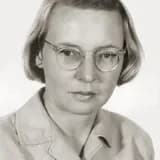
Ruby Payne-Scott died on 25 May 1981 in Sydney, Australia, having lived long enough to see her contributions to radio astronomy increasingly recognized.
Ruby Payne-Scott died on 25 May 1981 in Sydney, Australia, at the age of 69, following a period of declining health that included Alzheimer's disease. By the time of her death, she had lived to see radio astronomy blossom into a major scientific discipline, one to which she had been an original and vital contributor, though for decades her role had been largely obscured, partly due to her forced resignation from CSIRO after marrying (a consequence of the Australian public service marriage bar) and her subsequent decision to leave active research.
Her death came before the more concerted historical efforts of the 1990s and 2000s to recover and properly credit women's contributions to science, efforts which eventually placed her firmly in the historical record as the world's first female radio astronomer.
In the years following her death, scholars, historians, and her own children worked to bring her story and scientific legacy back into public awareness, resulting in retrospective recognition including the naming of the Ruby Payne-Scott Medal and Lecture by the Astronomical Society of Australia, and increasing attention from journalists, including a belated New York Times obituary published decades later in 2018 as part of its "Overlooked" series correcting historical gaps in obituary coverage of women.