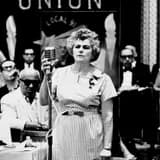
Rose Pesotta, pioneering labor organizer for the ILGWU, died on December 8, 1965, in Miami, Florida, at age 69.
Rose Pesotta died on December 8, 1965, in Miami, Florida, at the age of 69, following a battle with cancer. Her death was noted in a brief obituary in The New York Times, which recalled her decades of pioneering work as an organizer for the International Ladies' Garment Workers' Union (ILGWU).
By the time of her death, Pesotta had largely stepped back from the frontline organizing that defined her most famous years, spending her later life writing memoirs—including Bread Upon the Waters (1944) and Days of Our Lives (1958)—that chronicled her experiences as one of the few women vice presidents of the ILGWU and as a passionate advocate for rank-and-file democracy within the labor movement.
Her death marked the passing of one of the most significant women in twentieth-century American labor history: a Jewish immigrant anarchist who rose from sweatshop seamstress to national union leader, organizing tens of thousands of garment workers, many of them immigrant women, across cities including Los Angeles, Seattle, Montreal, Puerto Rico, and Akron, Ohio (where she helped rubber workers organize).
Pesotta's legacy endured through her writings, which remain primary sources for labor historians, and through the institutional memory of the ILGWU, where she had broken barriers as one of very few women to hold a vice-presidential seat on the union's General Executive Board despite the union's predominantly female membership.