← All women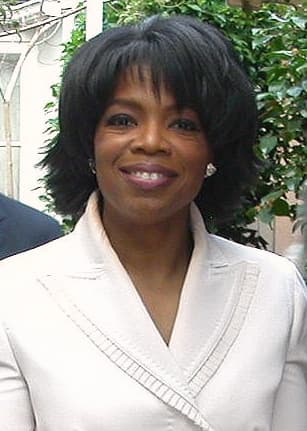
American · Arts · Activism
Oprah Winfrey
January 29, 1954 – present
Early Life and Background
Oprah Gail Winfrey was born on January 29, 1954, in Kosciusko, Mississippi, a small rural town in the segregated American South. Her birth name, "Orpah" Gail Winfrey, derived from a biblical character in the Book of Ruth, was frequently mispronounced, and "Oprah" eventually became the name she used publicly.[1][2][3][10] She was born to Vernita Lee, an unmarried teenage housemaid, and Vernon Winfrey, a soldier and barber, whose names are listed on her birth certificate.[3][4] Her parents never married, and Winfrey’s early childhood was marked by poverty, instability, and the constraints of Jim Crow racism.
Winfrey spent her earliest years living with her strict but caring grandmother, Hattie Mae Lee, in rural Mississippi.[2][4][11] Her grandmother taught her to read by the age of three, and Oprah began reciting Bible verses in church, experiences that nurtured her love of language and performance.[2][3] As a child, she wore dresses made from potato sacks and experienced the humiliation that came with deep poverty, yet teachers and local church members recognized her intellectual gifts and eloquence.
At age six, Winfrey moved to Milwaukee to live with her mother, where the family’s financial struggles continued and where she later reported experiencing repeated sexual abuse by male relatives and family friends.[1][2][9] These traumatic experiences, which she would later discuss on her talk show, profoundly shaped her empathy for survivors and her commitment to addressing child abuse publicly. During her adolescence she bounced between homes, spending periods in Milwaukee and, later, in Nashville, Tennessee, under the more structured oversight of her father, Vernon.[3][9]
Despite these hardships, Winfrey excelled academically. She joined speech and drama clubs, participated in debate, and won local oratory contests. In high school in Nashville, she was voted Most Popular Girl and served as a member of the student council.[2][11] Her talent for public speaking led to a scholarship at Tennessee State University, a historically Black university, where she studied communications and earned a B.A. in Speech and Performing Arts in 1976.[3][5] Her university years provided both professional training and a supportive environment in which she began to see broadcasting as a viable career.
Career Beginnings and Development
Winfrey’s media career began while she was still in college. In 1971, she won the Miss Black Tennessee beauty pageant, a title that brought her to the attention of local media executives.[5][9] As part of the outcome, she was hired by WVOL, a Black radio station in Nashville, where she read news and gained her first professional on-air experience.[5][11] This job allowed her to develop a conversational style and an intuitive feel for audiences that distinguished her from more formal broadcasters.
By the mid-1970s, Winfrey had transitioned to television. While still a student, she became a news anchor at WLAC-TV (later WTVF) in Nashville, reportedly the station’s youngest and first female news anchor, though exact dates are not consistently documented.[2][5][11] Her work in Nashville led to an offer from WJZ-TV in Baltimore, where she moved in 1976 to co-anchor the evening news.[2][5][13] Her emotive, empathetic delivery, which contrasted with prevailing norms of detached television news presentation, did not fit easily within traditional news formats, and she was reassigned to co-host the local talk show People Are Talking, beginning in 1977.[2][5][13]
On People Are Talking, Winfrey found a medium suited to her strengths. She excelled at connecting with guests and audiences, using a blend of humor, personal disclosure, and pointed questioning. The show’s popularity grew, and she remained a co-host until the early 1980s.[2][5] Her success in Baltimore brought her to the attention of station executives in Chicago.
In 1984, Winfrey moved to Chicago to host the low-rated morning talk show A.M. Chicago on WLS-TV.[2][5][13] Within months, her warm, audience-centered approach transformed the program into the city’s highest-rated morning show, surpassing the long-dominant Phil Donahue program.[2][5] Recognizing her appeal, the station rebranded the show as The Oprah Winfrey Show in 1985.[2][5][1] That same year, Winfrey took on her first major film role in Steven Spielberg’s adaptation of Alice Walker’s novel The Color Purple, released in U.S. theaters on December 18, 1985.[2][5][1] Her portrayal of Sofia earned an Academy Award nomination for Best Supporting Actress, further cementing her rising profile.[2][5]
Building on the success of the Chicago program, The Oprah Winfrey Show entered national syndication. On September 8, 1986, it debuted across the United States, making Winfrey the first Black female host of a nationally syndicated daily talk show and the first Black woman to helm her own national television program.[2][5][11] Syndicated by King World Productions, the show quickly became the top-rated daytime talk show in the country, attracting millions of viewers and reshaping the talk show landscape.[1][5][13]
Major Works, Enterprises, and Accomplishments
During the late 1980s, Winfrey consolidated her control over her work by founding Harpo Productions, Inc. ("Oprah" spelled backwards), a Chicago-based production company.[1][11] Harpo acquired studio facilities and became one of the few major television production entities owned by an African American, and one of the first owned by a woman at that scale.[8][11] This shift from talent to owner allowed Winfrey to retain significant portions of the profits from her show and to develop additional media ventures.
The Oprah Winfrey Show ran for 25 seasons, from 1986 until its final episode on May 25, 2011, and became the highest-rated talk show of its kind in history.[1][5][12] The program evolved over time: early episodes often featured sensational topics similar to other tabloid-style shows, but Winfrey increasingly focused on self-improvement, spirituality, and social issues. Key features included Oprah’s Book Club, launched in the mid-1990s, which turned many selected titles into best-sellers and made Winfrey one of the most influential figures in contemporary publishing.[1][2] She hosted episodes on racism, sexual abuse, health, and personal finance, frequently sharing her own experiences to encourage audience reflection.
Winfrey’s show also became a platform for philanthropic action and policy advocacy. In the early 1990s, she spoke openly about her childhood sexual abuse and championed the creation of a national registry of convicted child abusers.[3][9] Her advocacy contributed to the passage of the National Child Protection Act, signed into law on December 20, 1993 by President Bill Clinton.[3][8] Often dubbed the “Oprah Bill,” the law established mechanisms for states to access a national database for background checks on childcare providers and others working with children.[3][8]
Winfrey’s capacity to draw vast audiences was evident in her high-profile special with pop star Michael Jackson. On February 10, 1993, she conducted a rare prime-time interview with Jackson, broadcast by ABC from his Neverland Ranch.[4][13] The program became one of the most-watched television interviews in history, demonstrating her global reach and ability to shape public perception of major cultural figures.[4][13]
Beyond television, Winfrey expanded into publishing and film. In 2000, she launched O, The Oprah Magazine, a monthly publication blending personal essays, self-help advice, and cultural commentary, which quickly became one of the most successful magazines in the U.S. market.[5][14] Through Harpo Films, she produced and starred in projects such as Beloved (1998), adapted from Toni Morrison’s novel, and later backed films and television series that highlighted African American experiences.[2][5]
In the realm of philanthropy, Winfrey established the Oprah Winfrey Foundation and the Oprah Winfrey Operating Foundation, focusing on education and empowerment.[6][9] Her largest single initiative is the Oprah Winfrey Leadership Academy for Girls, a boarding school in South Africa that opened in 2007 after years of planning and substantial personal funding.[2][6] She has also supported scholarships at institutions such as Morehouse College and contributed to various organizations addressing poverty, disaster relief, and women’s health.[8][14]
On September 22, 2002, Winfrey’s philanthropic work was recognized when she received the inaugural Bob Hope Humanitarian Award at the 54th Primetime Emmy Awards, becoming the first-ever recipient and the only woman so honored.[9] In business, she reached another milestone when Forbes listed her in its 2003 billionaires issue, and contemporaneous reporting identified her as the first Black female billionaire and the first African-American woman on the magazine’s World’s Richest People list.[3][9][14]
Winfrey continued to innovate in media by launching the Oprah Winfrey Network (OWN) on January 1, 2011, in partnership with Discovery Communications.[3][8][13] OWN, a cable channel, replaced Discovery Health and became a platform for talk shows, scripted dramas, reality series, and documentaries oriented around personal growth, spirituality, and underrepresented narratives. As chair and CEO, Winfrey oversaw programming decisions and frequently appeared on flagship series such as Super Soul Sunday.[7][14]
On May 25, 2011, after 25 seasons, The Oprah Winfrey Show aired its final episode.[3][5] The conclusion of the show marked the end of an era in daytime television and allowed Winfrey to focus more intensively on OWN, film production, and philanthropic projects.
Awards, Honors, and Recognition
Winfrey has received numerous awards and honors reflecting her influence in entertainment, business, and philanthropy. Her performance in The Color Purple earned an Academy Award nomination for Best Supporting Actress and a Golden Globe nomination.[2][5][8] Across its run, The Oprah Winfrey Show garnered dozens of Daytime Emmy Awards, and Winfrey herself won multiple Emmys for Outstanding Talk Show Host.[7][14]
In 1990, Entertainment Weekly named Winfrey one of the most influential people in entertainment, and later business coverage noted that she was the first African-American woman to receive this recognition from the magazine.[9] Throughout the 1990s and 2000s, she appeared on lists such as Time magazine’s 100 Most Influential People and various rankings of powerful and wealthy individuals.[1][14]
On September 22, 2002, she became the first recipient of the Bob Hope Humanitarian Award at the Primetime Emmy Awards.[9] In 2013, President Barack Obama awarded her the Presidential Medal of Freedom on November 20, recognizing her transformative impact on American culture and her philanthropic leadership.[3][13][14]
Winfrey’s economic achievements are likewise notable. By the early 2000s, she was widely described as the richest African American of the 20th century and North America’s first Black multi-billionaire.[1][14] Forbes and other business publications highlighted her status as the first Black female billionaire and emphasized her unique control over her media enterprises.[3][14]
On January 7, 2018, Winfrey received the Cecil B. DeMille Award at the 75th Golden Globe Awards, becoming the first Black woman to be honored with this lifetime-achievement recognition.[9] Her acceptance speech, widely praised for its eloquence and moral clarity, strengthened her reputation as a voice for justice and gender equality.
Personal Life
Winfrey’s personal life has long attracted public interest, though she has maintained clear boundaries between her private relationships and her public work. Since the mid-1980s, she has been in a committed relationship with Stedman Graham, an educator, author, and businessman.[1][2] The couple became engaged in the early 1990s but ultimately decided not to marry, with Winfrey later explaining that traditional marriage did not align with her vision of partnership and her demanding career.[1]
Winfrey has no biological children, a choice she has discussed in terms of the responsibilities and sacrifices involved in parenting and her dedication to her work and philanthropic efforts.[1][2] She has, however, often described herself as a "mother" figure to the students at the Oprah Winfrey Leadership Academy for Girls in South Africa and to the wider audience she seeks to nurture through education and inspiration.[6]
Her close friendship with television producer and former talk show host Gayle King has been a recurring subject of public attention. Winfrey and King have acknowledged their deep bond, often characterized as sister-like, and Winfrey has used her platforms to celebrate the importance of friendship and support systems in women’s lives.[1][2]
Legacy and Historical Impact
Oprah Winfrey’s legacy is multifaceted, encompassing media innovation, economic empowerment, philanthropy, and cultural change. In television, she transformed the daytime talk show from a predominantly sensationalist medium into a vehicle for personal growth, social awareness, and communal healing. By centering ordinary people’s stories and openly discussing topics such as sexual abuse, racism, obesity, and addiction, she helped destigmatize difficult conversations and encouraged viewers to seek help and pursue self-improvement.[2][5][13]
Winfrey’s role as a Black woman at the helm of the most successful talk show in history challenged entrenched racial and gender hierarchies in media. Her success demonstrated that mainstream audiences would embrace a Black female host as a trusted authority and confidante, thereby widening the perceived possibilities for women and people of color in broadcasting and entertainment leadership.[1][5][11] Her ownership of Harpo Productions and later OWN provided a model of how women in media could move from talent positions into control of production and distribution, securing both economic power and creative autonomy.[1][8][14]
As a philanthropist, Winfrey has wielded her wealth to support education, particularly for Black youth and girls. The Oprah Winfrey Leadership Academy for Girls introduced a high-profile model of investing in leadership development among disadvantaged young women, with the goal of creating future generations of change-makers.[2][6] Her scholarships and donations to historically Black colleges and other institutions have further underscored her commitment to educational equity.
Winfrey’s influence also extends into literature and culture. Oprah’s Book Club has been credited with revitalizing interest in reading among television audiences and with substantially boosting the sales and visibility of selected authors, many of whom are women or writers of color.[1][2] The "Oprah effect"—the documented economic and reputational impact of her endorsements—illustrates the unusual scope of her cultural capital.
Politically and socially, Winfrey has been recognized as a significant public voice. Her interviews and specials have addressed topics such as apartheid, Hurricane Katrina, and the U.S. presidential elections. In 2007–2008 she publicly endorsed Barack Obama, and commentators noted the measurable effect of her support on his campaign.[1][14] Although she has declined to pursue elected office, her standing as an informal moral authority and cultural interpreter remains considerable.
For women’s history, Winfrey stands as a symbol of resilience and transformative possibility. Her trajectory from rural poverty and abuse to global media leadership exemplifies how structural barriers can be confronted through talent, strategic ownership, and community-building. Her willingness to share her own vulnerabilities has helped reshape norms around mental health and trauma in public life, making it more acceptable for women and survivors to speak out.
Later Life and Continuing Work
Since the end of The Oprah Winfrey Show in 2011, Winfrey has continued to shape media and culture through OWN, film and television production, and selective on-air appearances. She has hosted and produced programs such as Oprah’s Next Chapter, Super Soul Sunday, and various specials that address spirituality, race, and social justice.[7][13] OWN has aired scripted series including Queen Sugar and Greenleaf, which foreground Black families and complex social themes, reinforcing her commitment to diverse storytelling.[13][14]
Winfrey has also collaborated with streaming platforms and other networks on projects such as interviews, documentaries, and book-based content, extending her reach to new audiences. In 2021, for example, she conducted a globally watched interview with Prince Harry and Meghan, Duchess of Sussex, though detailed day-level information lies beyond the scope of the dated events here.[1]
Her philanthropic initiatives remain active, with ongoing support for the Leadership Academy and various grants through her foundations.[6][9] She continues to be cited by institutions such as the National Museum of African American History and Culture and the American Academy of Arts and Sciences as a paradigmatic media mogul and philanthropist.[13][14]
Winfrey has not retired; instead, she has shifted from daily hosting to selective, high-impact appearances, executive leadership, and writing. She has authored and co-authored books on weight, health, and spirituality, and she remains a prominent figure in discussions of wellness and personal transformation.[1][7]
As of the mid-2020s, Oprah Winfrey is widely regarded as one of the most influential women in the world, the richest Black woman globally, and a pioneer in self-made media empires.[1][14] Her continuing work across platforms ensures that her legacy is not static but evolving, as she adapts to new technologies and cultural challenges while maintaining a core mission of education, empathy, and empowerment.
Dated achievements
13 indexed.
- Jan291954Arts
Birth of Oprah Winfrey
Birth of Oprah Winfrey in Kosciusko, Mississippi, to Vernita Lee and Vernon Winfrey.
View details CNN – Oprah Winfrey Fast Facts - Jan011971Arts
Wins Miss Black Tennessee pageant
Wins the Miss Black Tennessee pageant, a title that leads directly to her first radio work at WVOL in Nashville.