← All women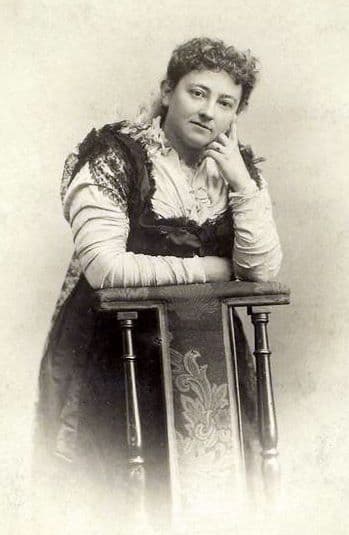
South African · Literature · Activism
Olive Schreiner
March 24, 1855 – December 11, 1920
Early Life and Background
Olive Schreiner was born on March 24, 1855, in Wittebergen Mission Station, South Africa, as the ninth of twelve children to Gottlob and Rebecca Schreiner. Her parents were missionaries of German extraction. Schreiner's family struggled with financial difficulties, often moving between mission stations. Her early education was sporadic, but she was an avid reader, educating herself through extensive reading.
Career Beginnings and Development
In 1874, Schreiner left home to work as a governess, experiencing firsthand the challenges and disparities of South African society. Her experiences during this period influenced her worldview and writing. In the early 1880s, she moved to England to pursue literary ambitions, where she became part of the intellectual circle of the Fabian Society.
Major Works and Accomplishments
Schreiner published her seminal novel, "The Story of an African Farm," in 1883 under the pseudonym Ralph Iron. This work is celebrated for its pioneering exploration of gender roles, religion, and identity. It was groundbreaking in its embrace of feminist themes and critique of Victorian norms. Her subsequent works, including "Dreams" (1890) and "Trooper Peter Halket of Mashonaland" (1897), further cemented her status as a writer of social conscience.
Awards, Honors, and Recognition
While not the recipient of formal literary awards during her lifetime, Schreiner’s work was highly influential, earning recognition from contemporaries and future literary scholars. Her writings have since been studied for their socio-political insights and literary merit.
Personal Life
In 1894, Schreiner married Samuel Cronwright, taking his name but continuing to publish under her own. They settled in South Africa, where her husband supported her engagement in politics and social causes.
Legacy and Historical Impact
Schreiner is remembered as a pioneering figure in literature and a committed activist for social justice and women's rights. Her work actively challenged societal norms, making her a critical figure in both South African and feminist history. Her writings provided a prescient critique of colonial and racial issues relevant even today.
Later Life and Death
Near the end of her life, Schreiner suffered from chronic asthma and heart disease. She returned to South Africa, living quietly writing until her death on December 11, 1920, in Wynberg, Cape Town. Her legacy endures through her influential writings and advocacy for equality and social reform.
Dated achievements
3 indexed.
- Mar241855Literature
Birth of Olive Schreiner
Olive Schreiner was born on 24 March 1855 at the Wittebergen mission station in the Basutoland border region of the Cape Colony, South Africa.
View details Olive Schreiner - Wikipedia - Jan011883Literature
Publication of The Story of an African Farm
Schreiner published The Story of an African Farm under the pseudonym 'Ralph Iron', a landmark work considered one of the first major feminist novels in English.