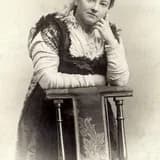
Olive Schreiner died in Wynberg, Cape Town, on 11 December 1920, aged 65, leaving behind a legacy as a pioneering feminist writer and thinker.
Olive Schreiner died on 11 December 1920 in Wynberg, a suburb of Cape Town, South Africa, at the age of 65. She had returned to South Africa in 1920 after years spent largely in England, where she had engaged deeply with feminist, pacifist, and socialist circles, including friendships with figures such as Havelock Ellis, Eleanor Marx, and Karl Pearson.
By the time of her death, Schreiner had suffered for decades from severe asthma and heart problems, conditions exacerbated by the stresses of her personal life, her tireless political activism, and the emotional toll of the Second Boer War, during which she was a vocal pacifist and critic of British imperialism and of the treatment of Boer civilians in concentration camps. She died alone in a boarding house, having been separated for some years from her husband, Samuel Cronwright-Schreiner, though the two remained on affectionate terms.
Her body was later reinterred, per her wishes, on top of Buffelskop, a hill near Cradock in the Eastern Cape, alongside the remains of her daughter (who died in infancy in 1895) and her beloved dog. Schreiner's death marked the end of a life devoted to challenging the racial, gender, and class hierarchies of colonial South African and British society. Her posthumously published works, including From Man to Man and Thoughts on South Africa, cemented her legacy as one of the most important progressive intellectuals of her era, and she remains a foundational figure in South African literature and international feminist thought.