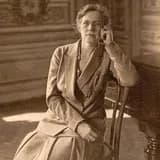
Boulanger became the first woman to conduct London's Royal Philharmonic Orchestra, breaking a significant barrier for women in classical conducting.
In 1937, Nadia Boulanger made history as the first woman ever to conduct the Royal Philharmonic Orchestra in London, one of Britain's most storied and prestigious ensembles. Conducting was, at the time, an almost exclusively male profession, with deeply entrenched assumptions that women lacked the authority, physical stamina, or technical command to lead a full symphony orchestra.
Boulanger's appearance on the podium challenged these assumptions directly. Her rigorous musicianship, honed over decades as an organist, composer, and analyst, gave her interpretive authority that silenced skeptics. She would go on to conduct other major orchestras across Europe and the United States, including appearances with the Boston Symphony Orchestra and the New York Philharmonic, becoming one of the first women to regularly conduct top-tier American orchestras as well.
This achievement mattered enormously not just symbolically but practically: it opened doors, however slowly, for future generations of women conductors who could point to her presence on major podiums as precedent. Given how few women conductors existed even decades later, Boulanger's role as a trailblazer in this arena is often overshadowed by her renown as a teacher, but it represents an equally significant, boundary-breaking dimension of her career and legacy in twentieth-century classical music.