← All women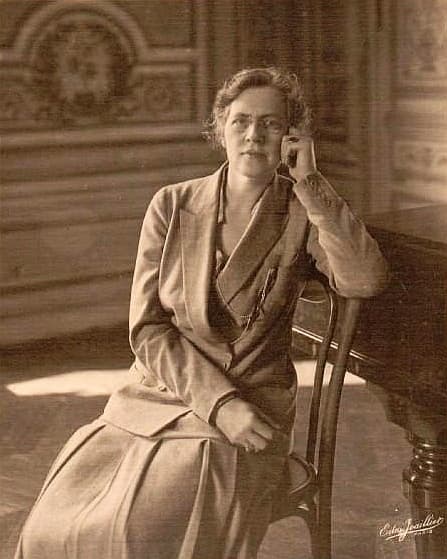
French · Arts
Nadia Boulanger
September 16, 1887 – October 22, 1979
Early Life and Background
Nadia Boulanger was born on September 16, 1887, in Paris, France, into a musical family. Her father, Ernest Boulanger, was a composer, while her mother, Raïssa Myshetskaya, was a Russian singer. Her sister, Lili Boulanger, also became a renowned composer. Nadia was a prodigious child, receiving her education at the Paris Conservatoire, where she studied harmony, organ, and composition under prominent teachers like Gabriel Fauré.
Career Beginnings and Development
Boulanger's career began with her participation in the Prix de Rome, where she won second prize in 1908. She then chose to focus on teaching rather than composing, recognizing an innate talent for pedagogy. She began giving private lessons in music theory and composition, eventually teaching at the Conservatoire américain de Fontainebleau in 1921. Her teachings attracted students internationally, particularly Americans.
Major Works and Achievements
Nadia composed several works, including a musical play, La Ville Morte, and numerous songs and pieces for small ensembles. However, her legacy is most strongly tied to her influence on the careers of countless musicians. She nurtured the talents of notable composers like Aaron Copland, Elliott Carter, Philip Glass, and Astor Piazzolla, shaping the terrain of modern music.
Awards, Honors, and Recognition
Throughout her life, Nadia Boulanger was celebrated for her contributions to music education. In 1958, she became the first woman to conduct the Boston Symphony Orchestra at Carnegie Hall. Her impact on the musical world was recognized through numerous awards and honorary degrees from prestigious institutions worldwide.
Personal Life
Nadia Boulanger never married, choosing instead to dedicate her life to her work and her students. Her closest personal relationship was with her sister, Lili, with whom she shared a deep and enduring bond until Lili's untimely death in 1918.
Legacy and Historical Impact
Nadia Boulanger's legacy extends beyond her own compositions and into the heart of 20th-century music through her students. She revolutionized musical instruction with her comprehensive approach that integrated theory, history, and performance. Her commitment to exploring the connections between emotion and technique left an indelible mark on the music world.
Later Life and Death
Boulanger continued to teach and conduct well into her later years. She passed away on October 22, 1979, in Paris, leaving behind a legacy as one of the most influential music educators in history.
Dated achievements
5 indexed.
- Sep161887Arts
Birth of Nadia Boulanger in Paris
Nadia Boulanger was born in Paris, France, into a musical family that would shape her extraordinary career as composer, conductor, and teacher.
View details Nadia Boulanger - Wikipedia - Nov151908Arts
First Woman to Receive Second Prix de Rome Recognition in Composition
Boulanger became a notable finalist in the prestigious Prix de Rome composition competition, an early sign of her exceptional compositional gifts.