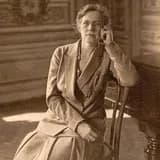
Boulanger joined the founding faculty of the newly established American Conservatory in Fontainebleau, beginning her legendary decades-long role teaching American composers.
In 1921, Nadia Boulanger became a founding member of the faculty at the newly created American Conservatory in Fontainebleau, France, an institution established to train American music students in the French tradition. This appointment marked the true beginning of her transformation from composer into the most sought-after composition teacher of the twentieth century.
At Fontainebleau, and later through her private studio in Paris at 36 Rue Ballu, Boulanger developed a rigorous pedagogical approach steeped in solfège, harmony, counterpoint, and analysis, while insisting each student find and refine their own individual musical voice rather than imitate hers. Her teaching combined exacting technical discipline with an almost spiritual reverence for musical structure, famously declaring there was 'no such thing as talent without discipline.'
It was here that she began mentoring a remarkable roster of American composers, most notably Aaron Copland, who became her first major American student and helped cement her reputation across the Atlantic. Over the following six decades, virtually every notable strand of American concert music would trace some lineage back to her Fontainebleau classroom, making this founding role one of the most quietly consequential appointments in modern music history. It positioned her as a pivotal bridge between European and American musical traditions.