← All women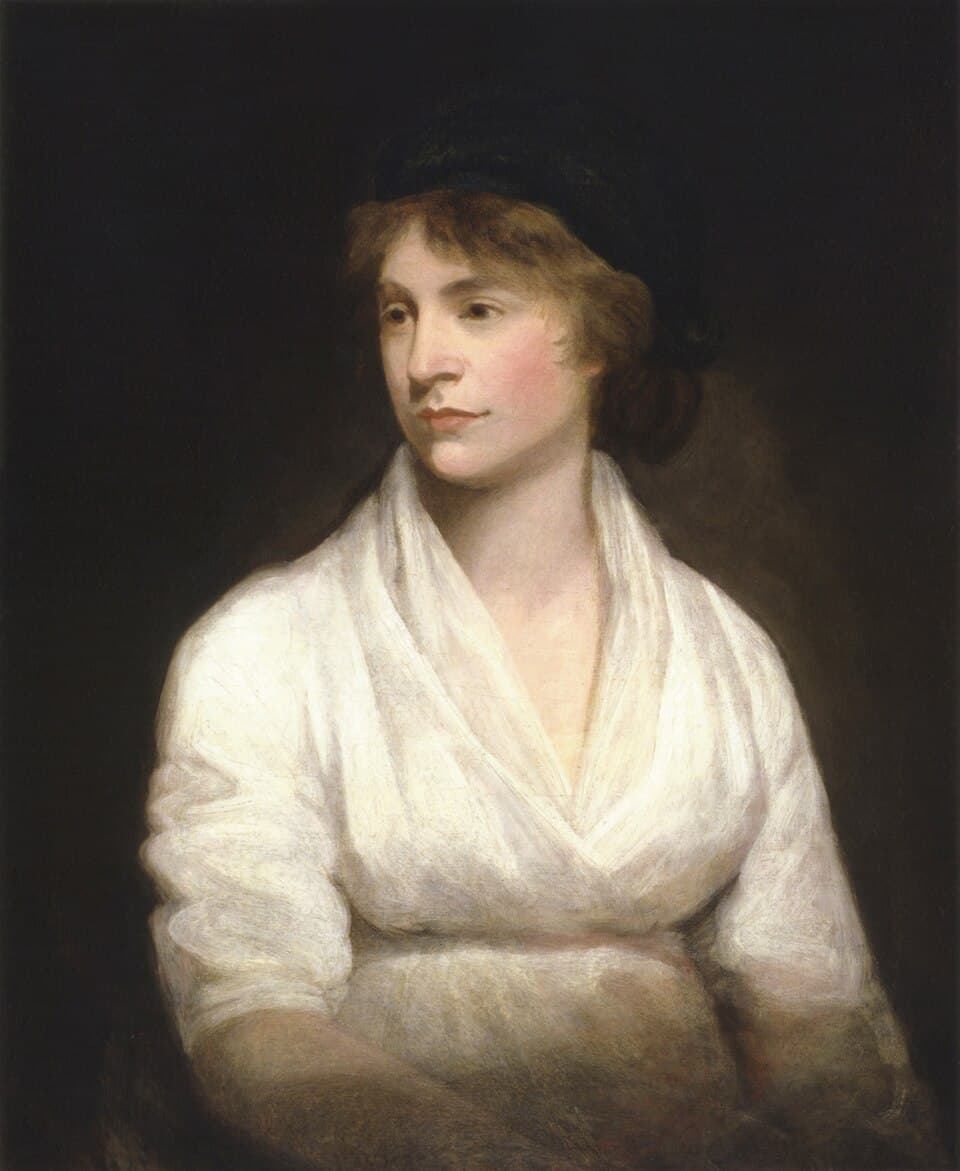
British · Literature
Mary Wollstonecraft Shelley
August 30, 1797 – February 1, 1851
Early life and family background
Mary Wollstonecraft Shelley was born Mary Wollstonecraft Godwin on 30 August 1797 in Somers Town, London, to two of the most influential radicals of the late eighteenth century: the philosopher William Godwin and the feminist writer Mary Wollstonecraft. Her mother died shortly after her birth, and the loss became one of the defining facts of her life. Raised by her father, Mary grew up in a household shaped by books, political argument, and reformist ideas. She was educated largely at home and had access to the kinds of intellectual resources that were unusual for women of her generation, especially in a society that still limited women’s formal schooling and public authority.
Godwin’s home introduced her to prominent literary and political figures, and she absorbed the atmosphere of Romantic-era debate from an early age. The memory of her mother’s writings, especially A Vindication of the Rights of Woman, remained important to her sense of identity. Although her upbringing was far from stable—her father’s finances were often precarious, and family relationships were complicated—Mary Shelley was immersed in a culture of reading and intellectual independence that helped shape her later career.
As a teenager, she spent time in Scotland and the English countryside, experiences that broadened her outlook and contributed to her sense of landscape as emotionally and imaginatively charged. By 1810, she had already entered print with Mounseer Nongtongpaw, an early work published by the Godwin Juvenile Library. That early appearance signaled her precocious literary development, even before the work that would make her famous.
Elopement, travel, and early adulthood
In 1814 Mary Godwin met and fell in love with the poet Percy Bysshe Shelley, who was then married. On 28 July 1814, she eloped with him, beginning a relationship that would become central to her personal and literary life. The decision caused scandal and estrangement, but it also launched a period of travel and creative energy. Mary and Percy traveled on the Continent, a journey that exposed her to the instability, beauty, and intellectual stimulation that later shaped her writing.
The years after the elopement were difficult. Mary experienced financial hardship, family disapproval, pregnancy, and the death of children in infancy. Yet these years were also formative. In 1816, during the famous summer near Geneva with Percy Shelley, Lord Byron, and others, she began developing the story that became Frankenstein. The origin of the novel has become legendary, but its significance lies in the way it joined personal imagination to broader anxieties about science, creation, and responsibility.
In November 1817, History of a Six Weeks’ Tour was published, becoming her first work to appear in print. The book drew on travel writings, letters, and journal materials and showed that Mary Shelley was already experimenting with prose forms before Frankenstein was published. The next year, in January 1818, Frankenstein; or, The Modern Prometheus appeared anonymously in three volumes. The novel’s success would eventually secure her place in literary history, but at the time the anonymity also reflected the gendered constraints of publishing and the vulnerability of a young woman author attached to a controversial name.
Marriage and personal life
Mary and Percy Bysshe Shelley were married in 1816 after the death of his first wife. Their marriage was marked by affection, intellectual partnership, grief, and instability. They had several children, though only one survived to adulthood. The repeated deaths of her children and the ongoing uncertainties of her married life deeply affected Mary Shelley and recur in her fiction. Her marriage was also shaped by Percy Shelley’s poetry, radical politics, and frequent moves across Europe, all of which placed Mary in the center of a brilliant but difficult domestic world.
In 1822 Percy Shelley drowned, leaving Mary widowed at the age of 24. From that point forward, she devoted considerable energy to supporting herself and to editing and promoting his work. This task was not merely literary housekeeping; it was an act of cultural preservation that helped shape Percy Shelley’s posthumous reputation. Mary’s labor as editor and literary executor was often overlooked in her own time, but it was essential to the survival and arrangement of his corpus.
Her personal life after widowhood was defined by responsibility, maternal devotion to her surviving son Percy Florence Shelley, and a sustained writing career. She never remarried. Instead, she navigated a life constrained by economics, social expectations, and the stigma still attached to her earlier relationship, while continuing to write fiction, essays, biographies, and travel prose.
Major works and literary career
Mary Shelley’s career extended well beyond Frankenstein. In 1823 she published Valperga; or, The Life and Adventures of Castruccio, Prince of Lucca, a historical novel that demonstrated her ambition and seriousness as a novelist. The book moved her reputation away from being seen merely as the author of a single sensational tale and toward recognition as a writer capable of historical imagination and political complexity. In 1826 she published The Last Man, a powerful apocalyptic novel that imagines the end of human civilization; today it is often read as a striking early example of post-pandemic and end-of-world fiction.
Her later novels Lodore (1835) and Falkner (1837) continued to explore domestic life, inheritance, moral responsibility, and the social constraints placed on women. These works were less famous than Frankenstein, but they show the breadth of her interests and the persistence of her critical attention to family, gender, and ethics. In 1844 she published Rambles in Germany and Italy, her last major book-length work, further confirming her status as a travel writer and observer of European culture.
Mary Shelley also worked as an editor, biographer, and literary historian. Her editorial project Lives of the Most Important Literary and Scientific Men of Italy, Spain, and Portugal demonstrated her ability to synthesize scholarship and narrative. She was a versatile prose writer whose work crossed genres at a time when women’s writing was often expected to remain private, decorative, or domestic. Instead, she produced fiction, travel narratives, criticism, and biography that engaged directly with politics, history, and science.
Recognition, reputation, and historical significance
Mary Shelley received no major state honors or formal prizes in her lifetime, and much of the public recognition she now enjoys developed after her death. Her most famous book, Frankenstein, came to be recognized as a foundational text of Gothic fiction and one of the earliest novels of science fiction. That reputation has expanded enormously in modern culture, where the name “Frankenstein” has become shorthand for the dangers of unchecked invention, though the novel is in fact much more complex than a simple cautionary tale.
Her historical importance also lies in the way she redefined women’s literary authority. As the daughter of Mary Wollstonecraft and William Godwin, and as the partner of Percy Shelley, she might have been remembered only through the men around her. Instead, she established her own body of work and demonstrated that a woman writer could sustain a major career across multiple genres. She also helped preserve and interpret Percy Shelley’s legacy, making her a crucial mediator of Romantic literary history.
In modern scholarship, Mary Shelley is increasingly understood as a writer of political insight, psychological acuity, and formal experimentation. Her fiction engages with scientific ambition, grief, mobility, exile, parenthood, and social exclusion. That range has made her especially important to feminist criticism, Romantic studies, and the history of science fiction.
Later life and death
In her later years Mary Shelley lived quietly in London, where she continued to write and manage family affairs. Ill health affected her final period, and she died on 1 February 1851 after a prolonged illness. She was buried at St Peter’s Church, Bournemouth. After her death, her reputation grew steadily, especially as Frankenstein became one of the most studied and adapted novels in the English language.
Mary Shelley’s legacy rests on both the singular power of Frankenstein and the larger body of her work. She transformed a life marked by grief, displacement, and scandal into a literary career of unusual breadth and endurance. Her writing continues to shape conversations about creation, ethics, gender, and literary form, securing her place as one of the defining women writers of the nineteenth century.
Dated achievements
5 indexed.
- Aug301797Literature
Birth of Mary Wollstonecraft Godwin
Mary Wollstonecraft Godwin (later Mary Wollstonecraft Shelley) is born in Somers Town, London.
View details Mary Shelley - Wikipedia - Jul281814Literature
Elopement with Percy Bysshe Shelley
Mary Godwin elopes with Percy Bysshe Shelley beginning their life and travels.