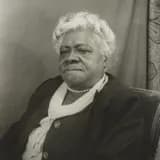
Bethune became vice president of the NAACP in 1940, a post she held until her death.
In 1940, Bethune became vice president of the NAACP, a position she held for the rest of her life. By that point, she was already one of the most visible Black women leaders in the United States, and the NAACP role confirmed her status as a national figure in the struggle for civil rights.
This office was important because it connected Bethune’s educational and political work to one of the country’s most influential civil rights organizations. As vice president, she helped shape strategy, broaden coalitions, and extend attention to the concerns of Black women and children. Her role also demonstrated how Black women activists could occupy leadership within institutions often dominated by men.
Her NAACP service belonged to a wider career defined by coalition-building. Bethune’s activism reached across education, public policy, women’s clubs, and civil rights, and the NAACP vice presidency symbolized that breadth. It was another indication that her leadership was not confined to one institution, but part of a sustained national campaign for equality and opportunity.