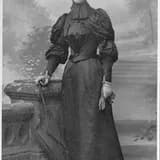
Kingsley published her landmark travel narrative Travels in West Africa in 1897, achieving significant commercial and critical success.
In 1897, Mary Kingsley published Travels in West Africa: Congo Français, Corisco and Cameroons, a book that became an immediate bestseller and remains a landmark text in the history of travel writing and Africanist ethnography. Written with wit, vivid detail, and self-deprecating humor, the book recounted her expeditions along the Ogooué River and into the Congo region, blending adventure narrative with serious anthropological and zoological observation.
The book was significant for its refusal to moralize or condescend toward African societies in the manner typical of missionary literature of the period. Kingsley argued for a nuanced understanding of African customs, including practices like polygamy and traditional religion, framing them within their own cultural logic rather than judging them by Victorian Christian standards. This stance was controversial and drew criticism from missionary societies, but it also earned her respect among scientific and geographical circles.
The commercial success of Travels in West Africa gave Kingsley a public platform; she became a sought-after lecturer across Britain, speaking to institutions such as the Liverpool Chamber of Commerce and various geographical societies, despite the Royal Geographical Society's continued refusal to admit women as full fellows. The book's legacy endures as one of the most important primary sources on late-19th-century West African ethnography written from a non-missionary, non-colonial-administrative European perspective.