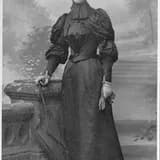
Kingsley undertook her second major West African expedition, becoming one of the first Europeans, and the first woman, to climb Mount Cameroon by an unexplored route.
Kingsley's second expedition to West Africa began in 1894–1895 and proved even more ambitious than her first. She traveled through the French Congo, navigating the Ogooué River by canoe and living among the Fang people, who were reputed by Europeans at the time to practice cannibalism—a claim Kingsley investigated firsthand with unusual scientific detachment rather than sensationalism.
During this journey she also became one of the first Europeans—and notably the first woman on record—to climb Mount Cameroon via its southeast face, an unexplored and treacherous route, reaching the summit in 1895. She accomplished this feat wearing her customary long Victorian skirts, later remarking wryly on the impracticality of European women's clothing for fieldwork, though she credited a full skirt with once saving her from a serious fall into a game pit.
Her fieldwork produced significant zoological discoveries, including several new species of freshwater fish later named in her honor (e.g., Ctenopoma kingsleyae), which she collected and sent to the British Museum for study by ichthyologist Albert Günther. This expedition cemented her reputation as a serious naturalist and cultural observer, distinguishing her from the missionary and colonial-administrator narratives that dominated contemporary European writing about Africa.