← All women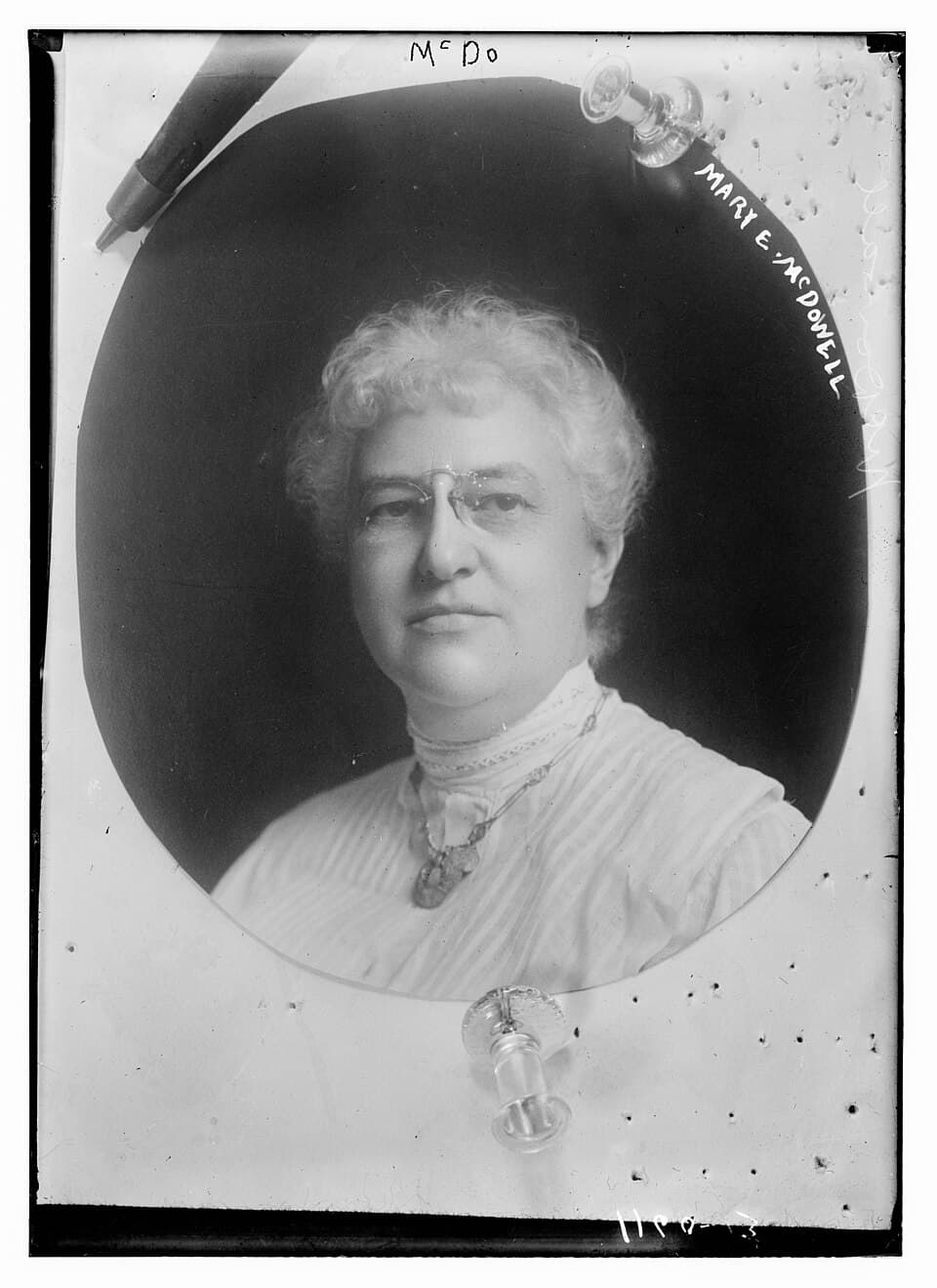
American · Activism · Politics
Mary Eliza McDowell
November 30, 1854 – October 14, 1936
Early Life and Background
Mary Eliza McDowell was born on November 30, 1854, in Cincinnati, Ohio. She was the daughter of Malcolm and Jane Welch McDowell. Her upbringing in a Quaker family instilled in her values of equality and social justice, which would become central themes in her life's work. Mary was educated at Friends Academy in Union Springs, New York, and later moved to Chicago, where she became involved in community work.
Career Beginnings and Development
McDowell began her career in social work in the late 19th century. Inspired by her affiliation with reformers like Jane Addams, she focused her efforts on improving the living conditions in Chicago’s industrial district. In 1894, she established the University of Chicago Settlement, also known as the Mary McDowell Settlement House, in the Back of the Yards neighborhood, an area infamous for its harsh living and working conditions.
Major Works, Discoveries, or Accomplishments
Mary McDowell was deeply committed to addressing issues like labor rights, particularly for women and immigrants. She played a significant role in advocating for child labor reform and was active in movements supporting women's suffrage. McDowell was a founding member of the Women’s Trade Union League, which fought for better wages and conditions for female laborers.
Awards, Honors, and Recognition Received
Though McDowell did not receive formal accolades during her lifetime, her legacy is honored through the memorialization of her contributions to social reform. Her efforts at the University of Chicago Settlement were recognized posthumously, marking her as a pioneer in urban social work.
Personal Life
Mary Eliza McDowell never married, dedicating her life and resources to her social reform initiatives. She fostered strong friendships with other reformers like Jane Addams and Ellen Gates Starr, who were instrumental in Chicago’s settlement house movement.
Legacy and Historical Impact
McDowell's work left a profound impact on urban social welfare and labor reform, especially in the context of industrial cities. She is remembered as a tireless advocate for the underprivileged communities of Chicago, particularly women and immigrants, and her initiatives set precedents for future social reform movements.
Later Life and Death
Mary McDowell continued her work at the settlement house until her health began to decline. She died on October 14, 1936, in Chicago, leaving behind a lasting legacy of dedication to social justice and community welfare.
Dated achievements
3 indexed.
- Nov301854Activism
Born in Cincinnati, Ohio
Mary Eliza McDowell was born on November 30, 1854, in Cincinnati, Ohio, to a family with strong abolitionist sympathies.
View details Mary McDowell - Wikipedia - Sep151894Activism
Founded the University of Chicago Settlement House
On September 15, 1894, McDowell opened the University of Chicago Settlement House in the Back of the Yards neighborhood to serve packinghouse worker families.