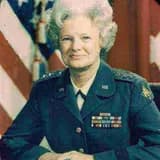
Clarke becomes commander of the U.S. WAC Center and School at Fort McClellan.
In 1972, Mary E. Clarke, then a colonel, became commander of the U.S. WAC Center and School at Fort McClellan, Alabama. The available sources identify the year but not a specific month and day, so this event is recorded as a year-level marker.
This assignment was historically significant because it placed Clarke at the center of women’s Army training during a period when the WAC was approaching the end of its separate institutional existence. Leading the WAC Center and School meant shaping the preparation of women soldiers at a time of rapid social change, expanding debate over women’s equality, and ongoing uncertainty about how fully women should be integrated into the armed forces. Clarke’s appointment reflected the Army’s confidence in her administrative ability and leadership.
The command also illustrates a broader pattern in her career: she repeatedly moved into positions where institutional barriers had to be navigated before women could be accepted in authority. The Army of the early 1970s was still heavily male in its senior ranks, and a woman commanding a central training institution was exceptional. Clarke’s leadership helped normalize the idea that women could not only serve in the Army, but also direct its training systems and standards. Her command at Fort McClellan would later connect directly to her barrier-breaking promotion and installation command in 1978.