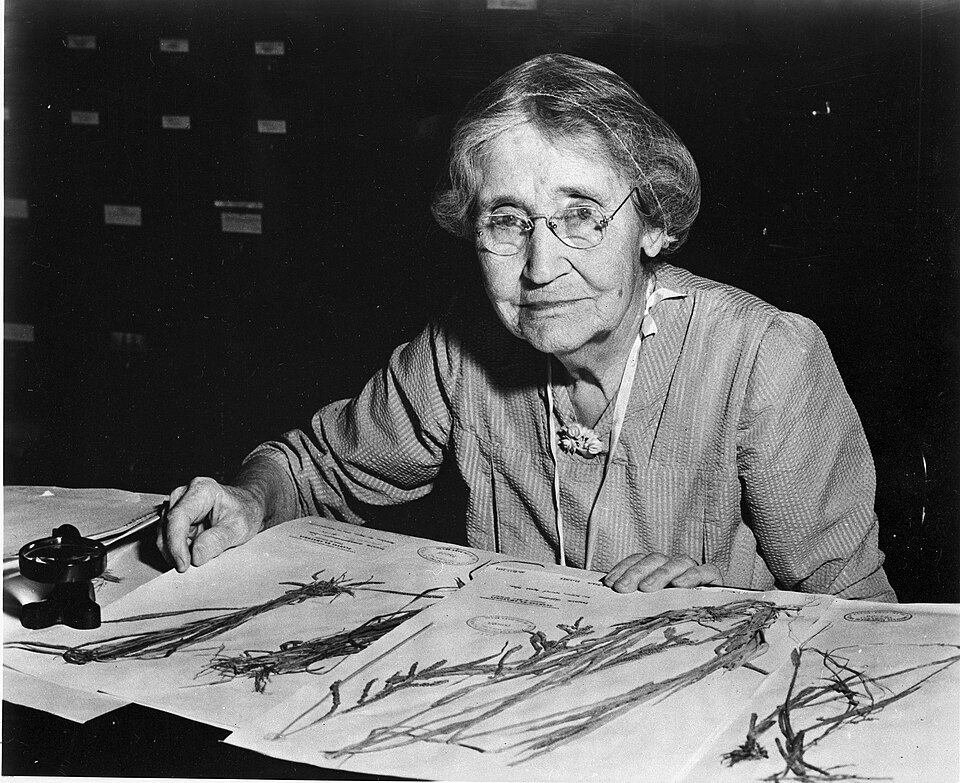
Birth of Mary Agnes Meara (Mary Agnes Chase) in Iroquois County, Illinois, into a working-class family that shaped her self-taught path in botany.
On 20 April 1869, Mary Agnes Meara—later known as Mary Agnes Chase—was born in rural Iroquois County, Illinois, into a family of modest means and limited formal education opportunities. Her early years were marked by financial hardship and the death of her father when she was very young, circumstances that pushed her into wage work rather than schooling.[5][8][12]
Despite these barriers, her birth in post–Civil War America placed her at the intersection of rapid scientific expansion and entrenched gender norms. Women were largely excluded from professional science, and few working-class girls could aspire to scholarly careers. Chase’s later achievements in botany and suffrage activism are therefore inseparable from this humble beginning: she would become largely self-taught, relying on evening courses, voracious reading, and practical illustration work to enter scientific networks traditionally reserved for university-trained men.[5][12]
The significance of this birth lies not only in the arrival of a future pioneer of agrostology but also in the trajectory it inaugurated: a woman who would catalog thousands of grass species, mentor generations of botanists, and risk her government job to campaign for women’s voting rights. Her life story illustrates how someone born far from elite institutions could nonetheless help shape modern plant taxonomy and the broader history of women in science and activism.[2][5][8]
Images