← All women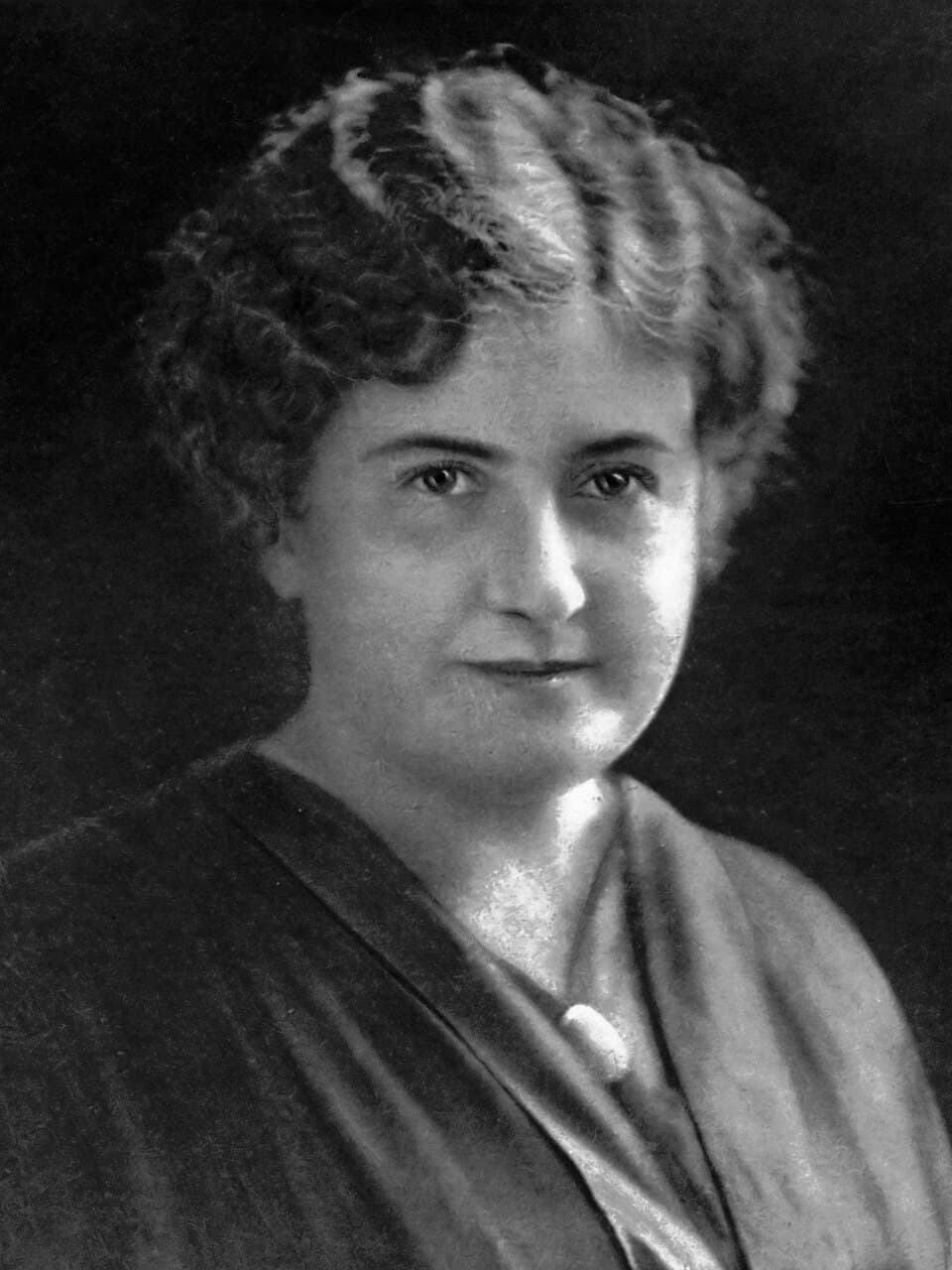
Italian · Medicine · Activism
Maria Montessori
August 31, 1870 – May 6, 1952
Early Life and Family Background
Maria Tecla Artemisia Montessori was born on 31 August 1870 in Chiaravalle, a small town in the province of Ancona, in the Marche region of Italy.[2][3][4][9] She was the only child of Alessandro Montessori, a civil servant employed in the State Railways, and Renilde Stoppani, an educated and culturally engaged woman related to the noted geologist and Catholic priest Antonio Stoppani.[3][9] Her mother’s literacy and support for learning were unusual in 19th‑century Italy and strongly influenced Maria’s intellectual ambitions.[9]
Shortly after her birth, the family moved to Rome, then becoming the capital of the newly unified Kingdom of Italy.[3][4] Growing up in Rome exposed Montessori to political debates about modernization, social reform, and women’s roles. She attended public schools and showed early aptitude in mathematics and the sciences, interests that challenged prevailing expectations that middle‑class girls should focus on domestic or literary education.[2][3]
Italy in the late 19th century maintained strict gender norms, especially in higher education. Few women entered secondary scientific studies, and virtually none pursued medicine. Against this backdrop, Montessori’s determination to study advanced subjects represented a conscious break with convention and would later underpin her insistence on women’s intellectual equality.
Education and Path to Medicine
Montessori first enrolled in a technical school, pursuing engineering, before deciding to study natural sciences, an essential prerequisite for admission to medical school.[3][4] She completed a degree in natural sciences and then, despite strong opposition, applied to study medicine at the University of Rome, La Sapienza.[3][4] University officials initially suggested that she pursue teaching rather than medicine, but she persisted.
Admitted in the early 1890s, Montessori entered a male‑dominated medical faculty where women were not expected, or welcome.[3][6] She faced institutional and social obstacles: for example, she was required to attend anatomy classes separately and to work on cadavers alone after hours because mixed‑sex dissection was considered inappropriate.[3][6] Despite these constraints, she excelled academically and gravitated toward pediatrics and psychiatry, motivated by an interest in children with developmental and intellectual disabilities.[3][6]
On 10 July 1896, Montessori received her Doctor of Medicine degree, becoming one of the first female doctors in Italy and the first woman to graduate from the University of Rome medical school.[3][6][13] This achievement was widely reported and celebrated, marking her as a trailblazer in Italian medicine and women’s higher education.
Early Medical Career and Work with Disabled Children
After qualifying as a physician, Montessori worked in the San Giovanni Hospital in Rome and later at the University of Rome’s psychiatric clinic.[3][6] There she encountered children classified as “feebleminded” or “deficient,” who were confined with adults and received little stimulation beyond custodial care.[3][4] Montessori observed that many of these children showed curiosity and responsiveness when given simple objects to manipulate, leading her to suspect that their apparent incapacity was partly due to inadequate educational environments.
Her interest in special education intensified after she became director of the Orthophrenic School in Rome, a state institution for children with mental disabilities.[3][6] She studied the work of French physicians and educators Jean‑Marc Gaspard Itard and Édouard Séguin, whose experiments with sensory training informed her own practice.[3][4] Montessori adapted and refined their materials, emphasizing graded tactile, visual, and auditory exercises to develop perception and coordination.
Under her leadership, children who had been deemed uneducable learned to read and write well enough to pass standard public examinations, a result that astonished contemporary observers.[3][6] These successes convinced Montessori that educational methods grounded in systematic observation and sensorial training could profoundly affect children’s development, and that such methods should be offered not only to those with disabilities but to all children.
Transition from Medicine to Pedagogy
Through her clinical work, Montessori increasingly shifted from purely medical intervention toward what she termed “scientific pedagogy”—an approach to education informed by experimental observation and psychology.[3][4] She studied anthropology and philosophy, taught pedagogical anthropology at the University of Rome, and published articles arguing that education required rigorous empirical study akin to laboratory science.[4]
Her reputation grew in Italy and abroad. She spoke at women’s congresses and international conferences, linking educational reform to broader questions of social justice and women’s emancipation.[8] As an outspoken advocate, she argued that improved education, especially in early childhood, was essential for addressing poverty and inequality.
By the early 1900s, Montessori had become known in Rome as a leading expert on children’s development. This reputation led to a pivotal invitation from a housing project in the San Lorenzo district, which wanted a solution to the problem of unsupervised, destructive children in new apartments. Montessori saw an opportunity to test her pedagogical theories with typically developing but economically disadvantaged children.
Founding the Casa dei Bambini and the Montessori Method
On 6 January 1907, Montessori opened the first Casa dei Bambini (“Children’s House”) at 53 Via dei Marsi in San Lorenzo, Rome.[1][2][3] The school served children aged roughly three to six from working‑class families, many of whom had never previously attended school. Rather than imposing strict discipline, Montessori created a carefully prepared environment with child‑sized furniture, low shelves, and an array of didactic materials derived from her work in special education.[1][3]
She trained the teacher, Signora Dottoressa, to observe quietly and intervene minimally, allowing children to choose activities, repeat them as desired, and work independently for extended periods.[3][12] Within months, Montessori observed unexpected phenomena: children displayed intense concentration, chose work over idle play, developed orderly habits, and spontaneously learned practical skills, reading, and writing.[1][3]
The success of the Casa dei Bambini attracted visitors from Italy and abroad, and the experiment was soon replicated. A second Children’s House opened in Milan in 1908, directed by Anna Maria Maccheroni, marking the method’s spread beyond Rome.[2] Montessori began to articulate the principles underlying these successes: respect for the child’s autonomy, mixed‑age groupings, freedom of movement within limits, and adults trained to observe rather than direct.
These ideas coalesced into what became known as the Montessori method, a comprehensive pedagogical system for children from birth to adolescence.[3][4] Her approach stood in sharp contrast to conventional schools of the period, which emphasized rote memorization, teacher‑centered instruction, and punitive discipline.
First Training Course and Writing of Her Foundational Book
In the summer of 1909, Montessori led her first formal teacher training course in Città di Castello, Italy, attended by about one hundred students.[2][9] Over several weeks she presented lectures on child development, demonstrated the materials used in the Casa dei Bambini, and supervised practice sessions.
During this course, Montessori wrote and compiled notes that formed the basis of her first major book, initially published in Italian as a treatise on scientific pedagogy applied to children’s education.[10] The book detailed the principles of the prepared environment, the sequence of materials, and the role of the teacher as observer. It quickly became an influential text for educators seeking alternatives to traditional schooling.
By 1910, Montessori model schools had been established in several European and American cities, including Paris, New York, and Boston, demonstrating that her ideas could be implemented in diverse cultural settings.[2] Her work began to attract the interest of progressive educators, psychologists, and philanthropists, including figures associated with the emerging international child study movement.
International Expansion and The Montessori Method
In 1911, the first formal Montessori school in the United States opened in Tarrytown, New York, signaling the method’s institutional foothold in American education.[4] The following year marked a major milestone in her international recognition. In 1912, the English translation of her book was published in the United States under the title The Montessori Method and rapidly climbed to second place on the U.S. nonfiction bestseller list.[2][9]
The book introduced English‑speaking audiences to her concepts of sensitive periods, auto‑education (self‑education), the importance of sensorial materials, and the child’s innate drive toward order and independence. Its popularity prompted the establishment of Montessori classrooms across North America and Europe and brought Montessori into contact with leading educators and public intellectuals.
In 1913, Montessori made her first visit to the United States, delivering lectures and observing schools that had adopted her method.[13][16] Her appearances attracted large audiences and considerable press attention, further disseminating her ideas. Over the next decade she traveled widely, conducting courses and advising on the creation of Montessori schools in countries including the United Kingdom, Spain, the Netherlands, and India.
Philosophy, Major Works, and Educational Innovations
Montessori’s educational philosophy evolved through both practice and reflection. She asserted that children possess an absorbent mind in early childhood, allowing them to take in aspects of language, culture, and environment effortlessly.[3][4] She identified “sensitive periods”—windows of heightened receptivity for particular skills, such as language, movement, or order—during which appropriate experiences could profoundly shape development.[3][4]
Her methodology emphasized:
- a prepared environment, ordered and aesthetically appealing, designed to meet developmental needs;
- auto‑education, where children choose their activities and learn through self‑directed work;
- mixed‑age classrooms to foster peer learning and social responsibility;
- teachers trained as careful observers and guides rather than lecturers;
- didactic materials that isolate concepts and allow for self‑correction.
Montessori published numerous works elaborating these ideas, including expanded editions of the original scientific pedagogy text, L’autoeducazione (1916), and later books on elementary and adolescent education.[10] In 1929, she published The Child in the Church (I bambini viventi nella Chiesa), her first sustained treatment of Catholic liturgy and religious experience from the child’s perspective.[2]
Her writings consistently linked pedagogy to broader ethical and social concerns. She argued that respectful education could foster peace, challenging authoritarian structures in both schools and society. Children, she insisted, were not blank slates but persons with rights and intrinsic dignity.
Association Montessori Internationale and Later Career
In 1929, Montessori and her son Mario Montessori founded the Association Montessori Internationale (AMI) in Amsterdam to maintain the integrity of her method and coordinate training worldwide.[3][4] AMI became the central organization responsible for accrediting teacher courses and publishing authorized versions of her materials.
Political upheavals in Europe affected her work. The rise of fascism in Italy and other dictatorships curtailed independent educational experiments. Montessori, whose approach encouraged autonomy and critical thinking, found her schools closed or pressured in some countries.[3][4] She spent significant periods abroad, including an extended stay in India during the Second World War.
In India, invited by the Theosophical Society, she conducted multiple training courses and developed her concept of Education for Peace.[5] During this period she was nominated twice for the Nobel Peace Prize, reflecting recognition of her belief that properly prepared education could be a foundation for global peace.[5] She also elaborated her ideas on cosmic education for older children, emphasizing the interconnectedness of human history, science, and moral responsibility.
Personal Life and Relationships
Montessori’s personal life was intertwined with her professional commitments. While a young doctor, she entered into a relationship with Giuseppe Montesano, a fellow physician at the psychiatric clinic in Rome.[3] In 1898, she gave birth to a son, Mario Montessori
Montessori maintained contact with Mario and later brought him into her household and professional work. As an adult, he became her close collaborator, assisting with training courses and administrative responsibilities, and eventually leading AMI after her death.[3][4] Montessori never married, and her life was characterized by a strong sense of vocation to scientific and educational work. Her devout Catholic faith informed aspects of her thought, especially in later writings considering the child’s spiritual development.[8][11] At the same time, she engaged with secular and international organizations, emphasizing that respect for the child’s personality transcended religious boundaries. Montessori’s contributions earned wide recognition during her lifetime. She was invited to speak at notable venues including the League of Nations and later UNESCO, advocating for children’s rights and peace‑oriented education.[6] Governments and educational authorities in several countries endorsed Montessori schools, particularly in the interwar period. During the 1940s, her work on Education for Peace and her broader influence on child‑centred pedagogy led to two nominations for the Nobel Peace Prize, underscoring the perception that educational reform was essential to preventing future conflicts.[5] While she did not receive the award, the nominations reflect the global impact of her ideas beyond the classroom. By the time of her death in 1952, Montessori’s method had inspired thousands of schools worldwide; contemporary estimates suggest that more than 15,000 institutions in dozens of countries now identify as Montessori or Montessori‑inspired.[4][9] Her name has been attached to schools, teacher‑training centers, and scholarly programs on education and philosophy. Maria Montessori is widely regarded as one of the most influential educators of the 20th century.[4][6] Her method shaped the broader progressive education movement and anticipated later developments in developmental psychology, early childhood education, and human rights. Key elements of her legacy include: Her influence extends beyond schools explicitly named Montessori. Many early childhood programs worldwide incorporate practices she pioneered, such as low shelves with accessible materials, uninterrupted work periods, and mixed‑age groupings. Researchers and philosophers continue to engage with her work; the Stanford Encyclopedia of Philosophy describes her as a psychologist, anthropologist, doctor, cultural critic, and philosopher as well as a pedagogue.[4] Montessori’s ideas have also sparked debate. Critics have questioned the extent of structure in Montessori classrooms, the reliance on specific materials, and issues of accessibility, particularly where private Montessori schools serve primarily affluent families. Nonetheless, her fundamental insistence on respecting the child’s personality and development remains a touchstone for reformers seeking humane, evidence‑informed education. After the Second World War, Montessori centered much of her work in the Netherlands, where AMI established its headquarters.[3][4] She lived in and near Amsterdam and later in the coastal town of Noordwijk aan Zee, together with her son Mario. From there she coordinated training courses, publications, and the rebuilding of Montessori schools disrupted by war. Even in her eighties she remained active. AMI sources note that in 1952, the year of her death, she still conducted a training course in Innsbruck, Austria, demonstrating her enduring commitment to teacher education.[2] On 6 May 1952, Montessori died in Noordwijk aan Zee following a cerebral hemorrhage, at the age of 81.[1][3][4][5] She was buried in the local Catholic cemetery, in accordance with her wishes.[3] Her passing marked the end of a singular career bridging medicine, psychology, philosophy, and pedagogy. Leadership of AMI passed fully to Mario Montessori and later to other successors, who have continued to protect and interpret her legacy. The date of her death is commemorated by Montessori organizations worldwide as an occasion to reflect on her contributions to children, education, and peace. Maria Montessori’s life illustrates the intersection of women’s history, scientific inquiry, and social reform. As one of Italy’s first female physicians, she broke gender barriers in academia and professional practice.[3][6] As an educator, she revolutionized how children are understood and taught, advocating for environments that nurture independence, curiosity, and respect. Her work continues to shape educational practice and theory, and her name has become synonymous with a distinctive approach to child‑centred education. More than a century after the opening of the first Casa dei Bambini, Montessori classrooms around the world attest to the enduring power of her insight: that children, given freedom within a prepared environment and guided by observant adults, can construct themselves and, ultimately, contribute to a more peaceful society.Awards, Honors, and Recognition
Legacy and Historical Impact
Later Life in the Netherlands and Death
Overall Assessment
Dated achievements
6 indexed.
- Aug311870Medicine
Birth of Maria Montessori
Maria Montessori is born in Chiaravalle, Italy, on August 31, 1870.
View details Timeline of Maria Montessori's Life - Jul101896Medicine
Maria Montessori earns medical degree
On July 10, 1896, Montessori becomes one of the first female doctors in Italy.