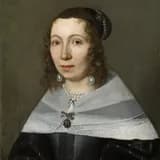
Merian funded and organized her own expedition to Dutch Suriname with her daughter Dorothea, a rare independent scientific journey for a European woman.
In 1699, at the age of 52, Maria Sibylla Merian undertook an extraordinary and, for the era, almost unprecedented venture: she financed and organized her own scientific expedition to the Dutch colony of Suriname in South America, accompanied by her younger daughter, Dorothea Maria Graff. She sold 255 of her paintings to help fund the costly voyage, demonstrating both financial independence and remarkable determination.
At a time when scientific exploration was almost exclusively the domain of men — typically sponsored by governments, universities, or wealthy patrons — Merian's self-directed expedition was exceptional. She traveled without a husband, without institutional backing beyond the city of Amsterdam's general encouragement, and without the protection typically afforded to European women undertaking transatlantic voyages.
Once in Suriname, Merian spent approximately two years observing, collecting, and illustrating the local insects, plants, reptiles, and amphibians in their natural habitats — a method of direct field observation that was highly unusual for the time. She documented the full life cycles of numerous tropical insect species, often for the first time in European scientific literature, and recorded ecological relationships between insects and specific host plants.
Her journey is widely regarded by historians as a genuine barrier-breaking first: an independent, self-funded scientific field expedition undertaken by a woman naturalist. It directly resulted in her masterwork, Metamorphosis Insectorum Surinamensium, and cemented her reputation as a pioneering figure in the history of entomology and scientific illustration.