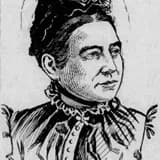
Beasley developed a compact, fireproof, and easily launched life raft design, an early step toward modern maritime safety equipment.
Around 1880, Maria Beasley turned her inventive attention to maritime safety, designing an improved life raft that was described by contemporaries as fireproof, compact, safe, and readily launched. This was a significant advance at a time when shipboard emergency equipment was often bulky, difficult to deploy quickly, and vulnerable to the very fires or accidents it was meant to help passengers escape.
Beasley's raft design addressed multiple practical failures of existing lifesaving equipment: rafts of the period were frequently heavy, slow to launch under emergency conditions, and constructed from materials that could catch fire or become waterlogged. Her design's compactness meant more units could be stored aboard a vessel, while its fireproof construction addressed one of the deadliest hazards at sea — shipboard fires that spread before passengers could escape.
This 1880 design served as a precursor to the more fully realized and patented life raft she would formalize two years later, in 1882. Together, these maritime safety innovations placed Beasley among the earliest inventors, male or female, to systematically apply mechanical engineering principles to shipboard survival equipment. Her work anticipated safety standards that would only become mandatory industry-wide decades later, following high-profile maritime disasters. Some historical accounts even credit descendants of her raft designs with influencing the collapsible lifeboats later used aboard the RMS Titanic, though that specific link remains debated among historians.