← All women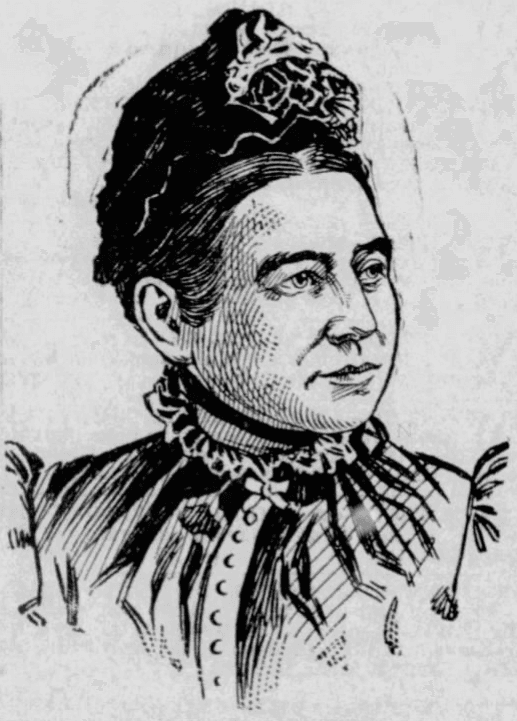
American · Science · Exploration
Maria Beasly
1836 – 1913
Overview
Maria E. Beasley (often given as Maria Elisabeth Beasley, née Hauser or sometimes reported as Kenny; c. 1836–1913) was an American entrepreneur and inventor best known for her barrel‑making machines and her improved life raft designs.[1][2][3][6][8][9] Between the late 1870s and the late 1890s she obtained approximately 15 U.S. patents, as well as patents in Great Britain, covering inventions that ranged from foot warmers and cooking implements to an anti‑derailment device for trains and machinery for paper‑bag manufacture.[1][2][3][4][7][9][12][14][17] She is widely cited as one of the few 19th‑century women inventors to achieve substantial financial success from industrial patents.[1][7][12][14]
Early life and background
The exact details of Beasley’s early life are uncertain and different language editions of Wikipedia and secondary sources present conflicting information.[1][2][3][4][5][6][8] Several accounts state that she was born around 1836 in North CarolinaMariah Elisabeth Hauser.[3][8] Other entries, such as the Basque‑language article, instead describe her as Maria Kenny from Philadelphia, Pennsylvania, with dates 1847–1904.[5] English‑language scholarly and transportation‑history sources generally adopt the c. 1836–1913 North Carolina narrative.[1][6][9]
Because of these inconsistencies and the lack of easily accessible primary records in the available materials, modern researchers treat her birth year and name as approximate. Nonetheless, sources broadly agree that she grew up in an environment where practical mechanics and manufacturing were visible. Later popular accounts, including educational materials and videos, describe her learning mechanical concepts from relatives involved in distilling and building her own small sailboat in adolescence, but these embellishments are not corroborated by the core encyclopedic sources.[11][12]
Formal education for girls in the mid‑19th‑century American South was limited, and there is no clear documentation of Beasley receiving advanced schooling in science or engineering. Most biographical sketches emphasize that she came to inventing through practical experience and self‑education rather than academic training.[1][7][9][12][14]
Family life, dressmaking, and early work
Before she began filing patents, Beasley is reported to have married and raised children while working as a dressmaker or seamstress, a typical occupation for women seeking income outside the home.[11][14] These descriptions, found in modern popular narratives, portray her as someone who "put down her needle and thread" in mid‑life to pursue mechanical invention.[11][14] While such phrases are not drawn from her own writings, they reflect a consistent theme: Beasley shifted from a conventionally gendered craft profession into the heavily male‑dominated world of industrial machinery.
This transition likely required overcoming substantial barriers. In the United States of the 1870s, married women often faced legal constraints on owning property and signing contracts. Women were rarely welcomed in machine shops or technical societies, and patent practice was dominated by men. Nevertheless, Beasley appears in the patent record beginning in the late 1870s, indicating that she navigated the legal and financial structures necessary to claim and exploit her intellectual property.[1][7][9][12][14]
Entry into invention: barrel‑making machines
Beasley’s first major success was in the field of cooperage, the craft of barrel‑making. According to multiple sources, her first patented invention was a barrel‑making (barrel‑hooping) machine issued in 1878.[1][7][12] This machine automated processes that had previously required the manual labor of skilled coopers, such as hooping the staves and securing the barrel structure.
Industrial and educational accounts emphasize that the 1878 patent rapidly generated income and established her commercial reputation.[1][7][12][14] By mechanizing production, Beasley’s machine significantly increased the number of barrels that could be manufactured in a given time, helping to meet rising demand from industries that relied on barrels for storing and transporting commodities—oil, alcoholic beverages, agricultural produce, and dry goods. The American Fuel & Petrochemical Manufacturers and transportation‑history organizations later highlighted her work as central to the efficiency of 19th‑century packaging for liquids and bulk materials.[9][10][14]
Some popular narratives describe her building a business around this technology and ultimately selling it for a large sum, though the specific financial figures in those accounts are not corroborated by the encyclopedic sources.[11][12][17] What is well supported is that the barrel‑making machine became her primary commercial success and remained the anchor of her reputation as an inventor.[1][7][9][12]
Industrial exhibitions and recognition for barrel machinery
Catalan‑language sources note that Beasley’s barrel machinery was displayed at the World’s Industrial and Cotton Centennial Exposition of 1884 in New Orleans.[4] There, her machine was presented as an example of advanced industrial technology in the booming packaging sector. Exhibiting at such a world’s fair was a mark of status: these expositions showcased innovations to investors and international delegates and often led to new business contacts.
For a woman inventor, appearing at a major industrial exposition had added significance. It placed her work alongside that of prominent male engineers and manufacturers, challenging the cultural assumption that heavy machinery and process optimization were male domains. The Catalan article suggests that her improved life raft was also exhibited, indicating that by the mid‑1880s she had gained recognition for multiple technologies.[4]
Life raft innovations and maritime safety
Beyond packaging, Beasley’s most widely celebrated contribution was to maritime safety. She designed an improved life raft during the early 1880s and obtained related patents in 1880 and 1882.[7][9][10][13][16] The life raft was engineered to be collapsible and compact, with metal floats and airtight compartments to ensure buoyancy, and guard rails to prevent passengers from falling into the water.[10][12][14][16][17]
Multiple sources emphasize that her raft could be deployed quickly and was robust enough that passengers could "jump onto" it from a burning or sinking vessel without causing it to sink or capsize.[12][16] This was an improvement over many earlier lifeboats, which were bulky, flammable, and difficult to launch in emergencies. Beasley’s design prioritized fire resistance, stability, and ease of storage—principles that would later be incorporated into modern inflatable life rafts using synthetic materials.[10][13]
Transportation‑history researchers describe these inventions as among "the most important transportation innovations of all time" in the safety domain.[7][9][10] The improved life raft helped shape expectations about emergency provisions on ships; over time, collapsible and modular raft systems became standard equipment in commercial and passenger vessels. Several secondary sources further claim that some of her collapsible life rafts were used aboard the Titanic, though the available results do not provide primary documentation or precise details, and historians continue to debate the connection.[2][12][13]
Range of inventions: transportation and domestic technologies
Beasley did not confine her inventiveness to barrels and rafts. Patent summaries and encyclopedia entries credit her with a wide range of inventions between roughly 1878 and 1898.[1][2][3][4][7][9][12][14][17] These include:
- A foot warmer, designed to improve personal comfort, likely targeting railway passengers or domestic users.[1][2][7][12][14][17]
- An anti‑derailment device for trains, contributing to rail transportation safety by reducing the risk of cars leaving the tracks.[1][2][3][4][7][9][12][14][17]
- A steam generator for train cars, mentioned in transportation‑history and educational materials as part of her efforts to enhance railway operations.[7][9][17]
- Various cooking pans and related household implements.[2][4][12][17]
- Machinery for manufacturing reinforced paper bags, highlighted in the French‑language biography as having significant impact on the packaging industry around 1880.[3]
The precise patent dates for these devices are not documented in the search results, but collectively they show Beasley’s interest in both heavy industrial processes and everyday technologies. Her rail‑safety inventions placed her among a small group of 19th‑century inventors addressing systemic transportation risks, while her domestic and packaging technologies reflected an understanding of consumer needs and logistics.
Patents and entrepreneurship
Across her career, Beasley obtained approximately fifteen U.S. patents and at least two British patents.[1][2][4][7][9][12][14][17] The distribution of these patents over two decades suggests that she was not a one‑time inventor but an ongoing participant in the innovation economy. She appears to have pursued patents in multiple U.S. states, and non‑English sources emphasize that she worked as an entrepreneur, likely licensing or selling rights to manufacturers.[2][4][9]
Secondary accounts portray her as one of the few women of her era to derive substantial income from industrial patents, with some stating that she "made money" or even became wealthy through her barrel‑making machinery.[1][7][12][14][17] While detailed financial records are not provided in the sources at hand, the repeated emphasis on her commercial success indicates that she stands out from many contemporaneous women whose inventions were marginalized or inadequately compensated.
Public image and later recognition
During her lifetime, Beasley would have been a relatively unusual figure: a woman named on patents related to heavy machinery and transportation systems. Contemporary press coverage is not reproduced in the search results, but modern historians and commentators have revisited her work as part of efforts to recover women’s contributions to science, engineering, and technology.
Engineering organizations, women‑in‑transportation initiatives, and educational publishers now feature Beasley in profiles and classroom materials. Iowa State University’s transportation research center, for example, describes her as an "engineering dynamo" whose barrel machines and life rafts fundamentally improved transportation safety and efficiency.[7][9] The American Fuel & Petrochemical Manufacturers include her in a list of "women who made the future possible," crediting her life raft designs with saving innumerable lives and forming the basis of modern emergency rafts.[10]
Educational resources for schools, such as fact files and lesson plans, highlight Beasley as a role model who broke gender barriers in the 19th‑century patent system and used engineering to protect human life.[12][13][15] Social‑media posts by history‑focused groups similarly portray her as a pioneer, stressing how she defied expectations that women’s ambitions should remain limited to domestic spheres.[14]
Personal life
Relatively little is documented about Beasley’s personal life beyond general references to marriage and motherhood in some modern narratives.[11][14] No primary sources in the current search results detail the names of her spouse or children, her daily work routines, or her participation in civic or professional organizations. Nor do the encyclopedic entries supply information about her religious affiliation, political views, or social activism.
In the absence of detailed records, historians caution against over‑romanticizing her story. Nonetheless, the combination of scattered biographical notes and her recorded patents suggests that she balanced domestic responsibilities with a sustained program of experimental work, prototyping, and engagement with manufacturers. That alone would have required negotiating gendered expectations about appropriate female behavior in the late 19th century.
Later life and death
The available sources concur that Beasley died in the early 20th century, but they differ on specifics. English‑language and several non‑English encyclopedias give her lifespan as c. 1836–1913, with death in New York or in Forsyth County, North Carolina.[1][3][8][9] The Basque‑language entry offers an alternate range of 1847–1904.[5] None of the consulted materials provide an exact death date or primary documentation such as an obituary or death certificate.
Because of these discrepancies, modern summaries typically treat her death as occurring around 1913, without specifying a day or month. There is also no detailed information in the search results about her activities in later life—whether she continued inventing, managed businesses, or retired from public work. It is therefore not possible, on the basis of the present sources, to reconstruct a full narrative of her final decades.
Legacy and historical impact
Maria E. Beasley’s legacy rests on two intertwined achievements: her mechanization of barrel production and her advances in life raft design. The barrel‑making machine helped transform a traditional craft into a modern industrial process, supporting the explosive growth of American manufacturing and trade in the late 19th century.[1][7][9][12][14] Her life raft patents introduced key design principles—collapsibility, fire resistance, guard rails, and reliable flotation—that underpin contemporary emergency flotation devices.[7][9][10][12][13][16]
From the perspective of women’s history, Beasley is significant because she obtained and profited from patents in domains typically closed to women, such as heavy machinery and transportation technology. She stands among a small cohort of 19th‑century women inventors whose names appear in patent registers and industrial exhibition catalogues, and later scholars have used her story to illustrate both the obstacles women faced and the possibilities they carved out.[1][7][9][12][14]
Today, Beasley is cited in discussions of STEM education, transportation safety, and intellectual property as an example of how individual ingenuity can alter technological trajectories and save lives. Her life rafts continue to be discussed in relation to major maritime disasters, and her barrel machinery is recognized as a key step in the industrialization of packaging. Even though many details of her biography remain obscure, her documented inventions secure her place in the history of engineering and in the broader almanac of women who shaped modern industry.
Dated achievements
3 indexed.
- Jan011878Science
Patents her first invention: a barrel-making machine
Beasley received her first U.S. patent for a machine that manufactured wooden barrels, launching her career as a professional inventor.
View details Maria Beasley: Engineering Dynamo - Jan011880Science
Designs an improved, fireproof life raft
Beasley developed a compact, fireproof, and easily launched life raft design, an early step toward modern maritime safety equipment.