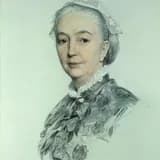
Margaret Oliphant died on 25 June 1897 in Wimbledon, London, after a prolific literary career spanning five decades.
Margaret Oliphant died on 25 June 1897 in Wimbledon, Surrey (now part of London), at the age of 69. By the time of her death, she had authored an extraordinary body of work — over 90 novels, more than 25 works of non-fiction, numerous short stories, and hundreds of articles and reviews, chiefly for the influential Blackwood's Magazine, with which she had a decades-long association.
Her death marked the end of one of the most productive literary careers of the Victorian period. Widowed early and left to support her children and later her wider family through her writing alone, Oliphant had become a symbol of the professional woman writer who succeeded through sheer industry and versatility, working across genres including domestic fiction, supernatural tales, literary criticism, biography, and history.
Though immensely popular and respected in her lifetime — she was among the highest-earning authors of her day — Oliphant's critical reputation faded in the decades after her death, overshadowed by contemporaries like George Eliot. Her posthumously published Autobiography (1899) revealed the personal tragedies — the deaths of her husband and all her children — that underlay her tireless productivity, and it has since become recognized as a significant work of Victorian life-writing.
Modern scholarship, particularly from the late twentieth century onward, has substantially revived interest in her work, recognizing her sharp social observation, proto-feminist perspectives, and her importance to the history of the professional woman writer.