← All women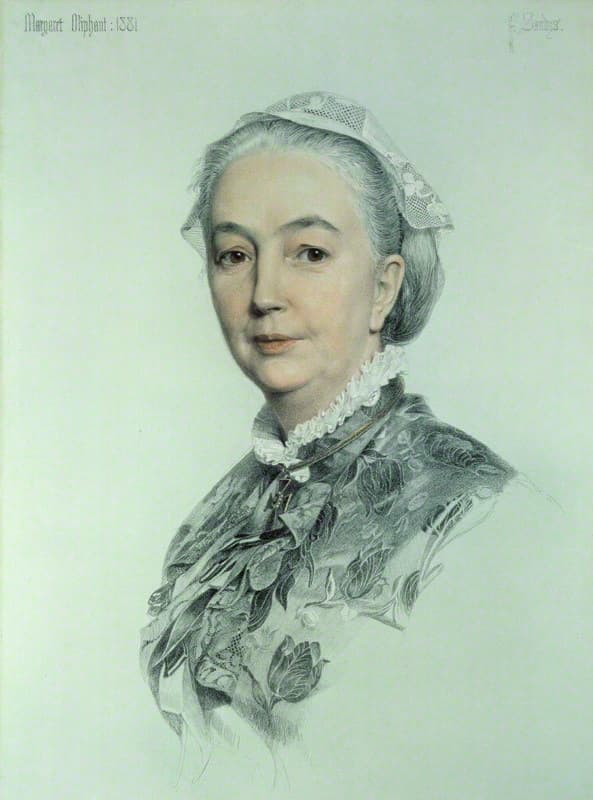
Scottish · Literature
Margaret Oliphant
April 4, 1828 – June 25, 1897
Early Life and Background
Margaret Oliphant Wilson Oliphant was born on April 4, 1828, in Wallyford, Scotland. She was the youngest of three children in a middle-class family. Margaret's early education was primarily home-based, fostering a voracity for reading that would define her future path. From a young age, she was influenced by the literary world, intriguing her towards weaving stories of her own.
Career Beginnings and Development
Margaret's literary career commenced earnestly with the publication of her novel "Passages in the Life of Mrs. Margaret Maitland of Sunnyside" in 1849. The novel was well-received, marking her as a promising young writer. Her storytelling was deeply rooted in the social and moral climates of her era, often exploring themes of family, religion, and societal expectations.
Major Works and Achievements
Over the years, Margaret Oliphant wrote over 120 books, including novels, biographies, and historical accounts. Some of her notable works include "The Chronicles of Carlingford" series, published between 1863 and 1876, which effectively captured the nuances of Victorian society. Her historical works such as "Makers of Florence" (1876) and "Makers of Venice" (1887) established her as a formidable voice in historical biography.
Awards, Honors, and Recognition
While not a frequent recipient of formal accolades, Oliphant's work was recognized and respected among literary circles throughout the British Isles. Her prolific output and intimate depictions of female experiences garnered respect and cemented her place as a critical literary figure of her time.
Personal Life
Margaret married her cousin Francis Oliphant in 1852. The couple had six children, though only three survived infancy. The economic pressures and personal tragedies in her life shaped her writing, providing authenticity to her depiction of loss and familial bonds.
Legacy and Historical Impact
Margaret Oliphant's legacy lies in her role as one of the pioneering female authors of the Victorian era. Her body of work stands as a testament to her ability to capture the essence of her time while discussing the challenges women faced. Her stories continue to be studied for their historical value and literary merit.
Later Life and Death
Margaret's later years were marked by continual family tragedies, with the deaths of her sons in the 1890s deeply affecting her. She continued to write until her death, illustrating her unwavering dedication to her craft. Margaret Oliphant passed away on June 25, 1897, in Wimbledon, Surrey, leaving behind a rich trove of Victorian literature that continues to resonate.
Dated achievements
2 indexed.
- Apr041828Science
Born in Wallyford, Scotland
Margaret Oliphant born near Musselburgh, Scotland, on 4 April 1828.
View details Margaret Oliphant - Wikipedia - Jun251897Science
Died in Wimbledon, England
Margaret Oliphant died on 25 June 1897 in Wimbledon, London, after a prolific literary career spanning five decades.