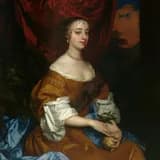
Hughes appears as Desdemona in Othello at the Vere Street Theatre, becoming the first woman known to perform on the English public stage.
On 8 December 1660, Margaret Hughes stepped onto the stage of the Vere Street Theatre in London as Desdemona in a production of Shakespeare's Othello, mounted by Thomas Killigrew's King's Company. This performance is widely credited by theatre historians as the moment a woman first appeared on the professional English stage in a female role, ending centuries of tradition in which boys and young men played women's parts.
The context for this breakthrough was the recent Restoration of Charles II to the English throne earlier in 1660, which brought with it the reopening of theatres after eighteen years of Puritan prohibition. Charles II, having spent his exile in France where actresses were already an established feature of the stage, was receptive to allowing women to perform in England as well. Hughes's appearance is often cited as the practical realization of this cultural shift, though the exact circumstances of who was 'first'—Hughes or her contemporary Anne Marshall—remain debated among historians.
The significance of this event cannot be overstated: it fundamentally altered the nature of English theatre, opening a profession to women that had been entirely closed to them. It challenged deep-seated societal norms about female propriety and public performance, and it paved the way for the professionalization of actresses as a recognized occupation. Hughes's Desdemona became a touchstone reference point in theatrical history, cited by early chroniclers such as John Downes in his Roscius Anglicanus.