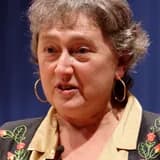
Margulis published 'On the Origin of Mitosing Cells,' laying out modern serial endosymbiotic theory (SET), initially rejected by ~15 journals before acceptance.
In 1967, then working under her married name Lynn Sagan, Margulis published her landmark paper "On the Origin of Mitosing Cells" in the Journal of Theoretical Biology. The paper synthesized decades of overlooked evidence to argue that mitochondria and chloroplasts—key organelles in eukaryotic cells—originated as free-living bacteria that were engulfed by host cells and became permanent symbiotic residents.
The manuscript was famously rejected by roughly fifteen scientific journals before finally being accepted, reflecting how radical the idea seemed to the mainstream biology establishment of the time, which favored a gradualist, non-symbiotic view of organelle evolution.
This paper is now regarded as one of the most important contributions to evolutionary cell biology in the twentieth century. It revived and substantially expanded upon earlier, largely dismissed ideas from Russian botanist Konstantin Mereschkowski and American biologist Ivan Wallin. Margulis's rigorous compilation of biochemical, genetic, and structural evidence eventually helped convert the scientific community, and by the 1980s the endosymbiotic theory had become a cornerstone of modern biology, taught in virtually every introductory biology course worldwide.
The paper marked the beginning of a lifelong, often contentious, campaign by Margulis to have symbiosis recognized as a primary driver of evolutionary innovation, alongside natural selection.