← All women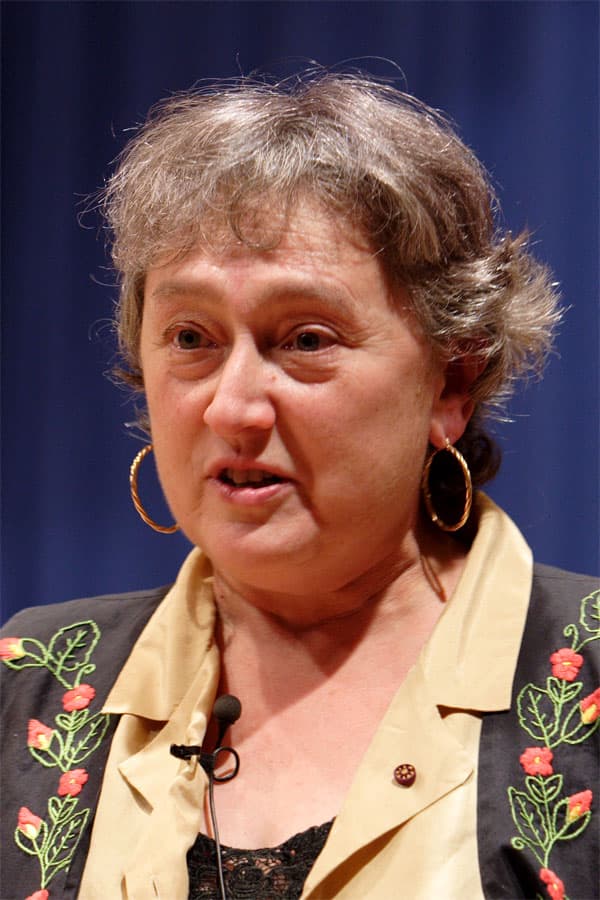
American · Science
Lynn Margulis
March 5, 1938 – November 22, 2011
Early Life and Background
Lynn Margulis was born on March 5, 1938, in Chicago, Illinois, to Leon and Leona Alexander. Her father was a lawyer and her mother served in various roles, managing the family shop and being active in the education sector. Margulis demonstrated a keen interest in science from a young age, which was nurtured by her parents. She attended the University of Chicago as an undergraduate, where she was part of the prestigious early entrance program. She graduated with a degree in Liberal Arts, showcasing her interdisciplinary aptitude early on.
Career Beginnings and Development
Margulis commenced her graduate studies at the University of Wisconsin, where she pursued genetics and microbiology. Her early work was marked by a desire to solve complex questions about cell biology and evolution. It was during this period that she developed the foundational theories for which she would later become renowned.
Major Works, Discoveries, or Accomplishments
The cornerstone of Margulis's career was her theory of endosymbiosis, which she first articulated in her 1967 paper 'On the Origin of Mitosing Cells.' The theory posited that eukaryotic cells originated through the symbiotic union of different species of prokaryotes. Initially, her ideas were met with skepticism as they challenged the existing paradigms. However, over time, the scientific community recognized the importance of her insights, which reshaped evolutionary biology. Her work not only changed our understanding of cell evolution but also influenced fields such as ecology and the study of biodiversity.
Awards, Honors, and Recognition
Throughout her career, Margulis received numerous accolades for her groundbreaking work. She was elected to the National Academy of Sciences in 1983 and awarded the National Medal of Science in 1999. Her contributions to science were further acknowledged internationally, reflecting the global impact of her research.
Personal Life
Lynn Margulis married astronomer Carl Sagan in 1957, with whom she had two children, Dorian and Jeremy. After their divorce in 1964, she married Thomas Margulis, with whom she had two more children. Their marriage also ended in divorce, but Margulis continued to maintain strong ties with her children and pursued her professional endeavors with vigor.
Legacy and Historical Impact
Margulis's legacy is vast, extending beyond her theoretical contributions. Her work facilitated a paradigm shift in biological sciences and served as a catalyst for further research into symbiotic relationships. Her ideas are now considered fundamental in biology, validated by the increasing evidence supporting endosymbiotic theory. Margulis's resilience in face of professional skepticism serves as an inspiration to many in scientific fields.
Later Life and Death
Margulis continued her academic pursuits and public advocacy for science throughout her later years. She held a professorship at the University of Massachusetts Amherst until her death. Lynn Margulis passed away on November 22, 2011, in Amherst, Massachusetts, leaving behind an enduring scientific legacy and a family of scholars influenced by her passion and dedication to understanding life.
Dated achievements
5 indexed.
- Mar051938Science
Born in Chicago, Illinois
Lynn Petra Alexander was born in Chicago, Illinois, on March 5, 1938, the eldest of four daughters.
View details Lynn Margulis - Wikipedia - Jan011967Science
Publishes seminal endosymbiotic theory paper (1967)
Margulis published 'On the Origin of Mitosing Cells,' laying out modern serial endosymbiotic theory (SET), initially rejected by ~15 journals before acceptance.