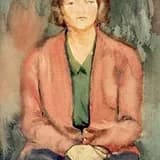
Lydia Mei died in 1965, closing out a career that spanned Estonian and Parisian avant-garde art circles.
Lydia Mei died in 1965, marking the end of a decades-long career as a painter associated with Estonian modernism and the broader European avant-garde. Her death closed a chapter for one of the three Mei sisters — alongside Kristine and Natalie — whose combined artistic output has since been reassessed by art historians as an important, if long under-recognized, contribution to twentieth-century Estonian and Baltic art.
In the years following her death, renewed scholarly and curatorial interest — including retrospective exhibitions and academic essays on women artists in Estonia — has worked to restore Lydia Mei's visibility within the historical record. Institutions such as the Kumu Art Museum in Tallinn have highlighted the Mei sisters' shared legacy as part of a broader effort to document the contributions of women to avant-garde movements that were historically dominated by male narratives.
Her life's work, spanning painting and engagement with early twentieth-century modernist currents, is now considered emblematic of the challenges and achievements of women artists navigating both Estonian national identity and international art scenes such as Paris. Lydia Mei's death in 1965 did not end interest in her work; rather, it marked the beginning of a slow process of rediscovery that continues among art historians today.