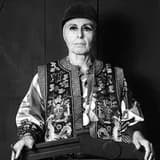
The American Institute of Architects awarded Nevelson its Medal for Sculpture in 1979.
In 1979, the American Institute of Architects (AIA) awarded Louise Nevelson its Medal for Sculpture, a notable honor given the close relationship between Nevelson's late work and architectural space. This recognition from architects, rather than solely art critics or museums, underscored the extent to which Nevelson's sculptural environments had begun to function as quasi-architectural interventions in public and private space.
Throughout the 1960s and 1970s, Nevelson had increasingly moved toward large-scale public commissions, including outdoor sculptures and environmental installations that interacted directly with architectural settings, plazas, and building facades. Her works such as Black Sun and pieces incorporated into corporate and civic plazas demonstrated a sensitivity to spatial context, scale, and the built environment that resonated strongly with architectural practice.
The AIA Medal reflected professional recognition from a discipline outside the traditional art world, validating Nevelson's role in redefining the relationship between sculpture and architecture in American public space. It anticipated the culmination of her environmental works, including Louise Nevelson Plaza in Manhattan, completed around this period, which stands as one of the few public spaces in New York City named after a woman artist and dedicated to her sculptural environment.