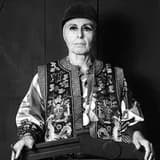
Nevelson received the Edward MacDowell Medal in 1977, honoring her lifetime contribution to American arts.
In 1977, Louise Nevelson was awarded the Edward MacDowell Medal, presented annually by the MacDowell Colony (now MacDowell) to an individual who has made an outstanding lifetime contribution to American culture. Previous recipients had included some of the most significant creative figures in American letters and arts, making this a particularly prestigious honor.
The award came at a moment when Nevelson, then in her late seventies, was experiencing a late-career surge of institutional and critical acclaim after decades of being underestimated within a male-dominated art world. Her signature style—assemblages of found wooden objects unified through monochromatic paint, often black—had become instantly recognizable and hugely influential on subsequent generations of sculptors working with accumulation, assemblage, and installation.
The MacDowell Medal specifically celebrated the cumulative arc of an artistic life, rather than any single work, underscoring how thoroughly Nevelson had reshaped the possibilities of American sculpture over more than four decades of practice. Her recognition alongside major literary and artistic figures reflected the breadth of her influence beyond the narrower category of sculpture, situating her as a central figure in twentieth-century American culture broadly. This medal was one of several major honors she received in rapid succession during the late 1970s and 1980s.