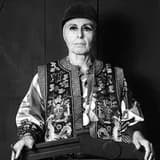
Nevelson joined Sidney Janis Gallery in 1962 as its first sculptor and first female Abstract Expressionist artist.
In 1962, Louise Nevelson joined the roster of the prestigious Sidney Janis Gallery in New York, one of the most influential commercial galleries championing Abstract Expressionism and modern art in postwar America. Her inclusion marked a significant milestone: she became the gallery's first sculptor and its first female Abstract Expressionist artist, a notable achievement in a field and an era dominated overwhelmingly by male painters such as Jackson Pollock, Willem de Kooning, and Franz Kline.
This barrier-breaking inclusion reflected Nevelson's hard-won ascension within the New York art establishment after decades of comparative obscurity and struggle, including years when she worked with limited recognition and financial precarity. Her monumental wood assemblages—stacked, painted black, white, or gold, and arranged into wall-like environments—had by this point captured the attention of major critics and curators, distinguishing her from the painterly focus of most Abstract Expressionists.
Her signing with Janis validated sculpture, and specifically assemblage, as a legitimate and commercially viable extension of the Abstract Expressionist movement. It also underscored the gradual, hard-fought opening of elite gallery representation to women artists during the 1960s. This moment helped cement Nevelson's reputation as a central figure of American modernism and paved the way for greater recognition of women working in large-scale sculptural forms.