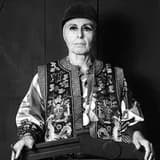
Nevelson was elected to the American Academy of Arts and Letters in 1969, a top honor for American artists.
In 1969, Louise Nevelson was elected to the American Academy of Arts and Letters, an honorary society composed of the country's most distinguished architects, artists, composers, and writers. Membership in the Academy is limited and considered one of the highest formal recognitions an American artist can receive, reflecting a lifetime of significant achievement and influence.
By 1969, Nevelson had firmly established herself as one of the leading sculptors in the United States, known for her towering, boxed assemblages of found wood painted in unifying monochrome hues—black, white, and later gold. Her election to the Academy came after decades of struggle for recognition, including years of poverty and dismissal by a gallery and museum system slow to embrace women working in large-scale sculpture.
This honor formally situated Nevelson within the pantheon of major American artistic figures, alongside luminaries in literature, music, and the visual arts. It reflected the art establishment's growing acknowledgment of her transformative contribution to modern sculpture and assemblage art. Her Academy membership further cemented her legacy and paved the way for the numerous civic and governmental honors that would follow in the subsequent two decades, including the Mayor's Award, the MacDowell Medal, and ultimately the National Medal of Arts.