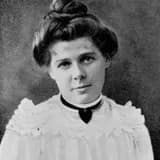
Louise Mack became recognised as one of the first women war correspondents, reporting from Antwerp, Belgium during its fall to German forces in October 1914.
In early October 1914, Louise Mack was in Antwerp, Belgium, when German forces besieged and then occupied the city during the opening months of the First World War. Rather than fleeing with other foreign civilians, Mack chose to remain in the city, providing eyewitness dispatches on the invasion and occupation that were published in British and Australian newspapers, including the Daily Mail and outlets back in Australia.
Her reporting from the front lines of a modern European war made her one of the earliest women — and by many accounts the first woman — to report as an accredited or de facto war correspondent directly from an active war zone in this conflict, at a time when war correspondence was considered an almost exclusively male domain. She later published a memoir, A Woman's Experiences in the Great War (1915), recounting her time in besieged Antwerp, her flight from the city as it fell, and her observations of Belgian refugees and German soldiers.
This achievement was significant not only for its journalistic value but for demonstrating that women could operate in dangerous, chaotic war environments and produce credible, compelling reportage. Mack's work helped pave the way for future generations of female war correspondents who would follow in the twentieth century, challenging assumptions about gender and combat journalism.