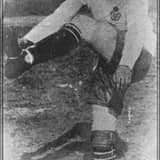
Lily Parr became the first woman inducted into the National Football Museum's English Football Hall of Fame, recognising her pioneering career.
In 2002, Lily Parr became the first woman to be inducted into the National Football Museum's English Football Hall of Fame, a landmark recognition of her extraordinary contribution to the sport more than two decades after her death.
The Hall of Fame, established to honour the greatest figures in English football history, had until this point recognised only male players and administrators. Parr's induction marked a significant, if belated, acknowledgment that women's football — and Parr's own remarkable career, encompassing an estimated 900-1,000 goals scored over three decades — deserved a place in the sport's official historical narrative.
This honour came amid a broader, slow-building movement to recover and celebrate the history of women's football in Britain, much of which had been suppressed or forgotten following the FA's 1921 ban. Parr's induction helped catalyse renewed public and media interest in the Dick, Kerr Ladies team and the wider history of women's football during and after the First World War.
Her Hall of Fame status has since been cited repeatedly in football media, documentaries, and educational materials as a foundational moment in the modern recognition of women's football history, paving the way for further honours including her 2019 statue and increasing scholarly and popular attention to her life and career.