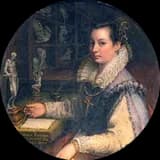
By the late 1580s Fontana operated her own workshop, taking commissions from Bolognese and Roman nobility and foreign dignitaries under standard commercial terms.
By the close of the 1580s, Lavinia Fontana had established herself as the operator of her own independent painting workshop in Bologna — a studio through which she accepted, negotiated, and fulfilled commissions from an increasingly elite clientele including Bolognese senators, Roman nobility, and visiting foreign dignitaries.
This is recognized by art historians as making Fontana the first documented woman to run her own commercial painting workshop under the same conditions as her male peers: she trained assistants, managed contracts, set prices, and delivered finished works on schedule, all functions typically restricted to male guild members. Workshops were the backbone of Renaissance and Baroque artistic production, and control over one conferred both economic independence and professional legitimacy.
Fontana's ability to sustain such an operation — while also raising eleven children — demonstrated that women could occupy the full spectrum of professional artistic life, from apprentice to master. Her workshop's output included portraits, religious paintings, and mythological scenes, reflecting a breadth of subject matter rarely permitted to women artists of the period, who were usually confined to portraiture or still life. This achievement paved the way for later women workshop-heads and cemented Fontana's reputation as a trailblazer for professional autonomy among women in the arts.