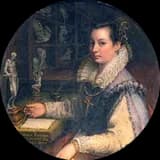
Around her marriage, Fontana arranged for her husband to manage household affairs so she could paint professionally — widely regarded as Italy's first professional female painter.
Around the time of her marriage to fellow painter Gian Paolo Zappi in 1577, Lavinia Fontana established an unprecedented domestic and professional arrangement: her husband would manage household and business affairs, freeing her to devote herself fully to painting and to accept commissions in her own name.
This arrangement is historically significant because it marks Fontana as, in the assessment of numerous art historians, the first professional female painter in Italy — and arguably in Western Europe — to build a sustained career based on open, competitive commissions rather than working within the sheltered confines of a convent or under the exclusive patronage of a single court. Most women artists of the period who achieved any recognition did so as court painters or as nuns producing devotional works for religious communities; Fontana instead operated as an independent economic agent, negotiating fees and contracts directly with patrons.
Remarkably, Fontana became the family's primary breadwinner, and Zappi is documented as having subordinated his own artistic ambitions to support hers, at times assisting in her studio. This reversal of expected gender roles was extraordinary for sixteenth-century Italy and allowed Fontana to raise eleven children while maintaining an active, prolific studio practice. Her success proved that a woman could compete commercially with male painters on their own terms, laying groundwork for later women artists such as Artemisia Gentileschi and Elisabetta Sirani.