← All women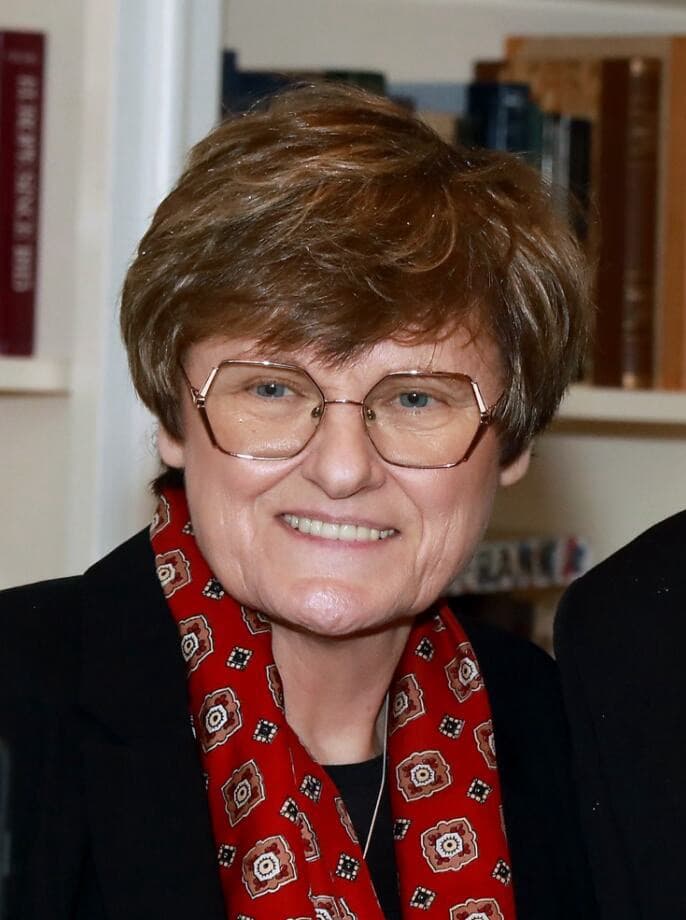
Hungarian, American · Science · Medicine
Katalin Karikó
January 17, 1955 – present
Early Life and Background
Katalin "Kati" Karikó was born on 17 January 1955 in Szolnok, Hungary, and spent her childhood in the nearby town of Kisújszállás.[1][2][3][4][11] She grew up in a modest adobe home that lacked running water and television, and her family cultivated its own vegetables to make ends meet.[3][11][15] Her father worked as a butcher, and there was no tradition of scientific work in the family.[11][15] Despite these circumstances, Karikó developed a strong fascination with nature and biology, inspired by the landscapes around her and by books available in the local library.[3][11]
Hungary in the 1950s and 1960s was a socialist state aligned with the Soviet Union.[13] Educational opportunities were structured within this context, but the country maintained strong traditions in mathematics and the natural sciences. Karikó’s aptitude for science emerged early; she excelled in school and was encouraged by teachers who recognized her talent.[2][13] Her determination to become a scientist was shaped by both curiosity and a desire to transcend the material limitations of her upbringing.[11][15]
Education and Formative Scientific Training
In 1973, Karikó entered the University of Szeged (then the József Attila University of Szeged) to study biology.[2][17] She completed her undergraduate degree in biology in 1978, then pursued doctoral studies in biochemistry at the Szeged Biological Research Centre (Biological Research Center of the Hungarian Academy of Sciences).[2][13][17] Her Ph.D. research focused on molecular biology and biochemistry, laying the groundwork for her later interest in RNA.[13][17]
Karikó received her Ph.D. in biochemistry in 1982messenger RNA (mRNA) as a tool for directing protein production in cells. She began to imagine using synthetic mRNA to treat diseases by instructing cells to produce therapeutic proteins.[12][16]
Emigration and Early Career Abroad
In 1985, facing limited funding and career prospects in Hungary, Karikó emigrated with her husband and young daughter to the United States.[12][11][17] According to later accounts, she arrived with approximately $1,200 hidden in her toddler’s teddy bear, a symbol of both the family’s financial precarity and her determination to pursue a scientific career abroad.[11][15]
Her early years in the U.S. were marked by short‑term positions and the challenge of establishing a research program. She held postdoctoral roles at institutions including Temple UniversityUniversity of Pennsylvania (Penn).[4][17] In 1989, she became a researcher in the Perelman School of Medicine at the University of Pennsylvania.[17] At Penn, she focused on RNA‑mediated mechanisms and began to explore how in vitro‑transcribed mRNA could be used for protein replacement therapy.[4][14][17]
Throughout the 1990s, Karikó’s work centred on the possibility of using synthetic mRNA as a therapeutic platform. She faced significant obstacles: many colleagues considered mRNA too unstable and too inflammatory to be clinically useful, and her grant applications were frequently rejected.[12][14][16] At one point she was demoted at Penn, losing the possibility of a traditional tenure‑track career.[12][14] Nonetheless, she continued to experiment with different ways of modifying and delivering mRNA.
Collaboration with Drew Weissman and the Breakthrough in Modified mRNA
A pivotal turning point came in the late 1990s, when Karikó met Drew Weissman, an immunologist at Penn interested in dendritic cells and vaccines.[12][17][19] In 1997, she began collaborating with Weissman, combining her expertise in mRNA with his knowledge of the immune system.[17][19] Together, they sought to understand why synthetic mRNA triggered strong innate immune responses and how those responses might be mitigated.
Karikó and Weissman discovered that in vitro‑transcribed mRNA, produced using standard methods, contained molecular signatures that activated Toll‑like receptors in immune cells, leading to inflammation.[14][19] They hypothesized that chemical modifications to the nucleosides in mRNA could reduce these immune responses. Through systematic experimentation, they showed that incorporating modified nucleosides such as pseudouridine and 5‑methylcytidine into mRNA significantly reduced its immunogenicity while preserving, or even enhancing, protein expression.[14][16]
This insight formed the core of their breakthrough. Starting in the early 2000s, they filed patent applications to protect the technology. In 2005, their non‑immunogenic, nucleoside‑modified RNA technology was patented, forming a basis for future mRNA vaccines.[4][12] A key U.S. patent application was filed on 12 December 2005, later granted as US8278036B2 in 2012.[4] A related application was filed on 2 April 2008 and granted as US8748089B2 in 2014, extending protection to pseudouridine‑containing RNA molecules.[4]
Foundational Patents and RNARx
Karikó and Weissman’s work resulted in several important patents. The 2005 patent on non‑immunogenic, nucleoside‑modified RNA established a conceptual framework for therapeutic mRNA.[4][12] In 2006, they received a patent on using modified nucleosides to reduce antiviral immune responses to mRNA.[4] A 2012 patent extended these ideas to multiple modified nucleosides.[4][9]
In the same year, 2012, Karikó and Weissman co‑founded RNARx, a company focused on developing nucleoside‑modified mRNA for therapeutic use.[2] Karikó served as co‑founder and CEO from 2006 to 2013.[2] RNARx aimed to translate their discoveries into clinical applications, though the company remained relatively small and operated in a field that had not yet captured broad commercial attention.
European patents later expanded the geographic reach of their intellectual property. On 11 January 2017, the European Patent Office (EPO) granted EP2510099B1, listing Karikó as inventor and covering mRNA technologies.[3] This was followed by EP3112467B1 on 9 May 2018, EP2578685B1 on 2 January 2019, and EP3287525B1 on 10 July 2019, all relating to modified mRNA innovations.[3]
Role at BioNTech and mRNA Vaccine Development
As interest in RNA therapeutics grew, Karikó joined the German biotechnology company BioNTech, where she eventually became a Senior Vice President.[14][17] At BioNTech, she contributed to building mRNA platforms for vaccines and other therapies, helping to refine delivery methods such as lipid nanoparticles and to optimize mRNA constructs for clinical use.[14][17]
When the COVID‑19 pandemic emerged in late 2019 and early 2020, the modified mRNA technology that Karikó and Weissman had developed proved decisive. BioNTech, in partnership with Pfizer, used nucleoside‑modified mRNA encoded for the SARS‑CoV‑2 spike protein and formulated it in lipid nanoparticles. This design, direct outgrowth of Karikó’s earlier work, allowed rapid development of a vaccine that showed high efficacy and acceptable safety in large clinical trials.[14][17][19]
Other companies, most notably Moderna, also built mRNA vaccines on similar principles of nucleoside modification and lipid nanoparticle delivery.[17][19] Although Karikó was not involved in all these efforts directly, her scientific contributions underpinned the entire class of mRNA vaccines. Commentators and institutional profiles have credited her with pioneering the creation of mRNA vaccines that helped stop the COVID‑19 pandemic.[2][3][9]
Academic Positions and Later Career
In addition to her industry role, Karikó has held academic appointments. She joined the Perelman School of Medicine at the University of Pennsylvania in 1989 and became an adjunct professor of Neurosurgery at Penn, maintaining ties to academic research while working at BioNTech.[17][14] She has continued to publish scientific articles and to participate in conferences and symposia describing the development and application of mRNA technology.[14][13]
Her career narrative has drawn attention because of its non‑traditional trajectory: long periods of work as a non‑tenure‑track researcher, a demotion at Penn, and a shift into industry leadership later in life. These experiences have been frequently cited as examples of the challenges faced by women and immigrant scientists in academia and the importance of resilience in scientific careers.[12][14][9]
Major Awards and Honors
The global success of mRNA vaccines led to a surge of recognition for Karikó’s contributions. In 2020, she and Weissman received the Lewis S. Rosenstiel Award for Distinguished Work in Basic Medical Research from Brandeis University for pioneering nucleic acid modification for RNA therapies and vaccines.[4][9] The announcement of this award was made on 24 February 2020.[4]
In 2021, she received numerous honors. These included the Lasker–DeBakey Clinical Medical Research Award, recognizing her central role in enabling mRNA vaccine development.[4][2] She was also a co‑recipient of the Louisa Gross Horwitz Prize awarded by Columbia University for her contributions to understanding and using mRNA for vaccines.[4][7] That year she received the Reichstein Medal of the Swiss Academy of Pharmaceutical Sciences, the Vilcek Prize for Excellence in Biotechnology, and the Wilhelm Exner Medal, all highlighting the impact of her work on pharmaceutical science and biotechnology.[4][7][16]
Karikó’s achievements were recognized in Spain with the Princess of Asturias Award for Technical and Scientific Research, presented on 22 October 2021, for her contributions to mRNA vaccines and their role in combating COVID‑19.[4] She also received the Albany Medical Center Prize in Medicine and Biomedical Research, formally awarded on 15 November 2021, and the John Scott Award in Philadelphia on 21 November 2021 for creating a stable and safe mRNA construct.[4][8]
In 2022, Karikó’s recognitions continued. She was a recipient of the Breakthrough Prize in Life Sciences for discoveries enabling mRNA vaccines.[3][4][7] She received the Japan Prize in Materials and Production, the Werner von Siemens Ring, and the Solvay Prize, all acknowledging her role in advancing materials science, engineering, and chemical research through mRNA technology.[3][4][9] She was also awarded an honorary doctorate by Eötvös Loránd University (ELTE), further cementing her status in Hungarian academic life.[17]
On 22 May 2022, Yale University conferred an honorary degree upon her during its commencement ceremony, praising her contributions to global health through mRNA vaccines.[7] On 27 May 2022, she and Weissman received the Novo Nordisk Prize for pioneering discoveries in nucleoside‑modified mRNA.[4]
That same year, she was elected a member of the U.S. National Academy of Medicine, recognizing her distinguished contributions to medicine and health.[4] On 20 June 2022, Germany’s Deutsches Patent‑ und Markenamt (DPMA) awarded Karikó and Weissman the inaugural "Inventor of the Year" prize for their mRNA vaccine research.[5] On 21 June 2022, the European Patent Office presented her with the European Inventor Award 2022 in the "Lifetime achievement" category for her work on modified mRNA.[3]
Nobel Prize in Physiology or Medicine
The highest recognition came in 2023. On 2 October 2023, the Nobel Assembly at the Karolinska Institute announced that the Nobel Prize in Physiology or Medicine would go to Katalin Karikó and Drew Weissman for their discoveries concerning nucleoside base modifications that enabled effective mRNA vaccines against COVID‑19.[4][6][7][10] The Nobel citation emphasized how their research had fundamentally changed the understanding of how mRNA interacts with the immune system and had paved the way for rapid vaccine development during a global health crisis.
On 10 December 2023, Karikó formally received the Nobel Prize at the award ceremony in Stockholm.[13][14] As one of the relatively few women ever to win the Nobel in Physiology or Medicine, her award has been widely discussed in the context of gender representation in science and medicine.[6][7][10] The Nobel Prize solidified her status as a central figure in the history of vaccinology and molecular therapeutics.
Personal Life
Karikó is married, and the couple has a daughter, Zsuzsanna ("Zsuzsi") Francia, who became an elite rower and represented Hungary in international competitions, including the Olympic Games.[4][11] Stories about Karikó’s emigration often mention traveling to the United States with her young daughter, underscoring the family dimension of her scientific journey.[11][12]
Accounts of her life describe a strong work ethic and modest lifestyle. She has spoken about working long hours in the laboratory, driven by curiosity and a belief in the therapeutic potential of mRNA.[14][16] Her personal narrative—combining family responsibilities, immigrant experiences, and scientific persistence—has resonated widely, particularly in discussions about women balancing research careers and caregiving roles.
Legacy and Historical Impact
Katalin Karikó’s legacy is defined by her pioneering role in the development of nucleoside‑modified mRNA as a therapeutic platform. Her work has enabled vaccines that were critical in controlling the COVID‑19 pandemic and has opened new avenues for treating cancer, autoimmune diseases, and genetic disorders.[1][4][14][16] Institutions such as the National Women’s History Museum and the Nobel Prize organization have highlighted her as an example of a woman who changed science through persistence and ingenuity.[3][9]
Historically, her contributions have reshaped perceptions of what mRNA can do. Once considered too unstable and too immunogenic, mRNA is now understood—because of her and her collaborators’ work—as a versatile, programmable tool for medicine. This transformation has influenced research priorities, funding patterns, and pharmaceutical strategies worldwide.[14][16]
From a women’s history perspective, Karikó’s story illustrates both the obstacles and the possibilities for women in science. She experienced grant rejections, career setbacks, and long periods without tenure, yet her persistence ultimately led to one of the most significant biomedical breakthroughs of the century.[12][14][9] Her recognition through major prizes, including the Nobel, helps counter the historic underrepresentation of women among high‑profile laureates and patent holders.
Her life is frequently cited as a case study in the importance of investing in basic research and in supporting unconventional ideas. Commentators have noted that if her work on mRNA had been abandoned because of funding difficulties, the rapid development of COVID‑19 vaccines might not have been possible.[14][16] As such, her legacy extends beyond mRNA to broader debates about the structure of academic careers, the value of long‑term research, and the need for inclusive systems that allow scientists from diverse backgrounds to thrive.
Later Life
As of the mid‑2020s, Katalin Karikó remains active in science, serving in roles that bridge academia and industry. She continues to advocate for mRNA research, mentor younger scientists, and speak publicly about her experiences developing the technology.[14][13][9] Her autobiography, Breaking Through: My Life in Science, has further disseminated her story, emphasizing themes of perseverance, curiosity, and the importance of fundamental research.[15][20]
Karikó’s ongoing work and public engagement ensure that her influence will extend into future generations of scientists and physicians. Her career stands as a testament to how sustained effort by a woman scientist, originating from a small town in Hungary, can lead to discoveries that reshape global health and scientific paradigms.
Dated achievements
20 indexed.
- Jan171955Science
Birth of Katalin Karikó
Katalin Karikó was born in Szolnok, Hungary, beginning the life of the biochemist whose work on modified mRNA would later underpin COVID-19 vaccines.
View details Wikipedia: Katalin Karikó - Dec122005Science
Filing of key U.S. patent on nucleoside-modified mRNA
Karikó and Drew Weissman filed the U.S. patent application that became US8278036B2, covering non-immunogenic nucleoside-modified RNA.