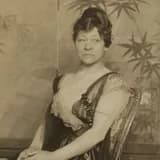
Juliana R. Force became the first director of the newly founded Whitney Museum of American Art in New York City.
In 1930, after the Metropolitan Museum of Art declined Gertrude Vanderbilt Whitney's offer to donate her extensive collection of contemporary American art, Whitney and Force made the momentous decision to establish an entirely new institution: the Whitney Museum of American Art. Juliana R. Force, who had already been managing Whitney's studio and exhibition spaces for over a decade, was named the museum's founding director—making her the first woman to direct a major American art museum of this stature.
This appointment was historically significant because it placed a woman at the helm of an institution dedicated exclusively to American art at a time when the American art establishment was dominated by European old masters and by male curators and directors. Force used her position to champion living American artists, many of whom had been overlooked by more conservative institutions.
Under her leadership, the Whitney became a vital counterpoint to the Metropolitan Museum, prioritizing contemporary and often controversial American artists including Edward Hopper, Georgia O'Keeffe, and members of the Ashcan School. Her directorship, which lasted until her death in 1948, fundamentally shaped the canon of American Modernism and established the Whitney Biennial's precursor exhibitions as essential barometers of American artistic production. Her legacy as a pioneering female museum director paved the way for future generations of women in arts administration.