← All women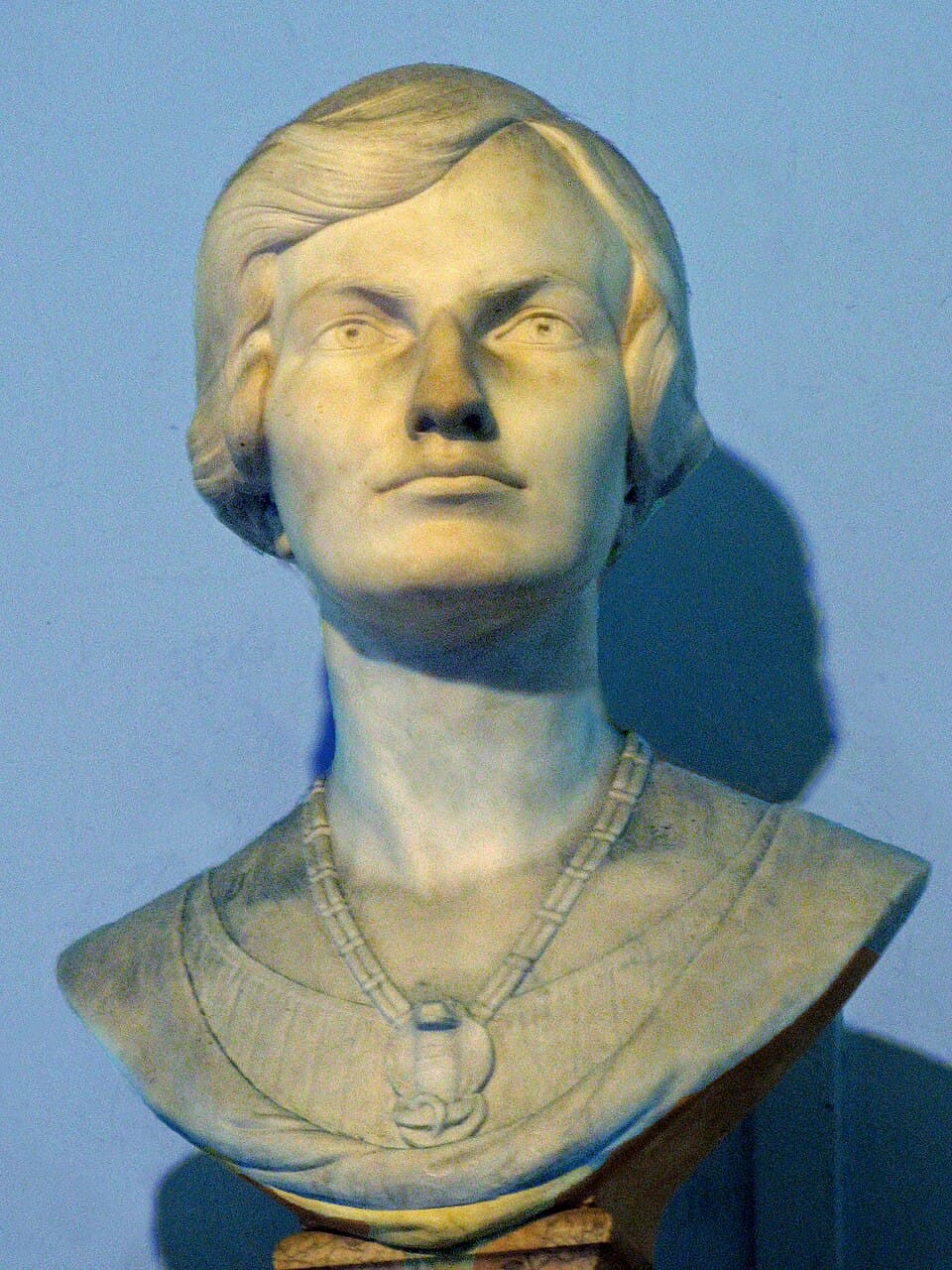
British · Science
Joan Beauchamp Procter
August 5, 1897 – September 20, 1931
Early Life and Background
Joan Beauchamp Procter was born on 5 August 1897 in London, England.[1][2][5] She was the daughter of Joseph Procter, a stockbroker, and Elizabeth Brockbank Procter, an artist, who together provided a home that combined financial stability with creative and intellectual stimulation.[2][4][9] The family lived at 11 Kensington Square, an address in a prosperous London neighborhood.[4] This environment, together with her parents’ support, allowed Joan to pursue wide‑ranging interests from an early age.
From childhood, Procter showed an unusual fascination with reptiles and amphibians. Accounts of her life emphasize that she kept snakes, frogs, lizards and even a crocodile as pets, using them not only as companions but as subjects for close observation.[6][8][10] This was highly unconventional for a girl growing up in Edwardian Britain, when women and girls were expected to be "dainty" and when reptiles were viewed mainly as exotic, dangerous curiosities rather than animals worthy of scientific study.[6][8] Her interest was therefore both personally distinctive and socially transgressive.
Joan attended St Paul’s Girls’ School
By her late teens, Procter had already developed a level of expertise unusual for someone of her age and circumstances. She followed the scientific literature on reptiles and began corresponding with museum staff, demonstrating her knowledge of taxonomy and behaviour.[2][7] Her early self‑education and practical experience with live animals laid the foundation for a professional career in herpetology, even though formal academic routes were largely closed to her as a chronically ill woman.
Career Beginnings at the British Museum (Natural History)
Procter’s transition from self‑taught enthusiast to institutional scientist occurred in her late teens. Around the age of nineteen, she delivered a paper to the Zoological Society of London, a remarkable achievement for someone without a university degree.[8][10] The society was sufficiently impressed by her work that she soon became known to leading figures in British zoology.
In 1917, Procter began working at the British Museum (Natural History), now the Natural History Museum in London, as a voluntary research assistant to the eminent zoologist George Albert Boulenger, Keeper of Reptiles and Fishes.[1][8][9] As Art UK’s biographical entry notes, her enthusiasm and knowledge "had already impressed officials" at the museum, leading to this appointment.[9] Although she was initially unpaid and her position was informal, she undertook substantial scientific responsibilities.
Working with Boulenger, Procter assisted in the curation and study of the museum's reptile collection. She helped identify and classify specimens, contributed to taxonomic work, and gained access to the museum’s global networks of collectors and scholars.[1][7][9] This experience strengthened her skills in systematics and exposed her to the cutting‑edge research of early twentieth‑century herpetology.
Procter’s chronic illness shaped her working life. Unable to follow the conventional academic path, she relied on independent study and institutional apprenticeship. The British Museum role exemplifies how women of her generation often entered science through auxiliary or voluntary positions, building reputations that eventually warranted more formal recognition.[2][9] For Procter, this recognition came within only a few years.
Advancement and Leadership at the British Museum
In 1920, following the retirement of George Albert Boulenger, Procter was placed in paid charge of the museum's reptile collection.[1][9] The Art UK biography records that "on Boulenger's retirement in 1920 Procter was briefly put in paid charge of the museum's reptile collection."[9] Although she did not hold a full curatorial title for a long period, this appointment gave her formal authority over one of the world’s most important reptile collections.
In this capacity, Procter oversaw the care and classification of a wide range of reptiles and amphibians. She continued taxonomic investigations and contributed to the museum’s role as a reference centre for international herpetological research.[1][7] Her responsibilities and visibility within the institution grew, and she developed a reputation as a meticulous and insightful worker on challenging taxonomic problems.
During these years, Procter began publishing scientific papers. Later institutional summaries and encyclopedia entries note that she produced "substantial taxonomic work" and wrote both scientific and popular zoological articles.[3][7] One of her most noted studies involved the East African tortoise Testudo loveridgei (now Malacochersus tornieri), which she examined in detail; the Linnean Society highlights this work as among her best‑known contributions.[2]
The early 1920s were therefore a period of consolidation of her scientific authority. Despite recurrent illness and the absence of a degree, Procter had moved from volunteer assistant to de facto leader of the reptile collection in a major national museum, and she had begun to build a bibliography that would cement her standing in the herpetological community.
Transition to the Zoological Society of London
In 1923, Procter’s career shifted from museum collections to living animals in a zoo setting. That year she was engaged by the Zoological Society of London (ZSL) to help plan a new aquarium at London Zoo.[5][8] According to a ZSL feature written for the 120th anniversary of her birth, she "helped with plans for the new aquarium" and worked with architects on its design.[5]
Her role went beyond decoration. Procter applied her deep understanding of reptile and amphibian physiology and behaviour to the practical design of tanks and enclosures. Later accounts attribute to her the design of rock formations for aquarium exhibits and other structural features intended to create more naturalistic environments.[14] This work represented an early example of habitat‑based exhibit design, a concept that would become central to modern zoo practice.
After roughly four months of work on the aquarium project, the Zoological Society invited Procter to join its staff formally. In 1923 she became Curator of Reptiles and Amphibians at London Zoo.[1][5][9] She was only twenty‑six years old, and she had no university degree, yet she was entrusted with full responsibility for a major department in one of the world’s most prominent zoos.
Curator of Reptiles and Amphibians at London Zoo
Procter’s curatorship at London Zoo is the role for which she is best remembered. The Zoological Society and encyclopedic sources affirm that she was the first woman to serve as Curator of Reptiles (or Curator of Reptiles and Amphibians) at the zoo, making her a pioneer in women’s employment in scientific leadership positions.[1][3][5][7]
As curator, Procter oversaw a diverse collection of reptiles and amphibians. She managed acquisition and exchange of animals, supervised their day‑to‑day care, and directed staff in implementing husbandry practices that reflected ecological knowledge. Her approach emphasized the importance of appropriate temperature, humidity, shelter and diet, and she was attentive to the behavioural needs of species that had previously been treated as static exhibits.[5][8]
Procter was also closely involved in the design and construction of a new reptile house at London Zoo, which was completed in 1926.[8][15] Educational resources and biographical summaries note that she worked with architects to create a building "designed specifically for the reptiles’ comfort" and that the structure remains in use today.[8][15] The reptile house incorporated controlled environmental conditions and display features that allowed visitors to observe animals while minimizing stress, marking an important advance in zoo architecture.
Her curatorship combined scientific research with public education. Procter wrote labels and interpretive materials for exhibits, presented lectures, and engaged with visitors, helping to shift public attitudes toward reptiles from fear and disgust to curiosity and respect.[2][5][6] She also coordinated veterinary care and experimented with medical treatments for reptiles, contributing innovative practices to zoo and veterinary medicine.[3][7]
Scientific Work, Discoveries and Publications
Beyond her institutional roles, Procter was an active researcher and writer. Encyclopedic entries note that she undertook "substantial taxonomic work" and made "important innovative contributions" to veterinary practice and zoo displays.[3][7] Her scientific papers addressed classification, anatomy and behaviour across a range of reptile groups.
Among her notable studies was her work on East African tortoises. The Linnean Society highlights her investigation of Testudo loveridgei, later recognized as Malacochersus tornieri, as her most famous research contribution.[2] Through detailed morphological analysis and comparative study, she clarified the taxonomy of these tortoises and contributed to understanding their diversity and distribution.
Procter also produced early accounts of the behaviour of Komodo dragons in captivity, based on animals held at London Zoo.[3][7] At a time when little was known about these large lizards, her observations of feeding, movement and interaction provided important baseline data. She was known internationally for her knowledge of the species, and later accounts credit her with helping to establish protocols for their care.
In addition to technical papers, Procter wrote popular articles and educational pieces on reptiles and amphibians.[3][6][7] These works appeared in scientific journals and in outlets aimed at broader audiences, helping to demystify herpetology and to inspire interest in animals often overlooked in mainstream natural history writing.
Her scientific contributions were recognized by the naming of at least two reptile species in her honour, including the snake Buhoma procterae and the tortoise Testudo procterae (nomenclature later revised).[6][2] Such eponyms signified respect from her peers and ensured that her name would remain embedded in the scientific record.
Awards, Honors, and Professional Recognition
Procter’s work received formal honours during her lifetime. She was elected a Fellow of the Zoological Society of London (FZS) and a Fellow of the Linnean Society (FLS), distinctions that acknowledged her contributions to zoology and natural history.[1][2][3] Fellowship in these societies was an important mark of professional standing, particularly for a woman without a university degree.
Her international reputation led the University of Chicago to award her an honorary Doctor of Science (D.Sc.) degree.[2] The Linnean Society notes that "her international recognition led her to receive an honorary doctorate D.Sc. degree from the University of Chicago," underscoring the high regard in which she was held beyond Britain.[2] This kind of honorary doctorate was relatively rare for women in the early twentieth century, especially in a specialized field such as herpetology.
Procter also held roles that reflected her standing in the wider scientific community. The New York Times obituary records that she served as secretary for the World List of Scientific Periodicals Company, a position connected to efforts to index and standardize scientific journal titles internationally.[14] Her involvement in such work shows that she was trusted with organizational responsibilities that affected the infrastructure of scientific communication.
By the end of her life, Procter was "known all over the world" for her reptile house work and her publications, in the words of the Linnean Society.[2] Children’s encyclopedias and educational materials produced long after her death describe her as "a brilliant scientist" who was internationally recognized at a time when women were not encouraged to be scientists.[6] These retrospective assessments emphasize the extent to which she overcame social and institutional barriers.
Personal Life and Health
Procter’s personal life was deeply affected by chronic illness. Sources consistently note that she suffered from poor health "for most of her life" and that her condition ultimately contributed to her early death at thirty‑four.[2][5][6] Some later accounts describe her as physically disabled by her early thirties.[13] The precise nature of her illness is not detailed in the main biographical sources, but it was severe enough to interrupt her schooling, block her entry to university, and necessitate periods of convalescence.
There is no evidence in the cited sources that Procter married or had children. Biographical entries focus on her professional achievements and her health rather than on domestic relationships, suggesting that her life was largely devoted to scientific work and institutional responsibilities.[1][2][3][7] In this respect, she resembled other early twentieth‑century women scientists whose careers were often pursued outside of traditional family structures.
Despite physical limitations, Procter maintained close relationships with animals. Anecdotal accounts emphasize that she formed strong bonds with the reptiles under her care, including a celebrated Komodo dragon with which she was sometimes photographed.[15][16] Her affinity with these animals, unusual in her social context, was both personal and professional, reinforcing her reputation as someone who understood reptiles not merely as specimens but as complex living beings.
Legacy and Historical Impact
Procter’s legacy is multifaceted, encompassing scientific research, zoo practice, and women’s history. In herpetology, she is remembered for her taxonomic work on tortoises and other reptiles, for her behavioural observations of Komodo dragons and other species in captivity, and for the species named in her honour.[2][3][6] Her publications continued to be cited after her death, and her contributions helped to define early twentieth‑century knowledge of several groups.
In zoo design and animal husbandry, Procter played a central role in shifting practices toward more humane and scientifically informed standards. The reptile house she helped design at London Zoo, completed in 1926, has been repeatedly highlighted as pioneering in its focus on the animals’ comfort.[8][15] Educational materials emphasize that it was "the first of its kind built specifically for the reptiles’ comfort" and that it remains in use, albeit updated, underscoring the enduring influence of her design principles.[8]
Procter’s career also has significance for the history of women in science. She became the first female Curator of Reptiles at London Zoo and one of the earliest women to hold curatorial authority in a major scientific institution.[1][3][5][7] Working without a university degree and while chronically ill, she reached positions that many healthy male graduates could not. Modern biographies and children’s books present her as a role model who "changed the world" by following her passion for reptiles and refusing to be constrained by gendered expectations.[6][10][15]
Her story continues to inspire. The picture‑book biography Joan Procter, Dragon Doctor introduces new generations to her achievements and her bond with reptiles.[15][16] Online educational resources, museum exhibits, and social‑media posts periodically commemorate her birthday and highlight her work, reaffirming her place in the broader narrative of women’s contributions to science.[2][5][12]
Later Life and Death
In her final years, Procter’s health worsened. The Zoological Society notes that she went to Whipsnade, its country zoo in Bedfordshire, for convalescence.[5] Despite periods of rest, her condition did not improve sufficiently to allow a long career. Nevertheless, she continued to be active in herpetology and zoo work as much as her health permitted.
On 20 September 1931, Procter died in London at the age of thirty‑four.[1][2][3][6] The New York Times obituary published the following day described her as a "specialist in Reptilia and Batrachia" and noted that she had been curator of reptiles at the Zoological Society of London and previously associated with the London Natural History Museum.[14] It emphasized that she was "widely known" in leading museums and that she had written numerous articles in her field.[14]
Her death brought an abrupt end to a career of extraordinary promise and achievement. Yet the institutions she served—the Natural History Museum, the Zoological Society of London, and the Linnean Society—continue to remember her. Modern profiles stress that her "short life was afflicted by chronic ill‑health" but also that she undertook "substantial taxonomic work" and made "significant innovative contributions" despite these challenges.[2][7]
Today, Procter is recognized not only as an outstanding herpetologist but also as a trailblazer who expanded the possibilities for women in scientific and zoo careers. Her life demonstrates how passion, self‑education and resilience could overcome structural barriers in early twentieth‑century science, leaving a legacy that endures in both the scientific literature and the physical spaces of London Zoo.
Dated achievements
7 indexed.
- Aug051897Science
Birth of Joan Beauchamp Procter
Joan Beauchamp Procter was born in London, England, on 5 August 1897, later becoming a pioneering British zoologist and herpetologist.
View details Wikipedia: Joan Beauchamp Procter - Jan011917Science
Became voluntary research assistant to George Albert Boulenger
In 1917, Procter began working as a voluntary research assistant to herpetologist George Albert Boulenger at the Natural History Museum, London.