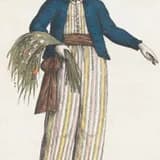
Jeanne Baret landed at La Rochelle on 7 January 1775, completing her long journey back to France after nearly a decade abroad.
On 7 January 1775, Jeanne Baret finally set foot back on French soil at the port of La Rochelle, bringing to a close a journey that had begun over eight years earlier when she secretly boarded the Étoile in November 1766. Her return followed years of botanical work, a global sea voyage, the death of her collaborator Philibert Commerson in 1773, and her subsequent marriage in 1774.
The landing at La Rochelle represented far more than the end of a long voyage; it was the completion of a journey that had taken Baret across the Atlantic, around the treacherous Cape Horn, through the vast Pacific, into the Indian Ocean, and around the Cape of Good Hope, effectively encircling the entire globe. Few Europeans of any gender had accomplished such a feat by this period, and Baret's return marked the quiet conclusion of an unprecedented, if largely unrecognized, achievement.
This event holds deep historical significance as the definitive endpoint of Baret's circumnavigation, cementing her place, only recognized much later by historians, as the first woman known to have sailed around the world. Her return was modest and lacked the fanfare that might have accompanied a male explorer's homecoming, reflecting the era's disregard for women's contributions to science and exploration, an injustice that later scholarship has worked to correct.