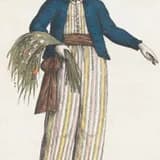
By landing at La Rochelle on 7 January 1775, Jeanne Baret became recognized as the first woman known to have circumnavigated the Earth.
Jeanne Baret's landing at La Rochelle on 7 January 1775 marked the completion of a journey that made her, according to modern historians, the first woman known to have circumnavigated the globe. Having departed France in November 1766 disguised as a man, she traveled through South America, crossed the vast Pacific Ocean, was exposed as a woman in Tahiti, continued through the Indian Ocean to Mauritius, and eventually made her way back to France via the Cape of Good Hope route.
This achievement is extraordinary given the extreme restrictions placed on women in the 18th century, particularly regarding travel, science, and maritime life. French naval law explicitly barred women from ships, meaning Baret's entire participation in the voyage, let alone its successful completion, required her to defy deeply entrenched gender norms through disguise, discipline, and considerable personal risk over the course of nearly a decade.
Recognition of this achievement was slow to develop. For nearly two centuries, Baret's role was treated as a footnote to Commerson's and Bougainville's accomplishments. It has only been in more recent scholarship, including formal biographies and institutional retrospectives, that she has received acknowledgment as a trailblazer in the history of exploration and science. Today, she is celebrated by institutions such as the National Museum of Natural History in Paris, the Royal Museums Greenwich, and numerous women's history projects as a pioneering figure whose journey preceded any other documented female circumnavigation by decades.