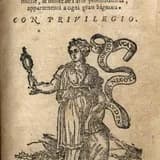
Cortese's vernacular handbook of alchemical, medical, cosmetic, and household 'secrets' first appeared in print in Venice in 1561.
In 1561, the Venetian press issued the first edition of I secreti della signora Isabella Cortese ('The Secrets of Lady Isabella Cortese'), a vernacular Italian handbook that gathered alchemical formulas, medicinal remedies, cosmetic recipes, household advice, and metallurgical techniques into a single accessible volume.
Unlike Latin treatises confined to university-trained physicians and guild-bound alchemists, Cortese's book was written in everyday Italian, opening the world of experimental knowledge to lay readers—especially women who managed households, prepared remedies, and produced cosmetics domestically. The book blended practical chemistry with promises of transformative secrets, including recipes purportedly for transmuting metals and prolonging youth and beauty.
Its publication is historically significant because it represents one of the earliest instances of a woman's name being attached to a printed scientific-technical text in the 'books of secrets' genre that flourished in Renaissance Italy. Whether or not 'Isabella Cortese' was a real individual or an authorial persona, the book's appearance under a woman's name in 1561 challenged assumptions about who could produce and transmit specialized knowledge.
The work's popularity led to numerous reprintings over the following century, cementing its place as a foundational text in the history of women's engagement with early modern science and alchemy.