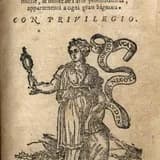
ABC-CLIO's 2007 Encyclopedia of Women in the Renaissance formally recognized Cortese's Secreti as the sole printed book by a female alchemist of the century.
In 2007, the reference work Encyclopedia of Women in the Renaissance, published by ABC-CLIO, offered a formal scholarly characterization of Isabella Cortese's I secreti, describing it explicitly as 'the only printed book by a female alchemist in the sixteenth century.'
This designation, appearing in a major academic reference work devoted to cataloguing and contextualizing women's contributions during the Renaissance, cemented Cortese's singular historical position. It elevated her from an obscure or overlooked figure to a recognized touchstone in discussions of gender and science in early modern Europe.
The statement carries significant weight: it implies that despite the vast alchemical literature produced across sixteenth-century Europe, Cortese's work—whether by a real individual or a constructed persona—stands as the sole surviving printed example explicitly attributed to a female alchemist. This uniqueness has made her book a frequently cited case study in the history of science, gender studies, and print culture.
The recognition also reflects broader trends in scholarship since the late twentieth century to recover and re-center women's contributions to fields historically dominated by male narratives, using bibliographic and textual evidence where biographical details are scarce or unverifiable.