← All women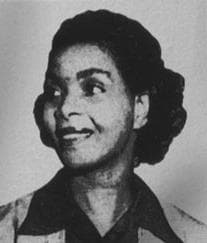
American · Activism · Law
Irene Morgan
April 9, 1917 – August 10, 2007
Early Life and Background
Irene Amos Morgan was born on April 9, 1917, in Baltimore, Maryland, into a working-class African American family living in a racially segregated United States. Her parents were part of the broader context of the Great Migration era, when many Black families sought better economic opportunities and relative safety in Northern and border-state cities such as Baltimore. Growing up in this environment, Morgan experienced the everyday realities of racial prejudice, but also witnessed the resilience of Black communities and the importance of mutual aid and religious life.
Sources describe Morgan as having limited formal education in her early years, leaving school before completing high school and later earning a General Educational Development (GED) certificate as an adult. As a young woman, she worked in factories and other jobs available to Black women in the mid-20th century, illustrating the constrained but vital role of Black female labor in wartime and postwar America. Her family background and economic circumstances were typical of many African American women of her generation, who balanced wage work, family responsibilities, and the pervasive discrimination of Jim Crow.
Religious faith played a significant role in Morgan’s life. She was a member of the Seventh-day Adventist Church, and Adventist sources later emphasized how her moral convictions and belief in human equality influenced her readiness to challenge unjust laws. While detailed records of her childhood are sparse, the combination of urban Black life, working-class experience, and religious commitment helped shape the quiet determination that would later define her civil-rights activism.
Marriage, Family, and Move to Virginia
As a young adult, Irene Amos married Sherwood Morgan, taking the surname by which she would first become known in civil-rights history. The couple had children, and like many families of their era they navigated economic challenges as well as the broader constraints of racial segregation. In the early 1940s, Irene Morgan temporarily relocated from Baltimore to Gloucester County, Virginia, to stay with her mother while recovering from a miscarriage. This stay in rural Virginia placed her directly under some of the most rigidly enforced Jim Crow statutes governing public accommodations and transportation.
By 1944, Morgan was working in a defense-related factory producing aircraft parts in Baltimore, reflecting the increased participation of African American women in wartime industrial labor. Her commute between Gloucester County and Baltimore for medical care and work made interstate bus travel a practical necessity, placing her at the intersection of state segregation laws and federal authority over interstate commerce—a legal conflict that would soon be tested in her case.
The 1944 Bus Incident and Arrest
On July 16, 1944, 27-year-old Irene Morgan boarded a Greyhound bus in Gloucester County, Virginia, heading to Baltimore for a doctor’s appointment.[9][12] Under Virginia law, buses were required to maintain racially segregated seating, with Black passengers relegated to the rear. Morgan sat in the section designated for Black riders, complying with the formal seating rules but asserting her right to travel in relative comfort and safety.
During the trip, when the bus reached Middlesex County or nearby along the route, a young white couple boarded the crowded vehicle.[5][8] The driver, enforcing Virginia’s segregation statute, ordered Morgan to surrender her seat and move further back so the white passengers could sit. Morgan refused, stating that she had already paid for her seat and was sitting where the law required Black passengers to sit.[9][11] When the driver persisted, she continued to decline.
The driver summoned local authorities. A sheriff’s deputy boarded the bus and presented a warrant or citation ordering Morgan to move. She again refused, asserting her rights and, according to some accounts, tearing up the arrest warrant.[12] Morgan was taken into custody, charged with violating the Virginia statute requiring segregation on public carriers and with resisting arrest. She was subsequently convicted in a local court and fined.[9][12]
In an era when defying segregation could lead to violence, imprisonment, or economic reprisals, Morgan’s refusal to move and her resistance to the arrest warrant represented remarkable personal courage. Her act was not coordinated by a civil-rights organization; it was a spontaneous assertion of dignity by a working-class Black woman who believed the law was unjust.
Appeal in Virginia Courts
After her conviction, Morgan chose to appeal rather than simply pay the fine, an important decision that transformed a local incident into a test case.[12] Her legal challenge moved through the Virginia court system, eventually reaching the Supreme Court of Appeals of Virginia (then the state’s highest court). The state court upheld her conviction, accepting the validity of the segregation statute as applied to her bus ride.[4]
At this point, Morgan’s case drew the attention of the National Association for the Advancement of Colored People (NAACP), whose Legal Defense and Educational Fund was actively seeking cases to challenge segregation. NAACP attorneys, including Thurgood Marshall—who would later become a U.S. Supreme Court justice—and William H. Hastie, recognized that the interstate nature of Morgan’s bus trip raised a constitutional question about the scope of state power versus federal authority under the Commerce Clause.[4][12]
Morgan v. Virginia: Supreme Court Case
Morgan’s legal team petitioned the U.S. Supreme Court to review the Virginia decision, framing the case as Morgan v. Commonwealth of Virginia. The central argument was that Virginia’s law mandating segregated seating on interstate buses placed an undue burden on interstate commerce, which the Constitution reserves to federal regulation.[4] In other words, if every state imposed different segregation or seating rules on interstate carriers, interstate travel would be subject to conflicting regulations, undermining the uniformity required for national commerce.
According to available accounts, NAACP attorneys argued Morgan’s case before the Supreme Court in March 1946.[12] On June 3, 1946, the Court delivered its decision, ruling in Morgan’s favor.[4][8][9] In a 6–1 vote, the justices held that Virginia’s segregation statute, as applied to interstate bus travel, was unconstitutional because it interfered with interstate commerce. The Court did not base its ruling directly on equal protection principles, but its reasoning nonetheless struck at the legal foundations of Jim Crow in transportation.
The decision invalidated similar laws in other states that required racial segregation on interstate buses.[4] As a result, interstate bus companies could no longer rely on state statutes to impose racially segregated seating on routes crossing state lines. While private practices and local enforcement continued to create barriers, the constitutional principle established in Morgan v. Virginia became a crucial early victory in the legal struggle against segregation.
Significance of Morgan v. Virginia
Morgan v. Virginia is widely recognized by historians as an important precursor to later civil-rights milestones. Encyclopediavirginia.org describes it as "an important early victory in the civil rights movement" and notes that Morgan is often portrayed as a critical, if little-known, precursor to Rosa Parks and the Montgomery bus boycott.[4][9]
By focusing on the Commerce Clause rather than directly on racial equality, the Supreme Court carved out a strategic path for restricting state-imposed segregation in areas where interstate commerce was involved. This approach would later inform other cases and actions, including federal interventions to protect Freedom Riders in the early 1960s.
The decision’s impact was complex. Some Southern states and bus companies resisted compliance, and many continued segregated seating practices despite the ruling.[14] However, the legal precedent laid the foundation for subsequent challenges. In 1947, civil-rights activists organized the Journey of Reconciliation, an early "Freedom Ride" designed to test and enforce the Morgan v. Virginia ruling by sending interracial groups of riders on interstate buses through the Upper South.[8] These actions highlighted the gap between law and practice, pushing federal authorities to confront ongoing violations.
Eight years after Morgan’s case, in 1954, the Supreme Court decided Brown v. Board of Education, striking down segregation in public schools. Thurgood Marshall, who had helped argue Morgan’s case, played a central role in Brown, illustrating the continuity between Morgan’s individual stand and the broader constitutional transformation of the mid-20th century.[1]
Career and Later Education
Throughout and after her legal battle, Irene Morgan continued to work to support herself and her family. She held industrial positions, including work in a Baltimore aircraft plant, reflecting the wartime shift of many women into manufacturing jobs.[7][10] Her employment underscored the intersection of gender, race, and class in her life: as a Black woman worker, she faced the dual burdens of sexism and racism while contributing essential labor to the wartime and postwar economy.
In her later years, Morgan pursued further education. She obtained her GED and eventually earned a bachelor’s degree from St. John’s University, followed by a master’s degree in education.[10] These academic achievements, completed well into adulthood, highlight her lifelong commitment to self-improvement and learning, and they offered her new opportunities to engage with issues of social justice and community life.
Personal Life and Second Marriage
After the period of her landmark case, Irene Morgan remarried. Her second husband was Elliott Kirkaldy, and she became known as Irene Morgan Kirkaldy in later decades.[1][9] She raised children and maintained a family life while living primarily in Maryland and Virginia.
Sources emphasize that Morgan did not seek public attention for her act of resistance or her Supreme Court victory. For many years, she led a relatively private life, working, worshiping, and caring for her family. Only later, as historians and civil-rights organizations revisited overlooked stories, did she become more widely known as a pioneer of the civil-rights movement.[10]
Religious Commitment and Ethical Motivation
As a member of the Seventh-day Adventist Church, Morgan’s beliefs shaped her understanding of justice and human dignity.[7] Adventist accounts about her life emphasize that her refusal to submit to bus segregation was rooted not only in personal pride but also in a moral conviction that discriminatory laws violated Christian principles of equality and respect for all people.
The Adventist tradition includes a strong emphasis on conscience, law, and religious liberty, themes that resonate with Morgan’s decision to challenge state authority when it conflicted with her understanding of right and wrong. Her case is sometimes highlighted in Adventist writings as an example of faith-informed civil disobedience contributing to social reform.[7]
Recognition and Honors
For many decades after the 1946 Supreme Court decision, Irene Morgan’s role in civil-rights history remained relatively obscure to the general public. In the late 20th and early 21st centuries, however, her contributions received increasing recognition.
In 2000, as part of Gloucester County, Virginia’s 350th anniversary, the county honored Morgan and installed a historical marker acknowledging her 1944 stand and the ensuing Supreme Court decision.[2] This local commemoration formally linked her personal act of resistance to the county’s history and to the broader narrative of American civil rights.
In January 2001, the President of the United States awarded Morgan the Presidential Citizens Medal, one of the nation’s highest civilian honors, in recognition of her courage and the national importance of her actions.[2] The medal signaled federal acknowledgment that her refusal to yield her seat and her persistence through the courts had helped dismantle a key component of Jim Crow law.
Maryland later inducted her into the Maryland Women’s Hall of Fame, further recognizing her as a significant figure in both state and national history.[1] Civil-rights organizations, historians, and educational projects began featuring her story in curricula and public programs, emphasizing that the history of bus desegregation did not begin or end with Rosa Parks.
Media, Scholarship, and Public Memory
In the early 21st century, Morgan’s story appeared in documentaries, articles, and educational resources. The Library of Virginia featured her as a "Virginia Changemaker," highlighting her contribution to American legal history.[2] The Zinn Education Project and other public-history initiatives produced teaching materials about her 1944 refusal and the 1946 Court decision, situating her within the broader struggle against racial injustice.[8][11]
Media outlets and historians have described Morgan as "one of the first" to challenge bus segregation successfully in court and have emphasized that she "preceded" Rosa Parks by more than a decade.[5][4] Articles and lectures recount her story to illustrate how civil-rights victories often depended on lesser-known individuals whose names never became as iconic as those of later leaders.
Television programs, including segments produced in connection with public-broadcasting documentaries on Rosa Parks, have featured Morgan’s case to show that there was "Irene Morgan" before Montgomery.[15] These treatments encourage audiences to view the civil-rights movement as a long continuum of resistance rather than a series of isolated heroic moments.
Legacy and Historical Impact
Irene Morgan’s legacy lies at the intersection of constitutional law, civil-rights activism, and public memory. Her refusal to submit to bus segregation in 1944 and her persistence in challenging her conviction contributed directly to a Supreme Court precedent that curtailed state power to enforce racial segregation in interstate transportation.[4][9]
While Morgan did not become a national civil-rights leader or organizer, her case provided a legal foundation for later activism. The Journey of Reconciliation in 1947, organized by the Congress of Racial Equality (CORE) and the Fellowship of Reconciliation, explicitly sought to enforce the Morgan v. Virginia decision by sending interracial groups on interstate buses through the Upper South.[8] The more famous Freedom Rides of the 1960s, which confronted continued segregation and violence in interstate travel, likewise relied on the principle that interstate carriers could not lawfully assign seats based on race.
Thurgood Marshall’s description of Morgan’s victory as "a decisive blow to the evil of segregation and all that it stands for" underscores the significance that legal strategists attached to the case.[2] Although the ruling did not dismantle segregation in intrastate travel or other domains, it demonstrated that federal constitutional principles could be used to challenge racially discriminatory laws in specific, targeted ways.
Morgan’s story also expands our understanding of women’s roles in the civil-rights movement. As a working-class Black woman, she did not hold formal leadership positions or organizational titles, yet her personal decision to resist unjust treatment became the catalyst for a landmark Supreme Court case. Her life reminds historians that the movement was built not only by prominent figures but also by thousands of ordinary women whose actions forced the legal system to confront the contradictions of American democracy.
Later Life and Death
In her later years, Irene Morgan Kirkaldy lived primarily in Virginia, including Gloucester County, where her historic bus ride had occurred decades earlier.[9][14] She continued her involvement in church and community life and, as public recognition of her story grew, occasionally spoke about her experiences. Nonetheless, she largely maintained a modest profile, emphasizing that she had simply done what she believed was right.
On August 10, 2007, Morgan died in Gloucester County at the age of 90.[9] By the time of her death, her story had been incorporated into state and national narratives of civil rights, featured in educational materials, recognized by government honors, and commemorated by historical markers.
Her passing marked the end of a life that had begun in a segregated Baltimore and spanned the era from World War I through the modern civil-rights movement and into the 21st century. The legal principles she helped establish remain part of the constitutional framework governing interstate travel, and her example continues to inspire scholarship, teaching, and activism focused on the ways that ordinary individuals can effect extraordinary change.
Conclusion
Irene Morgan Kirkaldy was a pioneering figure in the American civil-rights movement whose 1944 refusal to move from her seat on a segregated bus and subsequent Supreme Court victory in Morgan v. Virginia helped dismantle Jim Crow in interstate transportation. Though long overshadowed by later events, her story has increasingly been recognized as a vital chapter in the history of legal challenges to racial segregation and as a testament to the power of individual conscience in confronting injustice.
Dated achievements
6 indexed.
- Apr091917Science
Birth of Irene Morgan
Irene Amos Morgan was born in Baltimore, Maryland, on April 9, 1917.
View details Irene Morgan - Wikipedia - Jul161944Science
Arrested for Refusing to Give Up Bus Seat
Irene Morgan was arrested in Gloucester County, Virginia, after refusing to surrender her seat on an interstate Greyhound bus, sparking a landmark civil rights case.