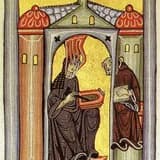
Hildegard was elected magistra, leader of the community of nuns at Disibodenberg, gaining recognized spiritual and administrative authority.
Following the death of Jutta of Sponheim, Hildegard was elected magistra — the leader — of the small community of nuns at Disibodenberg in 1136. This election recognized her spiritual maturity, administrative capability, and the trust of her fellow religious sisters.
As magistra, Hildegard assumed responsibility for the daily governance of the community, the spiritual formation of the nuns under her care, and increasingly, correspondence with clergy and secular figures beyond the monastery walls. This position of authority was significant in an era when women's opportunities for institutional leadership were extremely limited, confined almost exclusively to religious contexts.
Her leadership at Disibodenberg set the stage for her later, more ambitious project of founding an independent convent at Rupertsberg. The confidence and organizational experience she gained as magistra were essential to her subsequent successes as a founder, author, and correspondent with popes, emperors, and bishops. This role marks the beginning of Hildegard's transition from a cloistered visionary to a recognized leader within the broader ecclesiastical world.