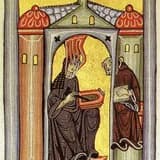
Hildegard began her second major theological work, Liber vitae meritorum (Book of Life's Merits).
Around 1158, Hildegard began composing Liber vitae meritorum ("Book of Life's Merits"), the second part of her theological trilogy following Scivias. This work presents a series of visionary dialogues examining human virtues and vices, framed as a moral guide for the spiritual life.
The text is structured around confrontations between personified virtues and vices, offering practical guidance for penance and moral reform, reflecting Hildegard's ongoing role as a spiritual director and confessor figure for both her nuns and a wide network of correspondents, including clergy and laypeople who sought her counsel.
This work demonstrates the maturation of Hildegard's theological voice, moving from the cosmic and doctrinal scope of Scivias toward more directly pastoral and ethical concerns. It reflects her continued authority as a visionary theologian, now writing with confidence following the papal approval she had received at Trier over a decade earlier. The composition of Liber vitae meritorum further cemented Hildegard's reputation as one of the most prolific and systematic theological writers of the twelfth century, male or female, and it remains an important source for understanding medieval moral theology and penitential practice.