← All women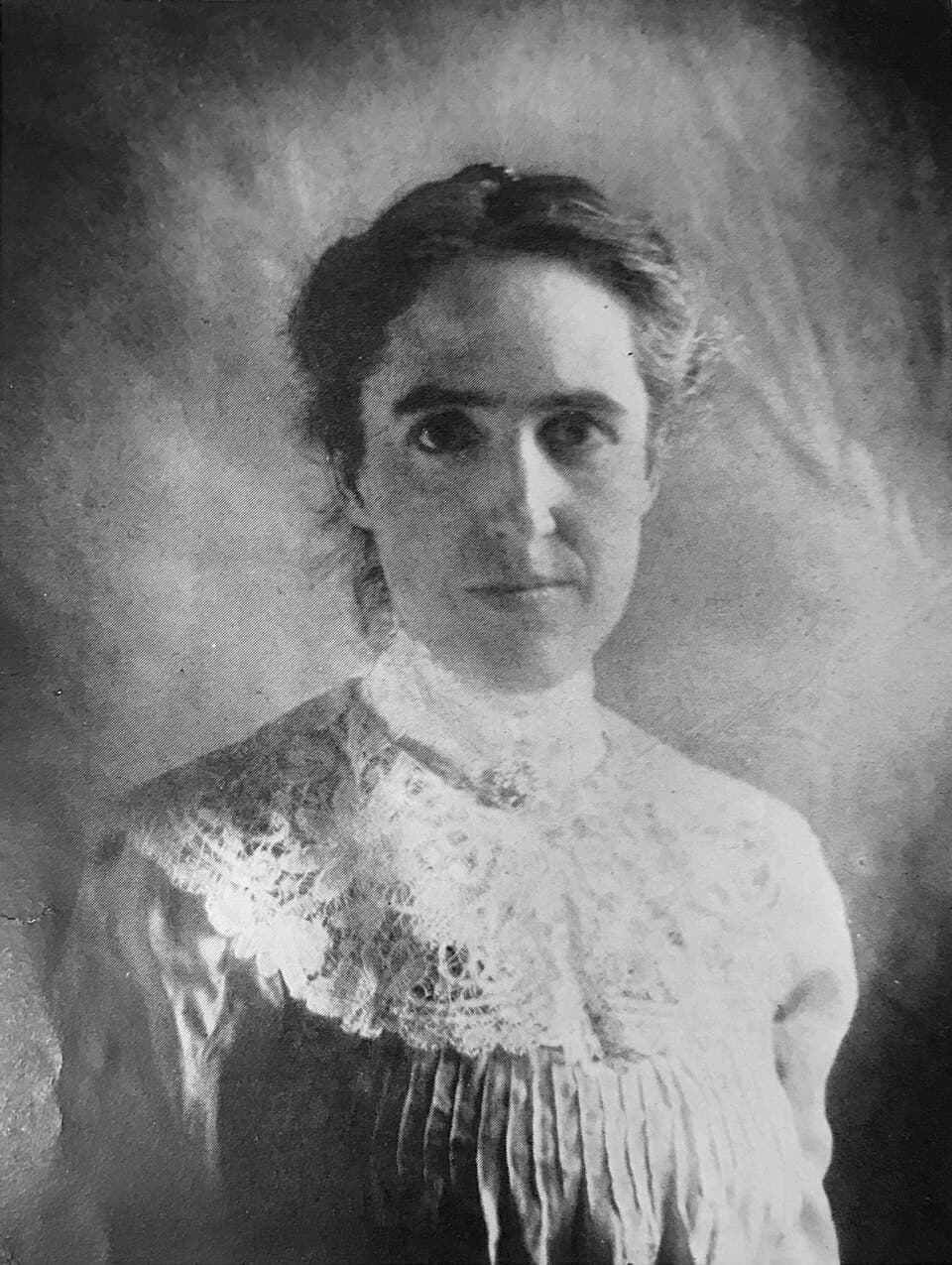
American · Science
Henrietta Swan Leavitt
July 4, 1868 – December 12, 1921
Early Life and Family Background
Henrietta Swan Leavitt was born on 4 July 1868 in Lancaster, Massachusetts, United States, the eldest child of George Roswell Leavitt, a Congregationalist minister, and Henrietta Swan (Kendall) Leavitt. Her upbringing in a devout New England family combined religious discipline with respect for learning, shaping the quiet determination that characterized her later scientific work. The family’s Puritan heritage and her father’s pastoral appointments meant that the Leavitts moved several times during Henrietta’s youth, living in Massachusetts, Cleveland, and later in other Midwestern communities.
From an early age, Leavitt showed intellectual curiosity and an aptitude for study. As the eldest of seven children, she also carried domestic responsibilities that were typical for young women of her time. Nevertheless, her parents supported her education beyond the local level, an opportunity unusual for many women in the late nineteenth century. This combination of moral seriousness, encouragement to learn, and modest expectations about public recognition would later shape the way she approached astronomy: with patience, meticulous care, and little concern for personal acclaim.
Education and Formative Influences
Leavitt pursued higher education at a time when women’s access to university study in the United States was limited. She first attended Oberlin College in Ohio, one of the earliest American colleges to admit women on equal terms with men. Oberlin exposed her to a mixed-gender academic environment and a progressive religious culture, reinforcing the idea that women could engage seriously in scholarly work.
She later transferred to the Society for the Collegiate Instruction of Women in Cambridge, Massachusetts, an institution affiliated with Harvard College that was designed to provide women with a Harvard-level education without formal admission to the university. This institution would become Radcliffe College. There, Leavitt studied a broad curriculum that included astronomy, philosophy, and classical subjects. She is believed to have completed her studies around 1892, although records of the exact date are sparse.
During her time at Radcliffe, Leavitt encountered astronomy both through coursework and through exposure to the nearby Harvard College Observatory. The observatory, under the directorship of Edward C. Pickering, was developing large programs of photographic sky surveys and systematic stellar cataloging. These efforts depended heavily on the labor of women hired as “computers” to measure and classify data from photographic plates. The combination of advanced astronomical research at Harvard and Radcliffe’s academic environment provided Leavitt with the intellectual foundation and institutional connections that would lead to her professional life in astronomy.
Early Career at Harvard College Observatory
After completing her studies, Leavitt initially volunteered at the Harvard College Observatory, assisting with the examination of photographic plates. By 1895, she was formally hired as one of Harvard’s women “computers” under director Edward C. Pickering. Her assignment was to measure and catalog the brightness (magnitudes) of stars recorded on glass plate photographs taken by Harvard’s telescopes in Cambridge and at its southern station in Arequipa, Peru.
As a computer, Leavitt worked within a predominantly female corps that included figures such as Annie Jump Cannon, Williamina Fleming, and later Cecilia Payne-Gaposchkin. These women were paid modest wages and excluded from faculty titles, yet their work was indispensable to Harvard’s ambitious program of building detailed star catalogs and classification schemes. Leavitt’s tasks involved scrutinizing thousands of plates, estimating stellar brightness using comparison sequences, and carefully recording measurements that would be used by male astronomers to publish major findings.
Leavitt’s interest soon gravitated toward stars whose brightness varied over time—variable stars. Identifying and characterizing these objects demanded exceptional patience and precision, as it required comparing plates taken at different times, noticing subtle changes, and determining periodic patterns in the light variations. By the early 1900s, she was recognized within the observatory as a leading authority on variables, even though her official title remained that of a computer.
Discovery and Cataloging of Variable Stars
A major turning point in Leavitt’s work occurred in the spring of 1904, when she examined plates of the Small Magellanic Cloud taken at Harvard’s Arequipa station in Peru. The Magellanic Clouds are nearby satellite galaxies of the Milky Way, visible from the Southern Hemisphere. By studying plates of these dense stellar fields, Leavitt identified numerous variable stars whose brightness changed over days or weeks.
The Small Magellanic Cloud was an ideal laboratory for her interests. Because its stars are all located at roughly the same distance from Earth, differences in their apparent brightness are likely to reflect true differences in luminosity rather than distance. This insight would later underpin her most famous discovery. Throughout the following years, Leavitt systematically searched the plates for variables, measuring their magnitudes and determining the periods of their fluctuations.
Between 1907 and 1921, she discovered and catalogued about 2,400 variable stars, roughly half of all known variable stars at that time. This enormous output required not only sharp observational skills but also an ability to manage complex data sets and maintain consistent standards across many plates and observing conditions. Her catalogs became key resources for other astronomers studying stellar evolution, pulsation, and galactic structure.
“1777 Variables in the Magellanic Clouds” (1908)
Leavitt’s first major publication emerged from this work in the Magellanic Clouds. In 1908, Harvard issued Observatory Circular No. 110, titled “1777 Variables in the Magellanic Clouds.” Although the circular bore Pickering’s name, the research and text were prepared by Leavitt. In it, she presented a catalog of 1,777 variable stars in the Small and Large Magellanic Clouds, including many Cepheid variables, a class of pulsating stars whose brightness varies with a regular period.
Within this catalog, Leavitt made a crucial observation. Because the stars in the Magellanic Clouds could be treated, to first order, as lying at a common distance, she reasoned that the brightest among them were intrinsically more luminous rather than simply closer. She noted that the periods of variation for Cepheids correlated with their apparent magnitudes: longer-period variables were systematically brighter in the sky. This was the first clear statement of what would become the period–luminosity relation for Cepheids.
At the time, this insight was presented cautiously, without the bold claims that might accompany a major theoretical breakthrough. Nonetheless, the 1908 circular provided an empirical foundation for using Cepheid variables as distance indicators, foreshadowing the transformation of these stars into key tools for measuring the structure of the universe. It also demonstrated how careful analysis of photographic plates, rather than telescopic discovery alone, could yield deep insights into stellar behavior.
The Period–Luminosity Relation and Leavitt’s Law (1912)
Leavitt continued to refine her data and methods after the 1908 circular. By 1912, she had improved her sample of Cepheid variables in the Small Magellanic Cloud and corrected earlier uncertainties in their magnitudes and periods. The result was a more precise and striking correlation between a Cepheid’s pulsation period and its intrinsic luminosity.
In Harvard Observatory Circular No. 173, issued in 1912, Pickering presented Leavitt’s refined analysis. The circular described a tight, nearly linear relationship: Cepheids with longer periods are systematically more luminous than those with shorter periods. Because all the stars in the Small Magellanic Cloud could be treated as being at the same distance, Leavitt’s measurements effectively calibrated a law linking period to true brightness, independent of distance.
This relationship, later known as Leavitt’s Law, was a breakthrough. It provided astronomers with the first reliable “standard candle” for measuring the distances to remote stellar systems. Once the absolute magnitude of a Cepheid could be inferred from its period, its distance could be calculated by comparing this intrinsic brightness with its apparent magnitude on the sky. This extended the cosmic distance scale far beyond the reach of geometric parallax, which is limited to relatively nearby stars.
Leavitt’s contribution was both conceptual and methodological. Her careful choice of a stellar system at a common distance, meticulous photometric measurements, and empirical plotting of period versus magnitude created a powerful tool that bridged observational practice and cosmological inference. Yet, in keeping with the gender norms of the time, the circular was published under her supervisor’s name; she herself received little public attention. Nonetheless, historians and astronomers alike now recognize Leavitt’s Law as one of the foundational discoveries of modern astronomy.
Development of Photometric Standards
Beyond her work on Cepheid variables, Leavitt played a key role in developing and applying what became known as the Harvard Standard for stellar photometry. During the 1910s, she worked on constructing sequences of comparison stars with carefully calibrated magnitudes. These sequences allowed observers to estimate the brightness of other stars reliably by comparing them visually or photographically to standard fields.
Standardization was essential as astronomy transitioned from qualitative observation to quantitative astrophysics. Different instruments, plates, and observing conditions could distort brightness measurements; only by tying these measurements to consistent standards could astronomers build trustworthy catalogs and compare results across observatories. Leavitt’s sequences and procedures helped establish a common magnitude scale that was adopted internationally, improving the precision of stellar photometry.
Her work in this area exemplified the often invisible labor that makes scientific progress possible. While the discovery of Leavitt’s Law drew attention in retrospect, her daily work on comparison stars, magnitude scales, and systematic catalogs underpinned much of early twentieth-century astronomy. It also anticipated later developments in photometric systems and calibration that are now central to observational cosmology.
Later Career and Appointment as Head of Stellar Photometry
Leavitt remained at the Harvard College Observatory from the mid-1890s until her death in 1921, gradually assuming greater responsibility within the computing staff. Her expertise in measuring stellar magnitudes and her leadership in variable-star projects led colleagues to rely on her judgment and methods. She also continued to suffer from periods of ill health and partial hearing loss, yet persisted in her work.
On 20 May 1921, she was formally appointed Head of Stellar Photometry at the Harvard College Observatory. This title recognized her long-standing leadership in photometric work and effectively acknowledged that she directed the observatory’s magnitude-measurement program. In the hierarchy of the observatory’s staff, this position marked a significant, if belated, elevation of her status.
Despite the appointment, her salary remained limited, and she was not granted a faculty role or the broader public recognition accorded to male astronomers. Her promotion illustrates the tension between the indispensable nature of women’s labor in astronomy and the institutional constraints that kept them from full professional standing. Still, the title "Head of Stellar Photometry" stands as one of the few official honors she received during her lifetime, a testament to her authority and skill.
Personal Life and Health
Leavitt’s personal life was quiet and largely private. There is no evidence that she married or had children, and contemporary accounts suggest that she devoted much of her time and energy to her work and to her family obligations. Her upbringing in a minister’s household and continued involvement with Congregational churches provided a spiritual framework that coexisted with her scientific pursuits.
She experienced partial hearing loss, apparently developing during her years at Oberlin and Radcliffe. This condition may have shaped her preference for the meticulous, solitary work of examining photographic plates rather than more public-facing roles. Later in life, she suffered from chronic health issues, including stomach cancer, which would ultimately lead to her death. Yet colleagues emphasized her diligence, modesty, and unwavering commitment to her observational programs despite these challenges.
Death and Immediate Remembrance
On 12 December 1921, Leavitt died in Cambridge, Massachusetts, at about 10:30 p.m., after complications from stomach cancer. She was 53 years old. Two days later, on 14 December 1921, her funeral was held at the Chapel of the First Congregational Church in Cambridge, reflecting her lifelong ties to the Congregationalist community.
In February 1922, the Harvard College Observatory published Annals, Vol. 79, Part 1, "Periods of 25 Variable Stars in the Small Magellanic Cloud," which included a memoir and formal acknowledgment of her death and contributions. The observatory’s notice recognized her pioneering work on Cepheid variables and her central role in measuring and cataloging variable stars, even if it did not yet fully appreciate the cosmological implications of Leavitt’s Law.
Her passing was noted in scientific circles but did not generate the widespread public attention that later accompanied the recognition of astronomers like Shapley and Hubble. For years after her death, her name remained relatively obscure outside professional astronomy, even as her methods and relations were used to make fundamental discoveries about the universe.
Legacy and Historical Impact
Leavitt’s most enduring legacy lies in the period–luminosity relation for Cepheid variables, which became known as Leavitt’s Law. After her 1912 publication, astronomers such as Ejnar Hertzsprung and Harlow Shapley undertook the crucial step of calibrating the relation in absolute terms—determining the true luminosities of nearby Cepheids using geometric methods. Once calibrated, Leavitt’s Law allowed distances to star clusters, globular clusters, and spiral nebulae to be measured with unprecedented accuracy.
In the 1920s, Edwin Hubble used Cepheid variables in the Andromeda "nebula" (now known as the Andromeda Galaxy, M31) and other systems to show that these objects lay far beyond the Milky Way, thereby demonstrating that the universe contains many galaxies. He then combined distance measurements based on Cepheids with radial velocity data to reveal that galaxies are generally receding from us, an observation that underpinned the concept of an expanding universe.
Although Hubble’s work brought fame to his name, it rested directly on the practical tool that Leavitt had created. Without the ability to determine reliable extragalactic distances through Cepheid variables, the scale and expansion of the universe could not have been established in the same way. Modern cosmological distance ladders still begin with Leavitt’s Law: Cepheids anchor the calibration of Type Ia supernovae and other distance indicators used to measure the Hubble constant and to probe dark energy.
Leavitt’s impact extends beyond cosmology. Her meticulous variable-star catalogs contributed to understanding stellar evolution and pulsation; her photometric standards helped transform astronomy into a quantitative physical science. In recognition of her contributions, the asteroid 5383 Leavitt and the lunar crater Leavitt have been named in her honor, and her story features prominently in modern histories of women in science and in educational resources highlighting hidden figures in astronomy.
Historians have also emphasized the gendered context of her career. Working as a low-paid computer without faculty status, she exemplifies the structural inequities that shaped early twentieth-century science. Her achievements illustrate how women’s labor underpinned major scientific advances, even when credit and visibility were largely reserved for male colleagues. In recent decades, scholarship and public history initiatives have sought to restore Leavitt’s name to its rightful place among the pioneers of modern astronomy.
Recognition and Retrospective Honors
During her lifetime, Leavitt received few formal awards or honors. Her promotion to Head of Stellar Photometry in 1921 was one of the rare official acknowledgments of her leadership. The scientific community did, however, recognize the utility of her period–luminosity relation; astronomers quickly adopted it for distance determinations, even if they did not always cite her explicitly.
In the decades following her death, appreciation of her work grew. Biographical articles in scholarly resources such as the MacTutor History of Mathematics archive, entries in major encyclopedias, and institutional histories of the Harvard College Observatory have highlighted her pivotal role. Educational resources from organizations focusing on women’s history and astronomy now regularly present Leavitt as a central figure whose insight changed the course of science.
Modern accounts emphasize not only her scientific achievements but also the obstacles she faced: limited pay, lack of faculty status, and the tendency for her work to be published under the names of male supervisors. Some commentators have reflected on the fact that she died before receiving many of the accolades that might have been afforded to her had she lived into the era when her law’s cosmological significance was fully appreciated.
Historical Significance
Henrietta Swan Leavitt occupies a distinctive place in the history of science. She did not invent new instruments or develop grand theoretical frameworks; instead, she transformed the interpretation of existing data through rigorous, patient analysis. Her insight that Cepheid variables could serve as standard candles rests on subtle reasoning: recognizing the advantage of a stellar system at common distance, trusting the photographic magnitudes as quantitative measurements, and detecting a tight empirical relation in noisy data.
Her story also offers a lens on the broader roles of women in astronomy at the turn of the twentieth century. As one of "Pickering’s women computers," she was part of a workforce that converted photographic plates into scientific knowledge, yet remained structurally constrained. The eventual framing of the period–luminosity relation as "Leavitt’s Law" and the naming of celestial features after her are part of a wider effort to acknowledge the overlooked contributions of women in science.
Today, Leavitt is widely regarded as a foundational figure in observational cosmology. The law that bears her name appears in university astronomy curricula, popular science accounts, and professional research on distance scales. Her legacy lies not only in the specific relationship she discovered but also in the model she provides of how careful observational work, even when carried out under restrictive conditions, can reshape our understanding of the universe.
Dated achievements
7 indexed.
- Jul041868Science
Birth of Henrietta Swan Leavitt
Henrietta Swan Leavitt was born in Lancaster, Worcester County, Massachusetts, USA.
View details Henrietta Swan Leavitt - Britannica - Mar011908Science
Publication of "1777 Variables in the Magellanic Clouds"
Harvard College Observatory Circular No. 110 presented Leavitt's catalog of 1,777 variable stars and an early period-brightness correlation for Cepheids.