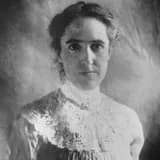
Harvard College Observatory Circular No. 110 presented Leavitt's catalog of 1,777 variable stars and an early period-brightness correlation for Cepheids.
In March 1908, the Harvard College Observatory issued Circular No. 110, titled "1777 Variables in the Magellanic Clouds," under the directorship of Edward Charles Pickering but crediting the meticulous work to "Miss Leavitt." This 21-page publication catalogued an extraordinary 1,777 variable stars that Leavitt had identified through painstaking comparison of photographic plates taken at the Boyden Station in Arequipa, Peru, of the Large and Small Magellanic Clouds.
Crucially, within this dense statistical work, Leavitt first noted that the brighter variable stars in the Small Magellanic Cloud appeared to have longer periods of light variation than the fainter ones—an early, tentative statement of what would become the period-luminosity relationship. Because all the stars in the Magellanic Cloud could be assumed to be at approximately the same distance from Earth, this correlation implied a genuine relationship between a Cepheid's intrinsic luminosity and its pulsation period, rather than being an artifact of varying distances.
This 1908 circular represented years of painstaking manual measurement using a technique Leavitt herself refined, blinking photographic plates against each other to detect stars that changed in brightness. It laid essential observational groundwork for her more definitive 1912 publication, and marked one of the first times statistical patterns among variable stars were rigorously documented at this scale, cementing Leavitt's reputation as a meticulous and gifted observational astronomer despite her subordinate institutional position as a "computer."