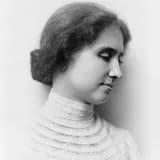
Anne Sullivan arrives in Tuscumbia on March 3, 1887, beginning Helen Keller’s formal education.
On March 3, 1887, teacher Anne Mansfield Sullivan, a recent graduate of the Perkins Institution for the Blind, arrived at the Keller family home in Tuscumbia, Alabama, to begin working with six‑year‑old Helen Keller.
This day marked the start of Keller’s formal education as a deafblind child. Sullivan, herself partially sighted and shaped by poverty and institutionalization, brought an experimental approach grounded in tactile sign language, rigorous discipline, and deep empathy. She insisted on living with Helen full‑time, transforming the Keller household into a classroom.
The arrival was historically important because it initiated one of the most influential teacher‑student relationships in modern education. At a time when deafblind children were widely assumed to be uneducable, Sullivan and Keller’s work challenged prevailing medical and pedagogical pessimism. Sullivan’s methods—spelling words into Helen’s hand, linking them to objects, and gradually introducing grammar and abstract concepts—would later inform specialized education for deafblind students worldwide.
March 3 is often celebrated as the day "Helen met her miracle worker," a phrase popularized by later dramatizations. Beyond the mythologizing, however, the date represents the moment when a child once considered unreachable was given access to language, literacy and, eventually, higher education. The partnership begun that day would endure for nearly 50 years, enabling Keller to become a writer, lecturer, and public intellectual whose work redefined cultural expectations of disabled women.